4 mins min read • 23 November 2026


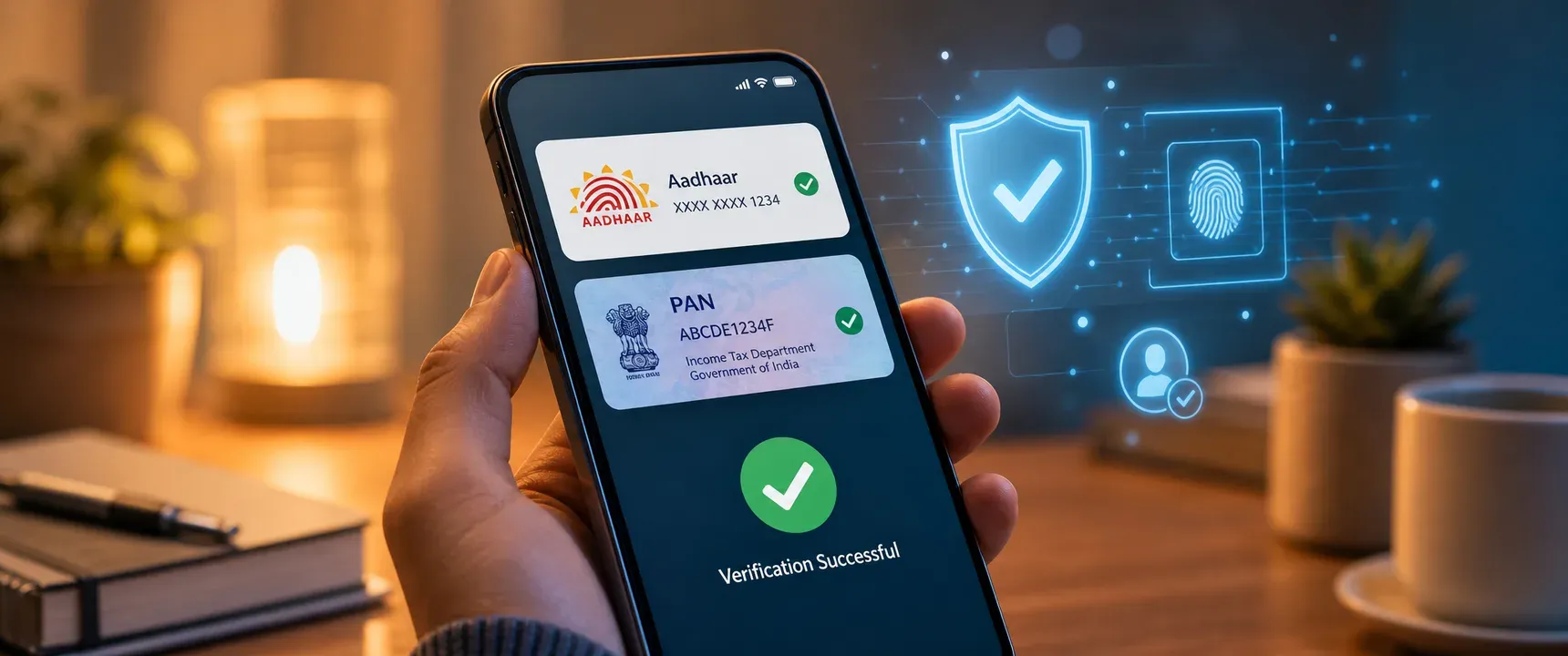
Table of content
Summary
How Aadhaar PAN KYC works
Why low friction creates risk
What responsible disclosure looks like
Documents beyond Aadhaar and PAN
Borrower awareness checklist
Building trust through transparency
FAQs
Millions of Indians search for loans they can get with just an Aadhaar card and a PAN card. The appeal is obvious: fewer documents, faster approval, money in the account within minutes. But when the application feels effortless, borrowers sometimes skip the fine print. mPokket believes that reducing friction in onboarding should never mean reducing a borrower's understanding of what they are signing up for.
Follow our Whatsapp Community for more offers and updates.
Join nowDigital KYC using Aadhaar and PAN has become the standard entry point for most online personal loan applications in India. The process typically involves three steps. First, the borrower enters their PAN card number, which the lender uses to verify identity and check basic financial records. Second, Aadhaar based OTP verification confirms the borrower's address and demographic details through UIDAI's authentication system. Third, a selfie or photograph may be captured for liveness verification.
This entire sequence can finish in under five minutes on platforms like mPokket. No physical documents need to be couriered or scanned. No branch visit is required. The Reserve Bank of India's digital lending guidelines (RBI, 2022) mandate that all digital lenders must follow proper KYC norms, and Aadhaar OTP based e-KYC is one of the accepted methods for regulated entities.
The result is a genuinely paperless loan application. For first time borrowers, freshers, salaried employees, and self-employed individuals, this removes one of the biggest traditional barriers to credit access: the documentation burden.
Speed is not the problem. The problem is what speed can obscure. When a borrower completes an application in three taps, the cognitive effort involved drops sharply. Research on digital consumer behavior consistently shows that faster checkout flows reduce the time users spend reviewing terms. In lending, that means borrowers may accept loan offers without fully understanding the interest rate, the total repayment obligation, or the consequences of a missed EMI.
Consider a common scenario. A young professional needs funds before payday. They download a loan app, enter their PAN and Aadhaar details, receive OTP verification, and see an approved loan amount on screen within minutes. The temptation is to tap "accept" immediately. But that screen also contains the interest rate, the tenure, the processing fee, and the total amount payable. If the borrower skips these details, they may be surprised by the EMI deduction from their bank account the following month.
This is not a flaw in digital lending itself. It is a design challenge. The same technology that makes onboarding fast can also make disclosure invisible if the lender does not prioritize it.
The RBI's digital lending guidelines require lenders to provide a Key Fact Statement (KFS) before loan disbursal. This document must clearly state the annual percentage rate, all fees, the repayment schedule, and the total cost of borrowing. Borrowers must acknowledge the KFS before funds are released.
mPokket is designed to integrate this disclosure step directly into the application flow. Rather than burying the KFS in a downloadable PDF that most users ignore, responsible platforms surface cost information at the moment of decision. The interest rate, EMI amount, tenure, and total repayment figure should be visible on the same screen where the borrower confirms the loan.
Consent clarity is equally important. When a borrower shares their Aadhaar and PAN details, they are authorizing the lender to access certain personal data. Responsible lenders explain exactly what data is being accessed, why it is needed, and how it will be used. This is not just a regulatory checkbox. It is a trust signal that separates credible platforms from predatory ones.
A frequent search query asks: "What documents are required for an instant personal loan?" The honest answer is that Aadhaar and PAN are typically sufficient for identity verification on platforms like mPokket. However, depending on the borrower's profile, additional information may be requested.
Salaried employees might need to share bank account details or salary account statements. Self-employed borrowers may need to provide proof of income or business activity. Freshers and interns might be evaluated based on alternative data signals rather than traditional credit scores. The specific requirements vary by lender and by the borrower's credit profile.
The key point is that "minimal documentation" does not mean "no evaluation." Lenders still assess repayment capacity. They still check whether the borrower can afford the EMI. The difference is that digital platforms can perform these checks using data rather than paper, which is faster but not less rigorous.
Before accepting any loan offer obtained through Aadhaar and PAN based onboarding, borrowers should verify several things. First, confirm the exact interest rate and whether it is flat or reducing. Second, check the total amount you will repay over the full tenure, not just the monthly EMI. Third, read the Key Fact Statement carefully. Fourth, understand the consequences of missing an EMI, including late fees and potential impact on your credit profile. Fifth, verify that you have given explicit consent for data sharing and that you understand what data the lender will access.
These steps take less than two minutes. They do not slow down the application process in any meaningful way. But they can prevent unpleasant surprises later. mPokket is designed to encourage this kind of informed borrowing by making cost and consent information accessible within the app itself.
The digital lending ecosystem in India has grown rapidly. With that growth has come scrutiny from regulators, media, and borrowers themselves. Platforms that treat onboarding as a race to disbursal, without pausing for borrower understanding, risk eroding the trust that the entire industry depends on.
mPokket's approach is designed to demonstrate that speed and awareness are not competing goals. A borrower can complete Aadhaar and PAN based KYC in minutes and still understand exactly what they are borrowing, at what cost, and on what terms. The technology that enables paperless verification can also enable clearer, more accessible disclosure.
For first time borrowers especially, this matters. Their first loan experience shapes how they think about credit for years. If that experience is fast but opaque, they may develop habits of borrowing without reading terms. If it is fast and transparent, they begin building financial literacy alongside their credit history.
Responsible digital lending is not about adding friction for its own sake. It is about ensuring that the friction you remove was never protecting the borrower in the first place. Document submission was a barrier. Understanding your loan terms is not.
Most digital lenders, including mPokket, require an Aadhaar card and PAN card for identity verification through digital KYC. Depending on your profile, bank account details or proof of income may also be requested.
Yes. Aadhaar and PAN based digital KYC is an accepted verification method under RBI guidelines. Platforms like mPokket are designed to use these documents for paperless onboarding, though loan approval also depends on your repayment capacity assessment.
Download a digital lending app like mPokket, complete Aadhaar and PAN based KYC through OTP verification, review the loan offer including interest rate and EMI details, accept the Key Fact Statement, and receive funds directly in your bank account.
When processed through RBI regulated or compliant platforms, Aadhaar PAN based loans follow mandated KYC and data protection norms. Always verify that the lender provides a Key Fact Statement and clear consent disclosures before sharing your details.
Review the annual interest rate, total repayment amount, EMI schedule, processing fees, and late payment penalties. Read the Key Fact Statement provided by the lender and confirm you understand the data consent terms before accepting.
How to choose a trustworthy instant personal loan app in India
3 mins min read • 6 October 2026
What Documents Are Actually Needed for Digital Loans
5 min read • 7 May 2026
7 Financial Terms Every First-Time Borrower Should Know in India
4 min read • 7 May 2026
5 Ways Paperless Loan Applications Simplify Loan Access
4 min read • 7 May 2026
The growing role of alternative borrower signals in India's digital credit market
3 mins min read • 20 September 2026