3 mins min read • 20 September 2026


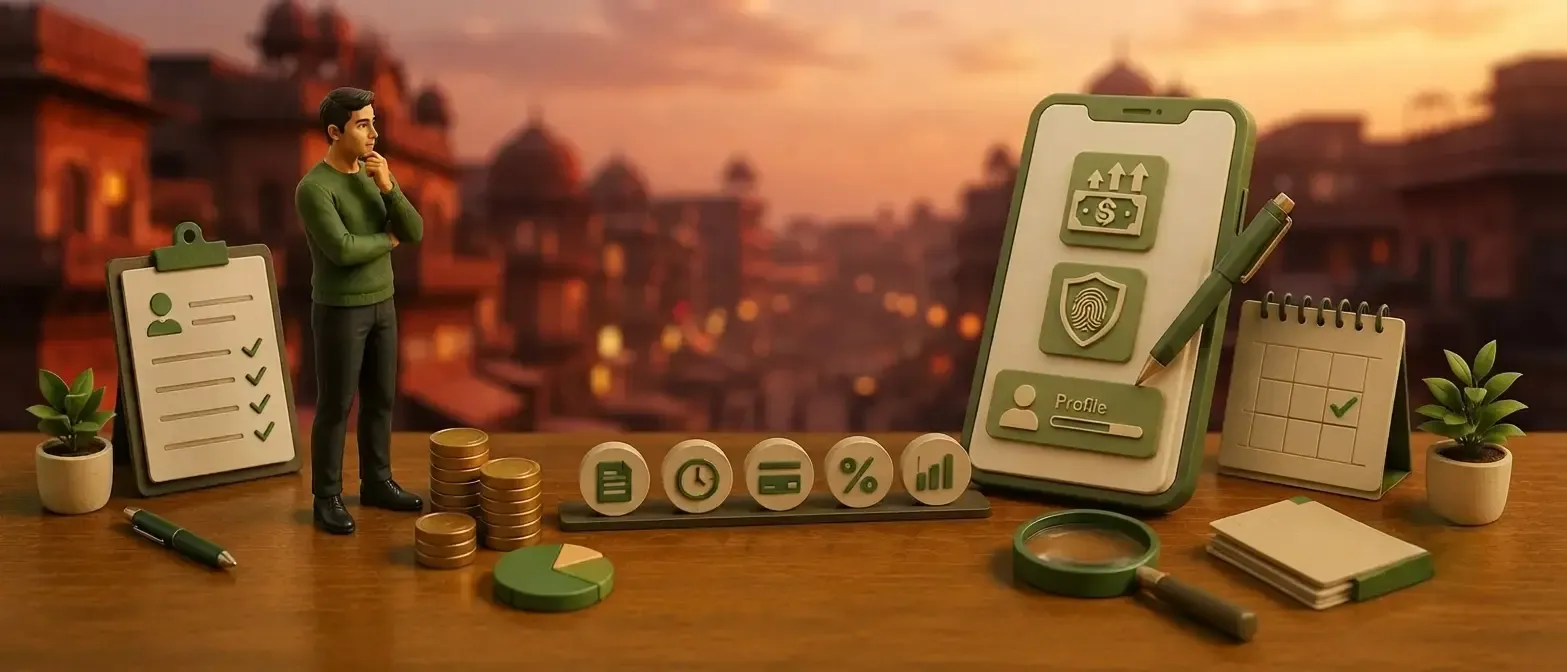
Table of content
Summary
Why traditional scoring excludes millions
What alternative borrower signals look like
Cash flow as a proxy for income
Identity and profile signals
How India's ecosystem enables this shift
Who benefits most from this trend
Responsible lending without overpromising
Building credit through first loans
What lies ahead for alternative assessment
FAQs
Millions of Indians apply for their first loan each year, yet many face rejection before a human even reviews their application. The reason is simple: they have no formal credit history. For students, freshers, housewives, gig workers, and freelancers, the absence of a CIBIL score can feel like a locked door. India's digital credit market is changing that equation. Platforms like mPokket now evaluate borrowers through alternative signals, opening access for people traditional scoring systems overlook.
Follow our Whatsapp Community for more offers and updates.
Join nowIndia's credit bureau ecosystem covers a fraction of the adult population. CIBIL, Experian, and other bureaus primarily track individuals who already hold formal credit products such as credit cards, home loans, or vehicle loans.
This creates a circular problem. Without prior credit, there is no score. Without a score, most banks decline applications outright. The people most in need of small, short term credit are the ones least likely to qualify.
Consider the scale. A large share of India's workforce is self employed, engaged in gig work, or earns through informal channels. Housewives managing household finances, interns on stipends, and freshers entering the job market all fall into this gap. Their financial discipline may be strong, but it remains invisible to conventional scoring models.
Alternative signals refer to data points beyond a traditional credit file. Digital lenders analyze these signals to estimate repayment capacity and intent. The table below summarizes the most common categories used in India's digital lending market.
| Signal category | What it measures | Example data points |
|---|---|---|
| Cash flow indicators | Income regularity and spending discipline | Bank statement patterns, UPI transaction frequency, salary credits |
| Digital identity verification | Authenticity and completeness of borrower profile | Aadhaar and PAN match, OTP verification, selfie verification |
| Profile completeness | Borrower engagement and data consistency | Occupation details, education, address stability, contact verification |
| Device and app behavior | Digital literacy and consistency | App usage patterns, device stability, registration consistency |
| Repayment behavior (post first loan) | Willingness to repay once credit is extended | On time EMI payments, autopay enrollment, early repayment |
None of these signals alone replaces a credit score. Combined, they form a composite picture that helps lenders like mPokket make informed decisions about borrowers who would otherwise be invisible to the system.
For salaried employees, salary credits into a bank account provide a clear signal. For gig workers and freelancers, UPI transaction history and bank statement analysis reveal income patterns even when formal salary slips are absent.
A delivery partner receiving regular weekly payments through a platform, for instance, generates a traceable cash flow record. Digital lenders can assess this pattern to gauge repayment capacity without requiring traditional employment documentation.
Aadhaar and PAN verification serve dual purposes. They confirm identity and establish a verifiable digital footprint. When a borrower completes KYC, uploads occupation proof, and provides consistent personal details, the lender gains confidence in the application's legitimacy.
mPokket uses this kind of digital KYC process. Borrowers verify their identity through Aadhaar and PAN, complete their profile, and provide basic income or occupation information. This paperless approach removes the branch visit barrier that excludes many first time borrowers.
Several structural factors make alternative signal based lending possible at scale in India today.
Hundreds of millions of Indians now access financial services through mobile apps. This creates the digital trail that alternative assessment depends on.
Second, UPI has transformed payment infrastructure. With billions of monthly UPI transactions, even informal earners generate transaction data that lenders can analyze.
Third, RBI's digital lending guidelines published in recent years have created a regulatory framework. These guidelines mandate transparency, direct bank account disbursal, and borrower protection measures. Responsible digital lenders operate within this framework, which builds trust for borrowers entering formal credit for the first time.
Alternative signal based lending is not a niche product. It serves several large borrower segments across India.
Freshers and students entering the workforce often need small loans for month end expenses, skill courses, or unexpected bills. They have no credit history but may have a stipend, a verified student profile, or consistent digital activity.
Housewives and homemakers seeking funds for a home based business, children's education, or medical emergencies often lack formal income documentation. Profile completeness and household cash flow indicators can bridge that gap.
Gig workers and freelancers, including delivery partners, cab drivers, and project based professionals, earn variable incomes. Traditional lenders struggle with this variability. Alternative signals like transaction frequency and average monthly inflows offer a more realistic assessment.
Self employed professionals such as shopkeepers, small traders, and service providers may have strong businesses but limited formal credit records. Bank statement analysis and business vintage indicators help lenders evaluate these applicants fairly.
mPokket specifically serves many of these segments, offering instant personal loans and business loans through a mobile first, paperless process that relies on alternative assessment rather than requiring a pre existing credit score.
Alternative signals expand access, but they do not eliminate risk assessment. Responsible lenders still evaluate repayment capacity carefully. The difference is in the data sources, not in the rigor of the evaluation.
A few principles distinguish responsible alternative lending from predatory practices.
Transparency matters. Borrowers should see their interest rate, total repayment amount, and EMI schedule before accepting a loan. mPokket provides this through its app based interface, including EMI calculators that let borrowers estimate costs upfront.
Loan amounts stay proportional. For first time borrowers without credit history, smaller initial loan amounts reduce risk for both the lender and the borrower. As repayment history builds, access to larger amounts can follow.
Repayment flexibility helps. Options like UPI repayment, autopay, and flexible tenure allow borrowers with variable incomes to manage repayment without defaulting. This is particularly relevant for gig workers and freelancers whose earnings fluctuate week to week.
One of the most significant outcomes of alternative signal based lending is credit building. When a borrower takes a small loan from a platform like mPokket and repays it on time, that repayment gets reported to credit bureaus.
This single act creates a formal credit record where none existed before. Over time, disciplined borrowing and repayment establish a CIBIL score. That score then opens doors to larger loans, better interest rates, and access to traditional banking products.
For millions of Indians, the first loan is not just about the funds. It is the entry point into the formal financial system. Alternative borrower signals make that entry possible.
India's digital lending market continues to evolve. Several trends suggest alternative borrower signals will become more sophisticated and more widely adopted.
Account aggregator frameworks allow borrowers to share verified financial data with lenders securely. This gives lenders richer cash flow insights while keeping borrowers in control of their information.
Machine learning models are improving at identifying repayment patterns from non traditional data. As these models mature, approval accuracy increases and default rates decrease, benefiting both lenders and borrowers.
Regulatory clarity continues to strengthen. RBI's ongoing focus on digital lending standards, data privacy, and borrower protection creates a stable environment for responsible innovation.
For borrowers who currently feel excluded by conventional scoring, the trajectory is encouraging. The tools and infrastructure already exist. Platforms like mPokket demonstrate that access and responsibility can coexist.
If you are a first time borrower, a freelancer, a gig worker, or someone without a formal credit score, the digital lending ecosystem in India is increasingly designed to include you. The key is choosing a platform that evaluates you fairly, lends responsibly, and helps you build a credit profile for the future.
Yes. Digital lenders like mPokket use alternative signals such as Aadhaar and PAN verification, cash flow analysis, and profile completeness to assess borrowers who lack a formal credit score or bureau record.
mPokket is a loan app that offers instant personal loans without requiring a pre existing credit score. It uses alternative assessment methods including digital KYC and income indicators to evaluate first time borrowers.
Lenders evaluate cash flow patterns from bank statements, digital identity verification through Aadhaar and PAN, profile completeness, device and app behavior, and post disbursal repayment conduct as alternatives to traditional credit scores.
Yes. When you repay a loan on time, the lender reports that repayment to credit bureaus. This creates a formal credit record and gradually builds a CIBIL score, improving your eligibility for future loans.
It can be safe if the app operates under RBI digital lending guidelines, disburses funds directly to your bank account, and provides transparent terms. Always verify the lender's credentials before sharing personal information.
5 Ways Paperless Loan Applications Simplify Loan Access
4 min read • 7 May 2026
How First-Time Borrowers Can Build Credit History in India (Step-by-Step Guide)
5 min read • 6 May 2026
Why Are Easy Loans Popular Among Borrowers In Mumbai?
3 min read • 5 September 2025