5 min read • 7 May 2026


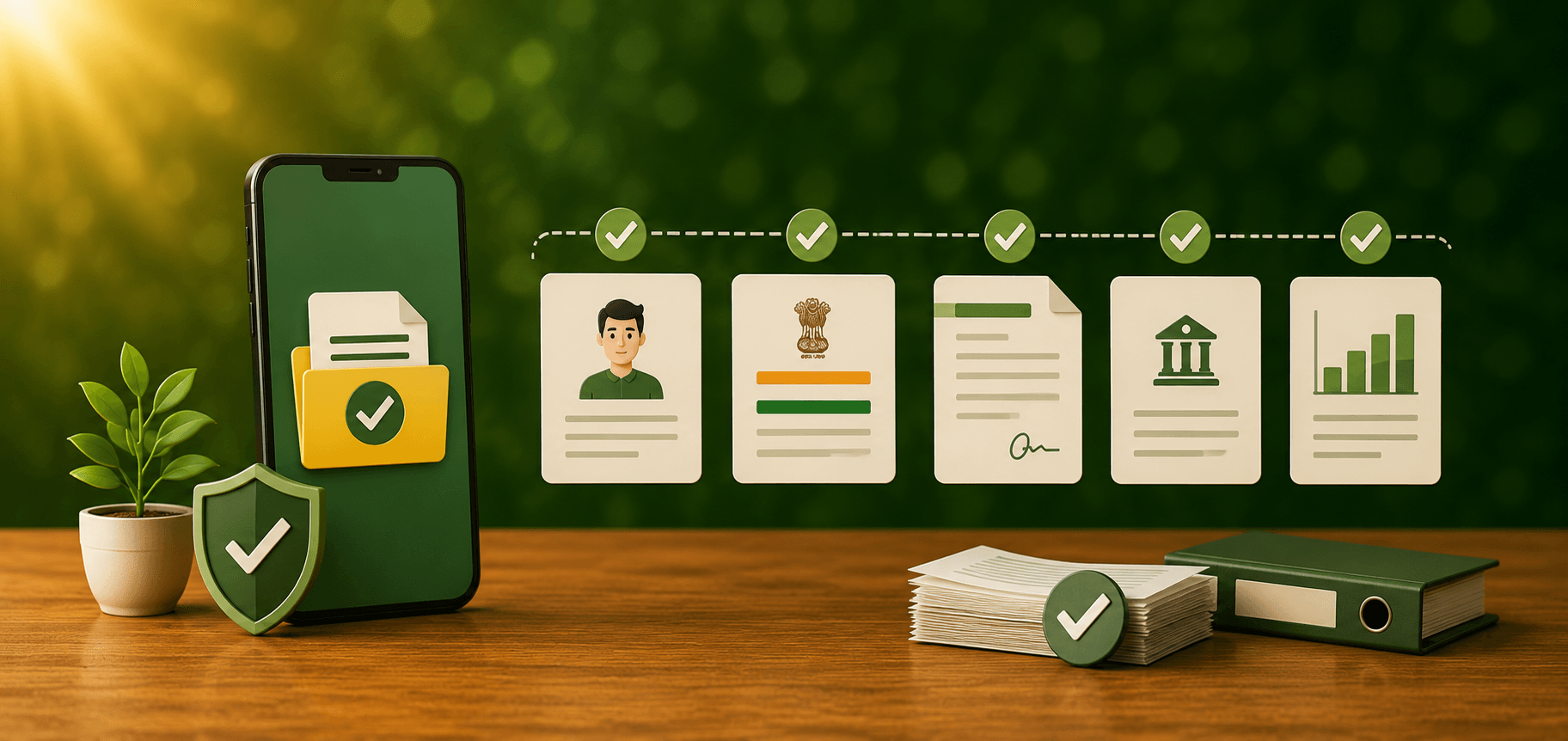
Table of content
What Documents Do Most Digital Loan Apps Actually Ask For?
What Income Proof Is Needed for Different Types of Borrowers?
Why Do Many Loan Apps Now Accept Alternative Income Proof?
Can You Really Get an Instant Loan With Just Aadhaar and PAN?
What Mistakes Delay Digital Loan Approval?
How Can You Improve Your Chances of Fast Loan Approval?
Conclusion
Getting a digital loan should be simple. Yet many applicants find themselves stuck, unsure which documents to upload, why their application was rejected, or why disbursal is taking longer than expected.
Whether you are a salaried employee, a first-time borrower, or a self-employed professional, the uncertainty around paperwork can be genuinely stressful. However, most modern online loan apps have simplified their document requirements dramatically.
This guide covers exactly what documents digital lenders ask for, what income proof is needed for different borrower types, why many apps now accept alternative income proof, and practical tips to speed up your approval.
Follow our Whatsapp Community for more offers and updates.
Join nowMost digital lenders ask for basic KYC and financial verification documents such as Aadhaar card, PAN card, bank statements, selfie verification, and a mobile number linked with Aadhaar. These documents help apps verify identity, assess repayment ability, and process loans quickly through digital systems.
Let’s understand why each document is important in a minimal documentation loan app process.
Aadhaar card for identity verification
Aadhaar is commonly used for identity and address verification during digital loan applications. It helps lenders complete eKYC instantly and reduce manual paperwork for faster loan approvals.
PAN card for KYC and credit checks
PAN card helps lenders verify financial identity and check your credit history. Most loan apps use PAN details to assess repayment behavior and prevent fraudulent applications.
Bank statements for income assessment
Bank statements help lenders understand salary credits, business income, cash flow, and spending patterns. They are commonly used as alternative income proof for faster digital loan approvals.
Selfie or live photo for digital KYC
Many digital lenders ask for a live selfie to match your identity with Aadhaar or PAN records. This step improves security and supports paperless loan verification.
Mobile number linked with Aadhaar
An Aadhaar-linked mobile number is important for OTP verification, eKYC authentication, and secure login approvals. Without it, many digital loan processes may remain incomplete.
Watch how KYC works in minutes! See how Aadhaar, PAN, and a quick selfie help complete your instant loan verification step-by-step.
Income proof requirements depend on the borrower’s employment type and repayment profile. Salaried employees usually submit salary-related documents, while self-employed individuals, freelancers, and students may provide alternative financial records instead.
Here’s how document requirements differ for different borrower categories.
Documents required for salaried employees
For a loan for salaried employees, lenders usually ask for salary slips from the last few months, Form 16, and bank statements showing regular salary credits. These documents help verify stable monthly income and repayment capacity. Many digital lenders also use this data for faster eligibility checks and instant approvals.
Documents required for self-employed individuals
For a loan for self-employed borrowers, lenders generally request ITR filings, GST registration details, and business bank statements. These documents help assess business stability, income consistency, and financial health. Some digital lenders may also evaluate monthly transaction volume before approving higher loan amounts.
Documents required for freelancers and gig workers
Freelancers and gig workers usually provide bank statements, client payment proof, and platform earning history from apps like Upwork or Fiverr. Since formal salary slips may not exist, lenders use alternative income records to evaluate repayment ability for a personal loan without income proof.
Can students apply with limited documents?
Yes, many students and applicants searching for a loan for freshers can apply with limited documents like Aadhaar, PAN, college ID, and bank statements. Some lenders also consider part-time income, internship stipends, or co-applicant support while reviewing eligibility for smaller instant loans.
Many instant personal loan apps now evaluate the borrowers beyond conventional payslips. This helps students, freelancers, gig workers, and self-employed users access faster credit with simplified documentation.
Here’s how lenders evaluate eligibility even when traditional income proof is unavailable.
eKYC and instant verification
eKYC helps lenders verify identity digitally using Aadhaar and PAN details. This reduces paperwork, speeds up onboarding, and enables faster loan approvals through automated systems.
API-based bank statement analysis
Lenders use Account Aggregator frameworks or Fintech APIs to fetch and analyse your bank transaction history directly. This lets them assess income patterns, spending behaviour, and creditworthiness without requiring manual document uploads or a traditional salary slip.
Credit score-based approvals
Some lenders rely heavily on credit scores and repayment history instead of traditional documents. A healthy credit profile often improves approval chances and loan limits.
Read to know more about - How First Time Borrowers Can Build Credit History
In many cases, especially for returning users or pre-approved customers, the digital lenders approve the loan request using only Aadhaar and PAN. However, additional documents may still be required for first-time borrowers or those seeking higher loan amounts.
Here are situations where Aadhaar and PAN may or may not be enough.
When Aadhaar and PAN may be enough
For existing borrowers who have repaid previous loans on time, many apps pre-approve repeat loans based on their profile alone. Similarly, if a lender has already verified your eKYC, a fresh loan may only require OTP confirmation; no new documents at all.
Cases where additional documents may still be required
A first-time borrower applying for a higher amount, like a lakh or more, may be asked for bank statements or income proof. Similarly, applicants with no credit history, a low CIBIL score, or flagged KYC details are typically asked to submit supplementary documents before approval.
Importance of credit score and repayment history
A strong credit score and timely repayment history improve trust with lenders. Borrowers with consistent repayment behavior often receive quicker approvals and better loan eligibility.
Read to know more about - How To Get ₹50,000 Loan On Aadhaar Card?
Many digital loan applications get delayed because of incorrect details, poor document quality, or repeated applications across multiple lenders. Even small verification issues can slow down approval or increase rejection chances.
Avoid these common mistakes to improve your loan approval experience.
Mismatch in Aadhaar and PAN details
If your name, date of birth, or address on your Aadhaar and PAN do not match exactly, automated KYC verification will fail. Always ensure both documents reflect identical details before initiating any loan application to avoid instant rejection.
Blurry document uploads
Unclear or cropped document photos may fail verification checks. Always upload clear, readable, and properly lit images during the loan application process.
Incorrect bank account information
Entering the wrong IFSC code, account number, or account holder name causes disbursal failures and triggers compliance checks. Double-check every banking detail before submission, as errors here can delay disbursal by several business days.
Multiple loan applications in a short time
Applying to several lenders simultaneously triggers multiple hard credit enquiries, which can lower your CIBIL score significantly. Lenders view this as a sign of credit hunger, reducing your chances of approval. Apply selectively and space out applications.
Read to know more about - How Do Credit Scores Impact Loan Approval?
Accurate KYC details, healthy financial behavior, and stable banking activity are the keys for faster approval. Here are some practical ways to improve your approval chances.
Keep your KYC updated
Ensure your Aadhaar, PAN, and mobile number are current and mutually consistent. Outdated or mismatched KYC triggers manual review queues that can delay your approval.
Maintain a healthy credit score
Pay EMIs and credit card bills on time to maintain a strong credit score. Good repayment behavior improves eligibility and approval speed.
Use a stable bank account
Using a regularly active bank account with steady transactions helps lenders evaluate income stability and repayment capacity more confidently.
Apply for the right loan amount
If you request an amount proportional to your monthly income, you will get faster approval, for sure. Start with small-amount, like Rs. 5,000 personal loans, repay on time, and gradually build eligibility for larger disbursals
Millions of salaried professionals, freshers, and self-employed individuals face this uncertainty every day, often missing urgent financial needs because of confusion around paperwork. Whether you are a first-time borrower or a professional without traditional salary slips, digital lending has evolved to work for you.
Whether you need a small emergency amount starting from ₹1,000 or a higher loan up to ₹2 lakh, instant loan apps, like mPokket can help bridge short-term financial gaps without lengthy paperwork or branch visits. Apply now!
How to Increase Your Credit Limit While Taking a Loan from mPokket
5 min read • 22 April 2026
Your Guide to Hassle-Free mPokket Loan Repayment
4 min read • 26 June 2025
How To Get An Instant Loan Without Documents Online In India?
4 min read • 29 April 2026
Need ₹10,000 Urgent Loan Today — What Should You Do To Get It Fast?
4 min read • 30 April 2026
What Are the Eligibility Criteria for an Instant Loan on an Aadhar Card?
7 min read • 10 April 2025