4 mins min read • 20 November 2026


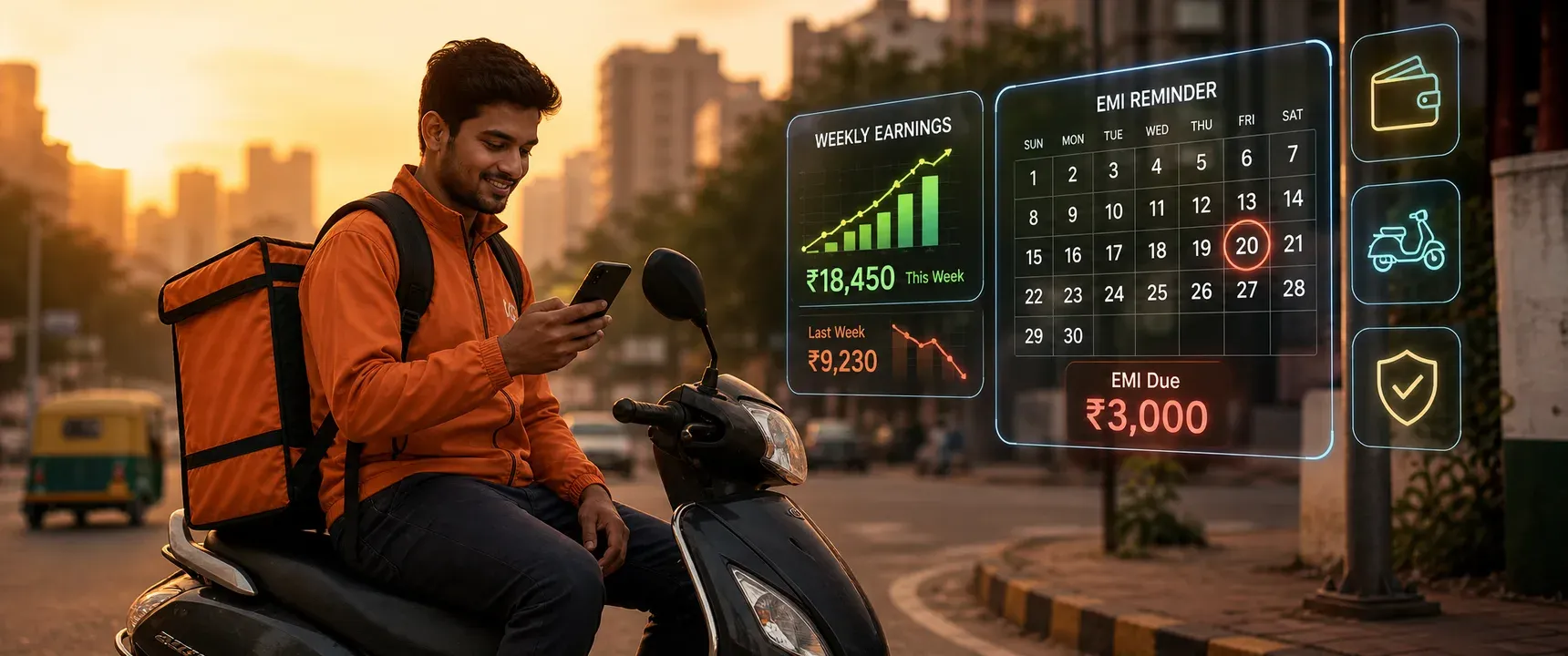
Table of content
Why fixed EMIs feel risky for gig workers with weekly earnings
Why gig income clashes with EMIs
Warning signs of EMI mismatch
Why traditional lenders miss this
What flexible repayment looks like
How gig workers can borrow smarter
The real cost of ignoring the mismatch
FAQs
A delivery partner finishes a strong week, earning well above average. The next week, rain keeps orders low and earnings drop by half. Somewhere in between, a fixed EMI of Rs 3,000 sits on the calendar, indifferent to either outcome. For millions of gig workers across India, this mismatch between variable weekly income and rigid monthly repayment obligations creates real financial stress. mPokket recognizes that traditional lending structures were not built for people whose cash flow shifts every seven days.
Follow our Whatsapp Community for more offers and updates.
Join nowIndia's gig workforce has grown rapidly. Delivery partners, cab drivers, freelance designers, and platform based service providers earn regularly, but not in neat monthly salary cycles. Income arrives in weekly or even daily payouts from aggregator platforms.
Traditional EMI structures assume a predictable monthly salary credited on a fixed date. The entire repayment calendar is built around that assumption. When a borrower's income pattern does not match, the EMI becomes a source of pressure rather than a manageable commitment.
A cab driver might earn Rs 18,000 one week and Rs 9,000 the next. Over a month, total earnings could be reasonable. But the timing of those earnings rarely aligns with a single EMI due date. This creates what lenders call a cash flow gap, and what borrowers experience as month end anxiety.
Gig workers often absorb repayment stress silently. Recognizing the symptoms early can help prevent a missed EMI or a debt spiral. Here are the most common warning signs that a fixed EMI structure does not fit a borrower's income reality.
Skipping essentials before due dates. Cutting back on food, transport, or medical needs in the days before an EMI is due suggests the repayment amount exceeds what the borrower can comfortably spare that week.
Borrowing informally to cover the EMI. Taking cash from friends, family, or informal lenders just to make a scheduled payment means the formal loan is creating a secondary debt cycle.
Persistent anxiety around month end. If the last week of every month brings dread rather than routine, the repayment schedule is misaligned with the borrower's earning rhythm.
Choosing between two financial obligations. When a gig worker must decide between paying rent and paying an EMI, the loan structure is too rigid for their cash flow pattern.
Depleting emergency savings repeatedly. Dipping into a small emergency fund every month to meet a fixed EMI erodes the financial safety net that gig workers need most.
Avoiding new work opportunities. Some gig workers turn down short term projects or platform switches because they fear any disruption to earnings during an EMI cycle. This limits their income growth.
Most banks and conventional NBFCs evaluate borrowers using salary slips, ITR filings, and CIBIL scores. Gig workers often lack one or more of these documents. Their income proof looks different: bank deposits from Swiggy, Zomato, Uber, or Ola; freelance invoices; or UPI transaction histories.
When a traditional lender does approve a gig worker, the loan product offered is usually the same fixed EMI structure designed for salaried employees. There is no adjustment for the borrower's actual earning pattern. The lender treats irregular income as a risk factor rather than a structural reality that requires a different repayment design.
This gap is precisely where digital lending platforms like mPokket can help. mPokket is designed to assess borrowers using alternative income proof and bank statement activity, rather than requiring conventional salary documentation. This approach opens access for gig workers, freelancers, and other non traditional earners.
A flexible repayment loan adjusts to the borrower's cash flow instead of forcing the borrower to adjust to the loan. Several structural features make this possible.
Shorter tenure options allow gig workers to borrow smaller amounts for shorter periods, reducing the total commitment window. Instead of a 12 month EMI cycle, a borrower might choose a 3 or 6 month tenure that matches a predictable earning season.
Flexi personal loans let borrowers withdraw only what they need from an approved limit and pay interest on the used amount. This structure suits gig workers who face unpredictable expenses, because they avoid paying interest on funds they have not actually used.
Lump sum or EMI repayment choices give borrowers the option to repay a larger amount during a strong earning week, or stick with smaller scheduled payments during lean periods. mPokket is designed to offer such flexible repayment options, helping borrowers align their outflows with actual income.
Autopay with flexibility is another useful feature. Setting up autopay for a minimum amount can help prevent missed due dates, while allowing manual top up payments when earnings are higher. mPokket supports autopay EMI repayment and UPI loan repayment, making the process convenient and reducing the risk of a missed payment.
Choosing the right loan structure is only part of the solution. Gig workers can take several practical steps to reduce EMI risk before they borrow.
Track weekly earnings for at least four to six weeks before applying. This gives a realistic picture of minimum, average, and peak income. Use the lowest earning week, not the average, as the baseline for deciding how much EMI is affordable.
Keep loan amounts small and purposeful. Borrowing Rs 15,000 for a specific need (a vehicle repair, a medical bill, an upskilling course) is far less risky than borrowing Rs 50,000 without a clear plan. mPokket offers personal loans that can help cover such targeted expenses.
Choose lenders that accept alternative income proof. Bank statements showing regular deposits from platform payouts, client invoices, or UPI transaction records can substitute for salary slips. mPokket is designed to evaluate such alternative data for loan approval, making it accessible for gig workers, delivery partners, and cab drivers.
Build a small buffer fund. Even Rs 2,000 to Rs 3,000 set aside each month can absorb the shock of a lean week without forcing a missed EMI. This is not about saving large amounts; it is about creating a one week cushion between income dips and repayment dates.
When a gig worker takes a fixed EMI loan that does not fit their income pattern, the consequences extend beyond a single missed payment. A missed EMI can damage a developing credit profile, making future borrowing harder and more expensive. For first time borrowers, this is especially harmful because they are still building credit history.
Repeated stress around repayment can also push gig workers toward informal lending channels, where interest rates are far higher and protections are absent. The formal credit system loses a borrower, and the borrower loses access to transparent loan terms.
mPokket's approach to flexible repayment and alternative assessment is designed to help prevent this outcome. By matching loan structures to the borrower's actual cash flow, the platform can help gig workers stay on track with repayment while preserving their financial stability.
If you earn weekly and feel uneasy about monthly EMI commitments, the problem is likely the loan structure, not your earning capacity. Look for lenders like mPokket that are designed to understand variable income patterns and offer repayment options that fit your reality. Borrowing responsibly starts with choosing a product built for how you actually earn.
Yes. Digital lenders like mPokket can help assess gig workers using alternative income proof such as bank statement deposits from platforms, UPI transaction records, and freelance invoices instead of traditional salary slips.
Flexible repayment loans, flexi personal loans, and shorter tenure options tend to suit gig workers better than fixed monthly EMIs. These structures can help align repayment with actual cash flow patterns.
mPokket is designed to offer flexi personal loan features with flexible repayment options suited for borrowers with irregular income, including gig workers, freelancers, and delivery partners across India.
A missed EMI can negatively affect the borrower's credit profile and may result in late payment charges. For first time borrowers building credit history, even one missed payment can make future borrowing more difficult.
Maintaining consistent bank deposits from platform earnings, keeping a verified bank account active, and starting with a small loan amount to build credit history can help improve eligibility with digital lenders like mPokket.
Flexi Loan Meaning and How It Works: A Complete Guide
4 min read • 4 August 2026
Do the Revised MSME Classification Limits Change MSME Loan Eligibility?
2 min read • 10 September 2026
How to build a repayment routine that works with EMI, UPI, and autopay
3 mins min read • 21 September 2026
Need ₹10,000 Urgent Loan Today — What Should You Do To Get It Fast?
4 min read • 30 April 2026
Best Quick Loan Apps With Flexible Repayment Options: A 2026 Guide
4 min read • 12 May 2026
