4 mins min read • 5 November 2026


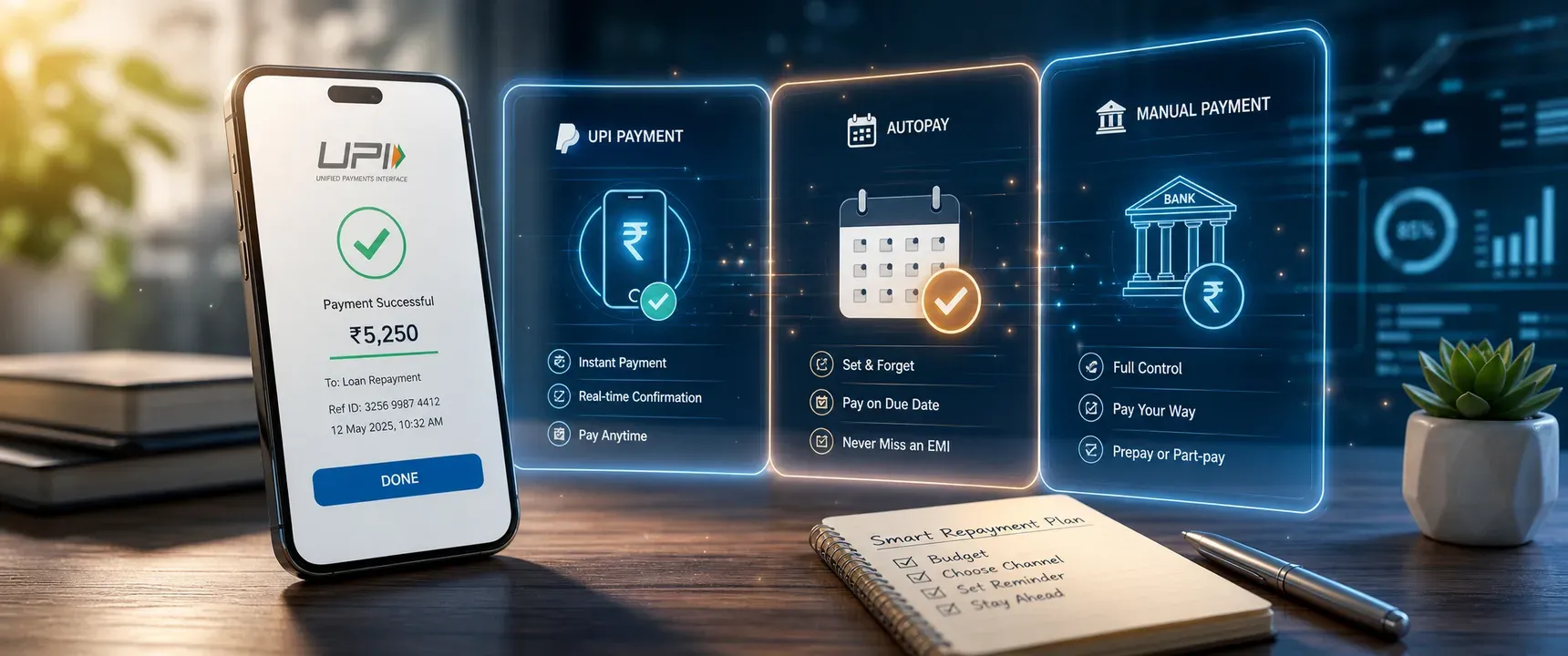
Table of content
Overview
Why repayment channel matters
How UPI loan repayment works
What is autopay loan repayment?
Manual repayment explained
Repayment channel scorecard
Combining channels for safety
What to check before choosing
FAQs
Missing an EMI due date can hurt your credit profile and trigger late fees. For Indian borrowers who use digital lending platforms like mPokket, choosing the right repayment channel after disbursal is just as important as getting approved. UPI, autopay, and manual repayment each carry distinct trade-offs in convenience, failure risk, and control. This scorecard helps you pick the channel that fits your habits and income pattern.
Follow our Whatsapp Community for more offers and updates.
Join nowAfter a digital loan is disbursed, many borrowers focus on spending the funds and forget about repayment mechanics. The channel you choose affects whether your EMI lands on time, how much effort each payment takes, and what happens when something goes wrong.
A missed EMI can result in late fees, a negative mark on your credit profile, and stress during an already tight month. Choosing a reliable repayment channel upfront is a form of financial discipline that protects your borrowing future.
For borrowers on platforms like mPokket, understanding UPI loan repayment, autopay loan repayment, and manual methods helps you match your repayment habit to your income pattern. The scorecard below makes that comparison structured and practical.
UPI (Unified Payments Interface) lets you transfer money from your bank account to the lender using a UPI ID or QR code. When a lender like mPokket supports UPI repayment, you open your UPI app (such as Google Pay, PhonePe, or BHIM), enter the payment details, authenticate with your UPI PIN, and the EMI is settled instantly.
The main advantage is speed and familiarity. Most Indian smartphone users already have a UPI app installed. There is no need to remember net banking credentials or carry a debit card. You get real time confirmation that the payment went through.
The downside is that UPI repayment is manual by nature. You must remember to pay before the due date. If your bank account has insufficient funds at the moment you try, the transaction fails and you need to retry. There is no automatic retry mechanism built into UPI itself.
UPI works well for borrowers who check their phone daily and prefer to control exactly when money leaves their account. It is especially useful for gig workers or freelancers whose income arrives on irregular dates.
Autopay (sometimes called e-mandate, e-NACH, or auto debit) is a pre-authorized instruction you give your bank to deduct a fixed amount on a specific date each month. Once set up, the EMI is pulled automatically without any action from you.
The Reserve Bank of India (RBI) regulates e-mandate frameworks under the National Payments Corporation of India (NPCI). Borrowers typically authorize the mandate during loan onboarding or shortly after disbursal. On mPokket, autopay setup is designed to be part of the in-app repayment configuration.
The biggest benefit is consistency. You do not need to remember due dates or open any app. As long as your account has sufficient balance, the EMI is deducted on schedule. This makes autopay the strongest channel for preventing missed payments.
The risk is that if your account balance is low on the deduction date, the autopay attempt fails. Some banks may charge a bounce fee for failed auto debit attempts. Borrowers with variable income should ensure adequate balance a day before the due date.
Autopay suits salaried employees, working professionals, and anyone with a predictable monthly salary credit. It removes human error from the repayment process entirely.
Manual repayment covers any method where you actively initiate each payment yourself, outside of UPI. This includes net banking transfers, debit card payments on the lender's portal, or using a payment link sent by the lender.
The advantage is maximum control. You decide the exact amount and timing. If you want to make a partial prepayment or pay a lump sum to close the loan early, manual methods give you that flexibility.
The disadvantage is significant: manual repayment has the highest failure risk among all three channels. Forgetting the due date, mistyping account details, or facing a temporary net banking outage can all cause delays. There are no built in reminders or automatic retries.
Manual repayment is best suited for borrowers who plan to prepay or close their loan ahead of schedule. For regular monthly EMIs, it is the least reliable option unless you set your own calendar reminders.
The table below scores UPI, autopay, and manual repayment across five criteria that matter most to Indian borrowers. Each criterion is rated on a simple scale: high, medium, or low.
| Criterion | UPI repayment | Autopay | Manual repayment |
|---|---|---|---|
| Convenience | High (familiar app, quick) | High (zero effort after setup) | Low (requires login each time) |
| Control over timing | High (pay when you choose) | Low (fixed deduction date) | High (full flexibility) |
| Missed EMI risk | Medium (depends on memory) | Low (automatic deduction) | High (easy to forget) |
| Failure handling | Medium (instant feedback, manual retry) | Medium (bounce if low balance) | Low (no automatic retry) |
| Best borrower fit | Gig workers, freelancers, variable income | Salaried employees, fixed income | Prepayers, lump sum closers |
This scorecard is not about declaring one channel the winner. It is about matching the channel to your financial behavior. A salaried professional on mPokket who receives salary on the 1st of every month can set autopay for the 5th and never worry. A delivery partner whose earnings vary weekly might prefer UPI so they can pay when funds are available.
Smart borrowers do not rely on a single channel. Consider setting up autopay as your primary method and keeping UPI as a backup. If the autopay attempt fails due to low balance, you can immediately pay via UPI before the grace period ends.
Platforms like mPokket are designed to send due date reminders through the app and notifications. These reminders act as a safety net regardless of which channel you use. Pairing reminders with autopay creates the lowest possible risk of a missed EMI.
If you plan to make a one time prepayment or close your loan early, switch to manual or UPI for that specific transaction. There is no need to cancel your autopay mandate permanently; just coordinate the timing so you do not get double charged.
Before finalizing your repayment channel, verify a few things. First, confirm that your bank account supports e-mandate or e-NACH if you want autopay. Most major Indian banks do, but some smaller cooperative banks may not.
Second, check whether your UPI app has a transaction limit that covers your EMI amount. UPI transaction limits vary by app and bank, though most support payments well within typical personal loan EMI ranges.
Third, review the lender's policy on failed payments. On mPokket, understanding the grace period and any late fee structure helps you plan a backup payment if your primary channel fails.
Finally, consider your income pattern honestly. If your cash flow is irregular, autopay without a buffer can cause bounced payments. In that case, UPI with a personal calendar reminder may be the safer choice.
Choosing the right repayment channel is a small decision that compounds over your entire loan tenure. Borrowers who match their channel to their income cycle, set up reminders, and keep a backup method rarely face missed EMI stress. Whether you use mPokket or another digital lender, this scorecard gives you a structured way to make that choice confidently.
Yes. If your lender supports UPI repayment, you can pay your EMI using any UPI app linked to your bank account. Platforms like mPokket are designed to accept UPI payments, giving you instant confirmation and flexibility to pay before the due date.
Autopay is a standing instruction that authorizes your bank to automatically deduct your EMI on a fixed date each month. It is regulated under NPCI's e-mandate framework and is designed to help borrowers avoid missed payments without manual effort.
You open your UPI app, enter the lender's payment details or scan a QR code, authenticate with your UPI PIN, and the EMI amount is transferred instantly from your bank account to the lender. The transaction is confirmed in real time.
If your bank account has insufficient funds on the deduction date, the autopay attempt fails. Some banks may charge a bounce fee. You should then pay manually via UPI or net banking before the grace period ends to avoid late fees and credit impact.
UPI repayment is generally better for borrowers with irregular income, such as gig workers or freelancers. It lets you pay when funds are available rather than on a fixed date, reducing the risk of a failed auto debit attempt.
How to Choose the Right Urgent Personal Loan During Financial Emergencies
4 min read • 10 August 2026
₹1,000 Instant Loan: Why Can the Amount Credited Be Lower Than the Sanctioned Amount?
3 min read • 11 October 2026
10 money management tips you can take to the bank
2 min read • 6 December 2024
