3 mins min read • 2 November 2026


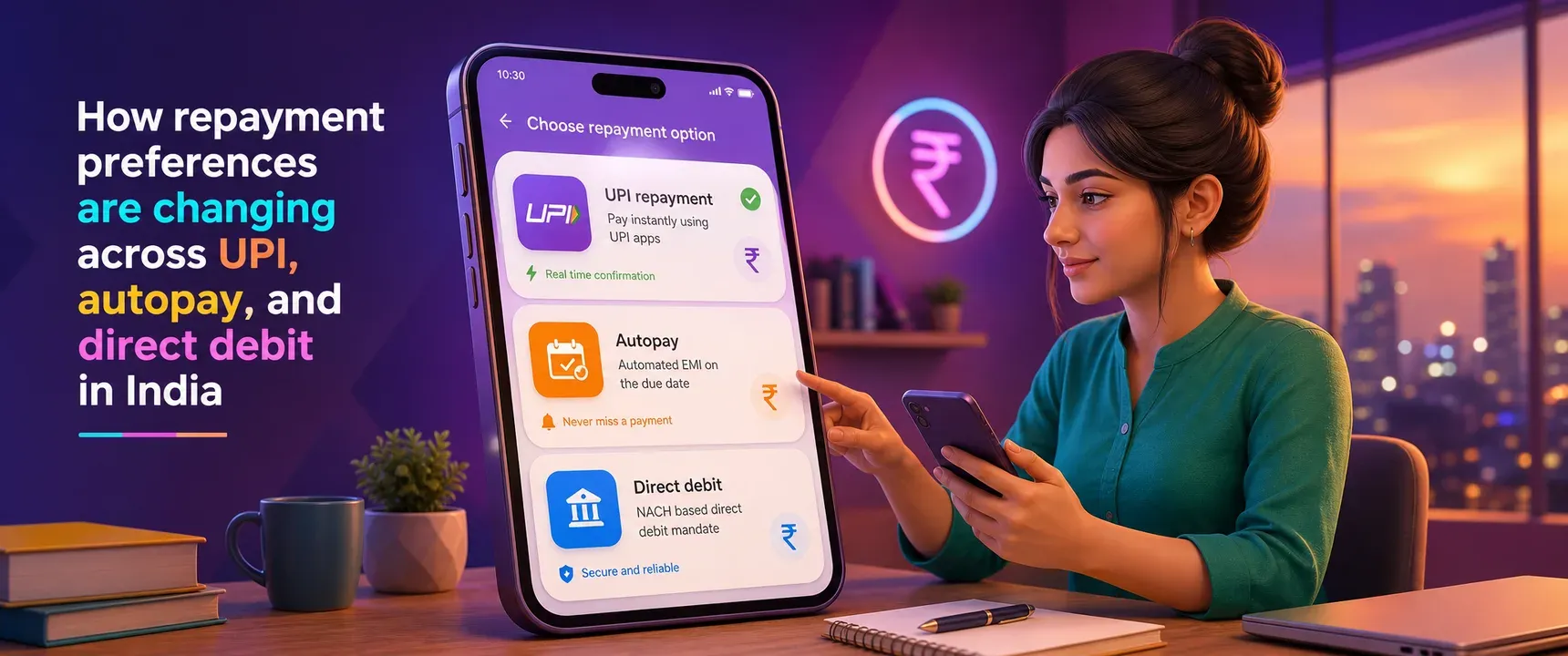
Table of content
Overview
Why repayment deserves attention
UPI for loan repayment
Autopay for recurring EMIs
Direct debit through NACH
Comparing the three methods
What is driving the shift
How mPokket approaches repayment
FAQs
Every borrower remembers the moment they received their loan. Fewer think about how they will pay it back until the first EMI date arrives. For personal loan customers in India, the repayment experience now matters as much as the disbursal speed. UPI transactions crossed 16.6 billion in a single month (NPCI, 2024), autopay mandates are growing across lending apps, and direct debit remains a backbone for scheduled EMI collection. mPokket recognizes that understanding these shifting repayment preferences is essential for borrowers who want convenience, control, and on time repayment.
Follow our Whatsapp Community for more offers and updates.
Join nowMost discovery content about personal loans focuses on eligibility, interest rates, and disbursal speed. Repayment gets treated as an afterthought. That gap creates real problems for borrowers.
A missed EMI can damage a credit profile. A confusing repayment process can cause anxiety every month. For digitally active users in India, especially freshers, gig workers, and salaried professionals, the repayment channel shapes the entire post disbursal experience.
mPokket approaches repayment as a design problem, not just a collections function. The goal is to give borrowers clear, convenient, and controllable ways to pay back their loans.
UPI has become India's default payment rail. The Unified Payments Interface processed over 131 billion transactions in FY 2023 to 2024 (NPCI, 2024). Its reach into loan repayment was inevitable.
When a borrower chooses UPI loan repayment, they open their lending app, select the EMI due, and complete payment through any UPI enabled app. The transaction settles in real time. The borrower receives instant confirmation that the payment reached the lender.
This process does not require sharing debit card numbers or net banking credentials. It works on a mobile phone with a linked bank account, which suits borrowers who prefer app based interactions.
Why borrowers prefer UPI
Control is the primary driver. UPI lets borrowers decide exactly when to pay, down to the minute. For someone whose salary arrives on the 1st but whose EMI falls on the 5th, UPI offers the flexibility to pay once funds are available.
Speed matters too. Unlike cheque based or NEFT based repayments, UPI confirms the transaction instantly. There is no ambiguity about whether the payment was received.
mPokket supports UPI repayment because it aligns with how young Indian borrowers already transact. A fresher paying rent through UPI expects to repay a loan the same way.
The borrower sets up an e-mandate, typically through UPI autopay or the National Automated Clearing House (NACH) framework governed by NPCI and RBI. Once active, the lender initiates a debit request on the EMI due date. The bank processes it automatically.
If the account has sufficient funds, the EMI is collected without any action from the borrower. The borrower receives a notification confirming the deduction.
Salaried employees with predictable income find autopay especially useful. Their salary arrives on a fixed date, and the EMI deducts shortly after. There is no risk of forgetting.
Borrowers who travel frequently or have busy schedules also benefit. Autopay ensures on time repayment even when the borrower is not actively checking their app.
mPokket offers autopay options designed to help borrowers maintain disciplined repayment without manual effort. This is designed to reduce missed EMI incidents and support credit building over time.
Direct debit predates UPI in India's digital payment ecosystem. The NACH framework, managed by NPCI under RBI oversight, allows lenders to pull EMI amounts directly from a borrower's bank account on scheduled dates.
Unlike UPI, where the borrower initiates payment, direct debit is lender initiated. The borrower authorizes the mandate once, and the lender triggers the debit each cycle. Settlement happens through batch processing, which can take a few hours rather than seconds.
Direct debit does not require the borrower to have a UPI app. It works through the banking system itself, making it accessible even to borrowers who are less comfortable with UPI.
For longer tenure loans and larger EMI amounts, direct debit through NACH remains reliable. Banks and NBFCs have used it for years, and the infrastructure is well established.
However, younger borrowers increasingly view NACH as a legacy system. They want the instant feedback loop that UPI provides. This generational shift is reshaping how lenders like mPokket think about repayment architecture.
| Feature | UPI repayment | Autopay (UPI or NACH) | Direct debit (NACH) |
|---|---|---|---|
| Who initiates payment | Borrower | Lender (after borrower mandate) | Lender (after borrower mandate) |
| Settlement speed | Real time | Real time (UPI) or batch (NACH) | Batch processing |
| Confirmation to borrower | Instant | Notification after deduction | Notification after deduction |
| Requires UPI app | Yes | Yes (UPI autopay) or No (NACH) | No |
| Borrower control over timing | Full (pay anytime before due date) | Limited (fixed date) | Limited (fixed date) |
| Risk of missed payment | Higher (manual action needed) | Lower (automatic) | Lower (automatic) |
| Best suited for | Borrowers who want flexibility | Salaried borrowers with fixed income | Borrowers without UPI access |
This comparison shows that no single method is universally best. The right choice depends on the borrower's income pattern, tech comfort, and preference for control versus automation.
Several forces are pushing Indian borrowers toward UPI and autopay, and away from purely manual or legacy repayment channels.
First, smartphone penetration continues to rise. India had over 500 million smartphone users as of 2024 (Ministry of Electronics and IT, Government of India). More smartphones mean more UPI capable devices.
Second, RBI's push for digital payments infrastructure has made e-mandates easier to set up. The introduction of UPI autopay in 2020 gave borrowers a familiar interface for recurring payments.
Third, app based lenders like mPokket have designed repayment flows that prioritize mobile first experiences. When the entire loan journey, from application to disbursal to repayment, happens on a phone, borrowers expect repayment to feel as smooth as ordering food.
mPokket is designed to offer multiple repayment channels so borrowers can choose what works for their situation. Whether a borrower prefers the hands on control of UPI, the set it and forget it convenience of autopay, or the familiarity of direct debit, the platform aims to accommodate that preference.
This approach reflects a broader principle in digital lending: repayment should not be a source of stress. When borrowers have clear options, due date reminders, and transparent terms (including the Key Fact Statement mandated by RBI), they can repay on time and build a positive credit history.
For freshers taking their first loan, gig workers with irregular cash flow, or salaried professionals managing month end expenses, the ability to choose a repayment method that fits their rhythm can make the difference between a missed EMI and a clean repayment record.
Borrowers considering a personal loan through mPokket can explore the repayment options available within the app. Understanding these choices before borrowing helps set realistic expectations and supports disciplined repayment from the start.
Yes. Many digital lenders, including mPokket, support UPI as a repayment method. You can pay your EMI directly from your bank account using any UPI enabled app, and the payment confirms in real time.
Autopay is a standing instruction that automatically deducts your EMI from your bank account on the due date. It uses e-mandate frameworks like UPI autopay or NACH, so you do not need to remember to pay manually each month.
You open your lending app, select the EMI amount due, and complete the payment through a UPI app linked to your bank account. The transaction settles instantly, and you receive immediate confirmation that the lender received your payment.
Autopay loan repayment is an automatic deduction system where the lender debits your EMI from your bank account on a scheduled date each month. Once you authorize the e-mandate, no manual action is needed for each payment cycle.
If a UPI loan payment fails due to insufficient funds or a technical issue, the EMI remains unpaid. You should retry the payment before the due date or contact your lender. Repeated failures can result in late fees and may affect your credit profile.
What Are the Eligibility Requirements for an Instant Rs. 1000 Loan?
3 min read • 5 June 2026
Need ₹10,000 Urgent Loan Today — What Should You Do To Get It Fast?
4 min read • 30 April 2026
How to Choose the Right Urgent Personal Loan During Financial Emergencies
4 min read • 10 August 2026
How digital lending works in India step by step
5 min read • 10 September 2026
