5 min read • 10 September 2026


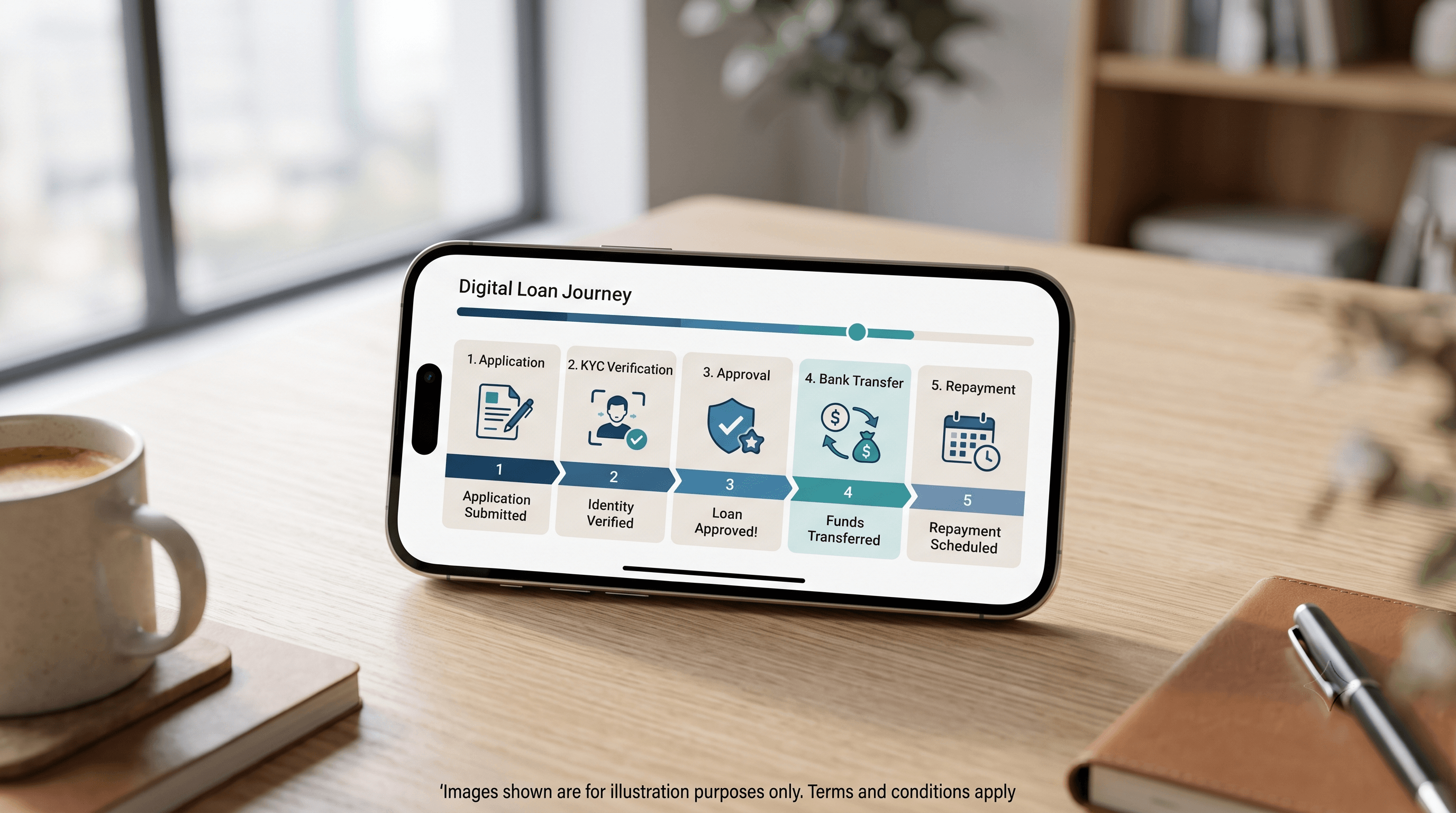
Table of content
TL;DR - Summary
What is digital lending?
How does it work?
What affects speed?
What should borrowers check?
FAQs
External References
How digital lending works in India, step by step?
If you need money quickly, the hardest part is often not the application. It is understanding what actually happens after you tap apply. This guide explains how digital lending works in India, step by step, with the borrower journey mPokket is designed around, from mobile registration and digital KYC to approval, bank disbursal, and repayment.
What is digital lending? - Digital lending is a paperless borrowing process completed mainly through a mobile app or online platform. In India, it usually includes registration, identity checks, eligibility review, approval, direct bank transfer, and in app repayment.
How does the process work? - Most borrowers start by entering a mobile number, completing profile details, and submitting PAN and Aadhaar based KYC. The lender then reviews identity, basic eligibility, and repayment capacity before approving and sending funds to a verified bank account.
Why do loan apps feel instant? - Loan apps can move faster because document collection, verification, and decisioning happen digitally. Speed still depends on complete details, successful KYC, and bank account validation.
Follow our Whatsapp Community for more offers and updates.
Join nowDigital lending means applying for and managing a loan through a phone or computer instead of relying on branch visits and paper forms. For personal borrowers in India, this usually means a loan app experience that covers the full journey in one place.
In simple terms, the lender collects your details digitally, verifies your identity, checks whether you meet its eligibility rules, and if approved, transfers the loan amount to your bank account. Repayment also happens digitally, often through UPI, autopay, debit card, or in app payment methods.
That is why digital lending is often called paperless lending or mobile first borrowing. The main difference is not just convenience. It is that each stage, identity verification, approval, disbursal, and repayment, is structured to happen online.
The process usually starts with app download and mobile number registration. After OTP verification, the borrower fills in basic profile details such as name, date of birth, and contact information. This creates the initial application record.
Next comes digital KYC. In India, many digital loan journeys use PAN and Aadhaar verification to confirm identity. Some lenders may also ask for a selfie, bank details, or proof of occupation and income. The exact document set can vary by borrower type and product.
After KYC, the lender checks eligibility. This review may include age, Indian nationality, bank account verification, income stability, existing repayment obligations, and credit profile. For some first time borrowers, lenders may also use alternative assessment methods when a long credit history is not available.
Once the review is complete, the lender decides whether to approve the application and on what terms. That can include the loan amount, tenure, repayment schedule, and any EMI repayment option. The borrower usually sees these terms in the app before accepting them.
After acceptance, disbursal begins. In a typical digital lending flow, the money is sent through direct bank transfer to the verified bank account linked to the application. This is why correct bank details matter. A mismatch can delay transfer even after approval.
Repayment happens on the agreed due dates. Depending on the loan structure, borrowers may repay through EMI, scheduled autopay, UPI, debit card, or another in app option. A good digital lending experience also lets the borrower track due dates, payment status, and remaining balance inside the app.
Many people ask how loan apps give instant loans. The short answer is that the process is compressed, not skipped. Digital systems can collect data quickly, verify documents faster, and reduce manual back and forth.
Still, instant does not mean automatic approval for everyone. Speed usually depends on whether your KYC details match, whether your profile is complete, whether the lender can verify your bank account, and whether you meet the product's eligibility conditions.
For example, a borrower with clear PAN and Aadhaar details, a reachable mobile number, and a verified bank account will usually move through the journey faster than someone whose details do not match across documents. Bank processing timelines can also affect how quickly funds appear after approval.
This is also why digital lending can feel simpler for first time users. Instead of handling multiple paper steps, they can move from application to repayment inside one mobile flow. mPokket fits into this model by framing borrowing around a mobile first journey that borrowers can understand and manage more easily.
Before applying, focus on the full borrowing cycle, not only the speed of approval. Check the KYC requirements, the repayment mode, your due date, the tenure, and whether the monthly payment fits your budget. A fast disbursal matters less if the repayment plan is not manageable.
It also helps to confirm that the bank account you want to use for disbursal is active and in your control. Since digital lending in India often relies on verified direct bank transfer, accurate account information is part of a smooth experience.
Finally, repay on time and keep proof of payment. That is especially important if you use UPI or another manual method. In digital lending, the app is not just where you borrow. It is where you monitor your loan, stay on schedule, and reduce the risk of missed payments.
If you are new to online borrowing in India, start by understanding the steps before you compare products. When the process is clear, it becomes easier to judge whether a digital lender and its repayment structure match your actual need, whether that is a short cash crunch or a planned expense.
1. How does digital lending work in India?
Digital lending in India usually starts with mobile registration and OTP verification, followed by digital KYC, eligibility review, approval, bank disbursal, and app based repayment through EMI, UPI, autopay, or similar methods.
2. How do loan apps give instant loans?
Loan apps can feel instant because registration, document upload, KYC, and approval checks happen digitally. The actual speed still depends on complete information, successful verification, and transfer to a verified bank account.
3. What documents are commonly used in digital lending in India?
Common documents and checks include PAN, Aadhaar, mobile number verification, bank details, and sometimes proof of occupation, income proof, or a selfie for identity confirmation, depending on the lender and loan type.
Third-party sources cited inside this article