4 mins min read • 14 October 2026


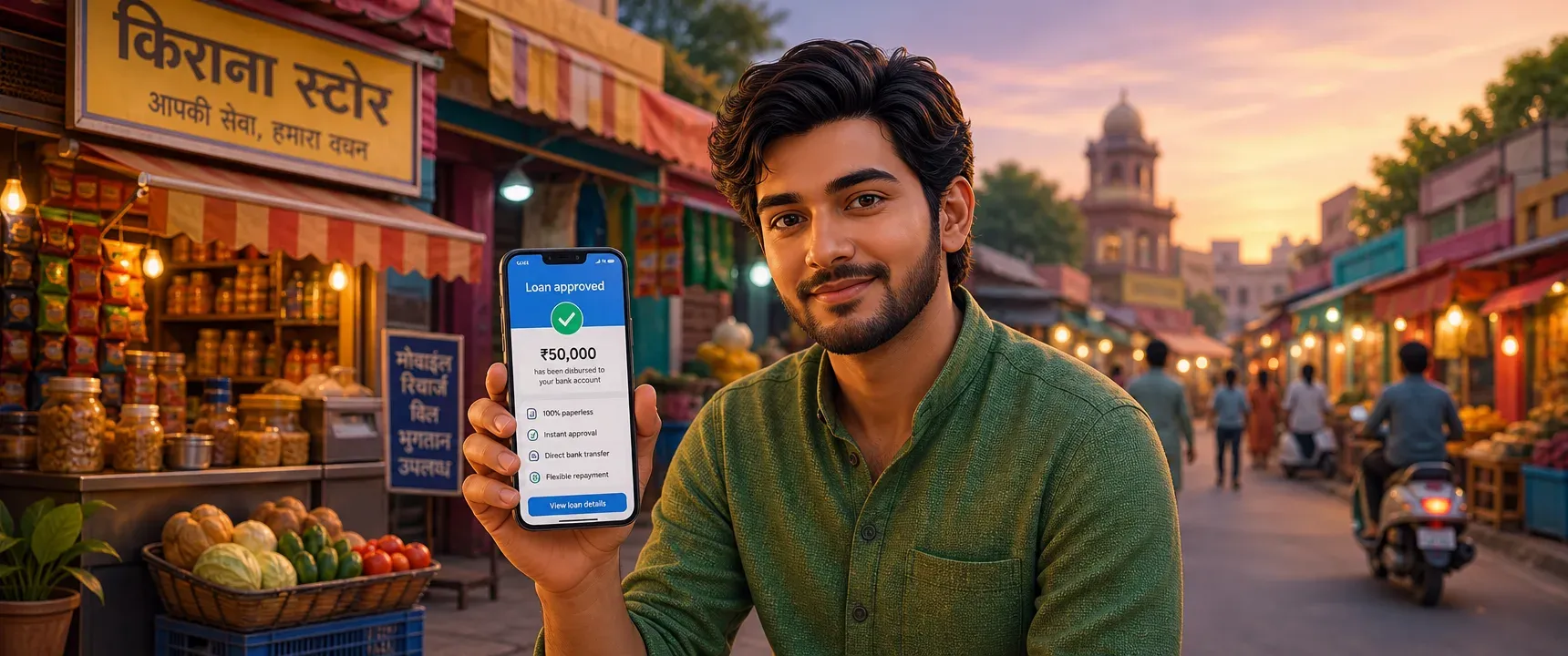
Table of content
Summary
Why branches fail non metro borrowers
Who benefits from paperless access?
How does digital lending actually work here?
Repayment that fits real life
Building credit beyond city limits
FAQs
Why does mobile first matter outside metros? - Non metro borrowers rarely have nearby bank branches or the luxury of weekday office visits. A mobile first lender like mPokket removes geography from the equation by offering a 100 percent online process, from application through disbursal, on a smartphone.
What makes mPokket relevant for diverse borrowers? - mPokket is designed to serve salaried employees, self employed professionals, housewives, freshers, gig workers, and freelancers. Paperless KYC using Aadhaar and PAN, minimal documentation, and alternative data assessment can help borrowers who lack traditional credit histories access formal credit.
How does digital lending reach non metro India? - Digital lending platforms like mPokket use OTP based verification, digital document submission, and direct bank transfer to deliver funds without requiring a branch visit. This branchless borrowing model is designed to work wherever a stable internet connection exists.
Follow our Whatsapp Community for more offers and updates.
Join nowTraditional lending assumes proximity to a branch. For borrowers in tier 2, tier 3, and rural India, that assumption breaks down fast. Traveling to a bank can mean a lost workday, transport costs, and paperwork that demands documents many self employed or first time borrowers simply do not have.
mPokket addresses this gap with a branchless borrowing model. The entire journey, from app download and digital KYC to approval and bank account disbursal, happens on a mobile device. No branch visit is required. No courier. No waiting room.
This matters because financial inclusion is not just about offering a product. It is about removing every friction point that keeps a borrower from accessing it. When a cab driver in Lucknow or a tiffin service owner in Nagpur can apply during a break and receive funds within the same day, the lender has met the borrower where they actually are.
Non metro India is not a single demographic. It includes salaried employees at small firms, self employed professionals running local shops, housewives managing household budgets, freshers entering the workforce, gig workers with irregular cash flow, and freelancers juggling project based income.
mPokket is designed to serve this range. Paperless loan applications using Aadhaar and PAN based digital KYC can help reduce the documentation burden. Alternative data assessment can help evaluate borrowers who may not have a formal credit score or a traditional salary slip.
Consider a housewife in Jaipur who wants a small loan for a stitching venture. She may not have income proof in the conventional sense. A mobile first lender that uses alternative assessment and minimal documentation is designed to give her a realistic path to formal credit, rather than shutting the door at the eligibility stage.
Similarly, a delivery partner in a smaller city earns variable income weekly. A platform that accepts alternative data and offers flexible repayment can help bridge the gap between irregular earnings and fixed monthly obligations.
Digital lending in India, as practiced by platforms like mPokket, follows a streamlined process. The borrower downloads the loan app, completes OTP based verification, uploads Aadhaar and PAN for digital identity verification, and submits proof of occupation or income where applicable.
Approval can happen within minutes. Funds are transferred directly to the borrower's verified bank account. The entire process is designed to be 100 percent online, with no physical paperwork exchanged at any stage.
For non metro borrowers, this paperless process is not a convenience upgrade. It is the difference between having access and not having it. A fresher in Bhopal with a starting salary and no credit history can apply for a personal loan without needing to produce months of bank statements or visit a branch that may be hours away.
Earning patterns outside metros are often less predictable than a fixed monthly salary. Gig workers, freelancers, and small business owners may see income fluctuate week to week. A rigid EMI structure can create unnecessary stress.
mPokket offers flexible repayment options that are designed to accommodate this reality. Borrowers can choose their EMI tenure, repay through UPI, set up autopay to avoid missed due dates, or opt for lump sum repayment when cash flow allows. These repayment modes are accessible directly within the app.
This flexibility is designed to help borrowers manage repayment without defaulting during lean periods. For a shopkeeper restocking inventory before a festival or a freelancer waiting on a client invoice, the ability to align repayment with actual cash flow can reduce financial pressure significantly.
One overlooked benefit of mobile first lending for non metro borrowers is credit building. Many first time borrowers, whether freshers, housewives, or gig workers, have no formal credit history. Without a starting point, they remain invisible to the traditional financial system.
By borrowing responsibly and repaying on time through a platform like mPokket, these borrowers can begin building a credit profile. Disciplined borrowing and repayment through a digital lending platform is designed to help establish the kind of track record that opens doors to larger financial products later.
This is where financial inclusion moves from a policy phrase to a practical outcome. A woman running a home based tiffin service in a small town, who takes and repays a small loan through mPokket, is not just solving a short term cash need. She is creating a financial identity.
Digital lending relevance is not defined by geography. It is defined by whether the product actually works for the person using it. mPokket is designed to make that answer yes, regardless of whether the borrower lives in Mumbai or Muzaffarpur. The combination of paperless application, alternative assessment, flexible repayment, and direct bank transfer creates a lending experience that can help meet non metro borrowers on their own terms.
Digital lending in India uses mobile apps and online platforms to process loan applications, verify identity through Aadhaar and PAN based digital KYC, and disburse funds directly to a borrower's bank account. Platforms like mPokket are designed to complete this process without any branch visit or physical paperwork.
Yes. Mobile first lenders like mPokket can use alternative data assessment to evaluate borrowers who lack a formal credit score. This is designed to help first time borrowers, freshers, housewives, and gig workers access formal credit through minimal documentation and digital verification.
Small town borrowers often lack easy access to bank branches. A paperless loan through mPokket removes that barrier by offering a 100 percent online process, from application through disbursal, using only a smartphone, Aadhaar, and PAN card.
mPokket offers flexible repayment options including UPI loan repayment, autopay EMI, and customizable tenure selection. These features are designed to help gig workers and freelancers align repayment with their actual cash flow rather than a fixed monthly schedule.
Need ₹10,000 Urgent Loan Today — What Should You Do To Get It Fast?
4 min read • 30 April 2026
How Digital Lending Helps Students in India
4 min read • 6 May 2026
Working Capital Loan: Everything Small Businesses Should Know
5 min read • 17 July 2026
How digital lending works in India step by step
5 min read • 10 September 2026
What Are the Advantages of Using a Short-Term Loan for Emergencies?
3 min read • 2 June 2026