3 mins min read • 9 November 2026


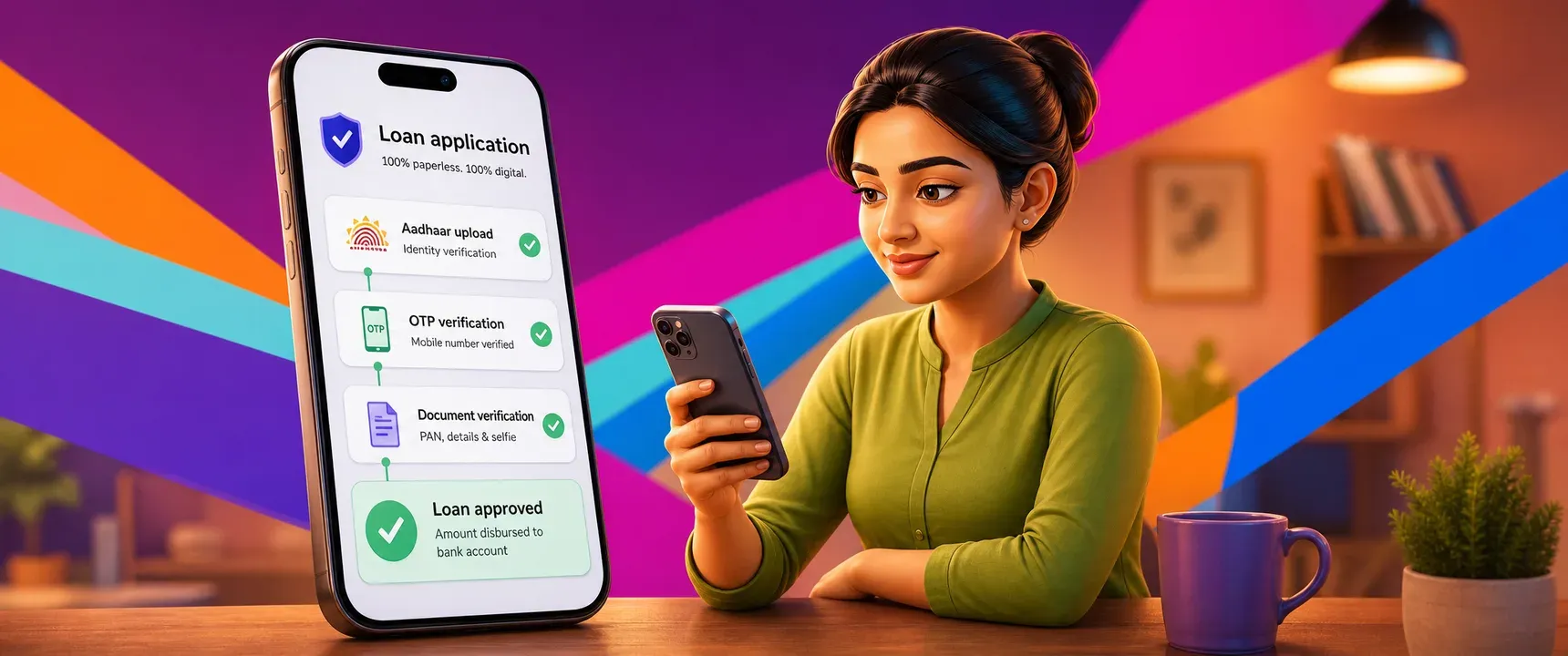
Table of content
Overview
What does paperless mean?
Steps in a paperless loan journey
Why each document matters
FAQs
Borrowers across India search for loans they can get without visiting a branch or printing a single page. Yet many hesitate at the application screen, unsure whether a fully online process is legitimate or what personal details they will need to share. mPokket helps borrowers understand exactly what a paperless loan involves so they can move forward with confidence.
Follow our Whatsapp Community for more offers and updates.
Join nowA paperless loan eliminates every offline touchpoint in the borrowing journey. The borrower downloads a loan app, fills in basic personal information, and uploads identity documents digitally. Verification, credit assessment, approval, and fund transfer all happen within the app or platform.
Traditional lending requires printed forms, notarized copies, and in person visits. A paperless process replaces those steps with digital document upload, OTP based digital KYC, and electronic agreements. The borrower signs a Key Fact Statement and loan agreement on screen.
mPokket, for example, is designed to let eligible borrowers complete the entire process on a mobile device. Funds can be disbursed directly to a verified bank account after approval, often within minutes.
The typical digital loan application follows a clear sequence. Understanding each step can help reduce confusion before KYC submission.
App download and registration. The borrower installs the loan app and registers with a mobile number. Profile completion includes basic details such as name, date of birth, and address.
Document upload. The app requests Aadhaar card and PAN card images. These serve as government issued identity and address proof. Some lenders also ask for a selfie to match the applicant's face against the Aadhaar photo.
eKYC and verification. OTP based verification confirms the borrower's Aadhaar and mobile linkage. This digital KYC step replaces the traditional in person verification that banks require. The RBI's digital lending guidelines (RBI, 2022) require regulated entities and their lending service providers to perform adequate KYC before disbursing funds.
Credit assessment and approval. The lender evaluates the application using the uploaded documents, bank account activity, and other data points. Approval can happen within minutes on platforms like mPokket.
Loan agreement and disbursal. Once approved, the borrower reviews the Key Fact Statement, which discloses the interest rate, tenure, EMI amount, and total repayment. After accepting the terms, the loan amount is transferred directly to the borrower's verified bank account.
First time borrowers sometimes worry about sharing Aadhaar, PAN, or bank details online. Each piece of information serves a specific, regulated purpose.
Aadhaar enables OTP based identity verification without a branch visit. PAN links the borrower to their tax identity, which is mandatory for financial transactions above certain thresholds. Selfie verification adds a layer of fraud prevention by matching the live photo to the ID document.
Bank account details ensure the loan amount reaches the correct account and that repayments can be processed. Legitimate digital lenders like mPokket follow RBI norms that require funds to be disbursed only to the borrower's own verified bank account, not to a third party wallet or intermediary.
Before sharing any data, borrowers should confirm the app is associated with an RBI regulated entity. Checking for a clear privacy policy and a published Key Fact Statement are practical ways to verify legitimacy.
A paperless loan is not a shortcut around compliance. It is a digitally enabled version of the same checks a bank performs, completed faster and without printed forms. mPokket is designed to combine this convenience with the transparency borrowers deserve, so the process feels straightforward rather than opaque. If you are considering a paperless loan, review the Key Fact Statement carefully and confirm the lender's regulatory status before you proceed.
Most paperless lenders ask for Aadhaar, PAN, a selfie for identity matching, and bank account details. All documents are uploaded digitally through the app, and verification happens via OTP based eKYC.
Download a legitimate loan app like mPokket, register with your mobile number, upload Aadhaar and PAN, complete OTP based eKYC, and review the Key Fact Statement. After approval, funds transfer directly to your bank account.
Paperless loans from RBI regulated lenders follow strict digital lending guidelines. Borrowers should verify the lender's regulatory status, read the privacy policy, and confirm that disbursal goes to their own verified bank account.
What is CKYC? Central KYC Registry Explained
3 min read • 26 September 2025
What Is a Fully Digital Loan Application Process? Steps, Documents & Approval Timeline
4 min read • 11 May 2026
Working Capital Loan, Cash Credit, or Overdraft: Which One Actually Fits Your Business?
3 min read • 16 September 2026
5 Reasons Your Business Needs a Working Capital Loan
4 min read • 28 July 2026
