4 min read • 11 May 2026


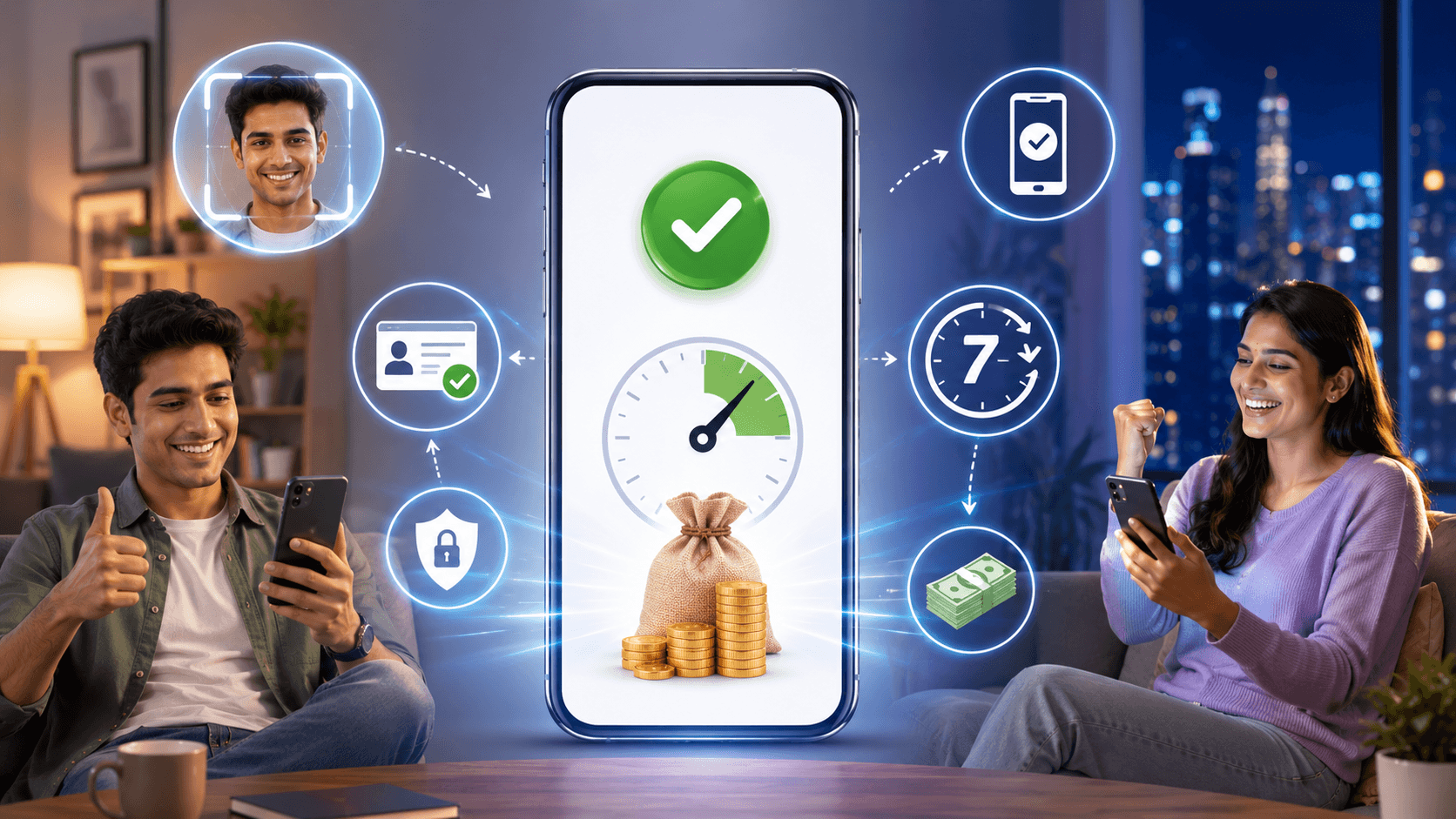
Table of content
What is an End-to-End Digital Loan Application?
What are the Steps for Applying For a Digital Loan Using an Instant Personal Loan App?
How Do Loan Apps Verify Documents and Bank Details Online?
What Is the Approval and Disbursement Process for Digital Loans?
Is Application for Fully Digital Loan Safe and in Line with RBI Requirements?
Traditional Bank Loans vs Instant Personal Loan Apps: What Is the Difference?
How Can You Improve Approval Chances?
Conclusion
Maybe your laptop stopped working before a deadline, rent is due but salary is delayed, or a business opportunity showed up suddenly. In situations like these, waiting for a traditional loan simply doesn’t make sense anymore.
That’s exactly why digital lending is growing so fast. Today, an instant personal loan app can approve and disburse money faster than ordering food online.
Even better, digital lending has made borrowing more accessible for everyone, including people who don’t have a traditional salary slip, high CIBIL score, or long credit history.
In this blog, we’ll walk you through how the fully digital loan process actually works, the exact steps inside loan apps, documents required, approval timelines, safety and RBI compliance, and how these apps compare with traditional bank loans.
Follow our Whatsapp Community for more offers and updates.
Join nowAn entirely paperless borrowing process where borrowers don't have to submit any documents physically or visit branches is referred to as digital loan application. The loan application process is fully automated using sophisticated AI underwriting and secure API-based banking services.
Upon applying, your creditworthiness is analyzed using real-time credit checks and digital bank verifications within minutes. It is convenient, highly effective, and a secure process to access credit anytime.
In contrast to other traditional borrowing systems, a digital platform analyses thousands of data points related to cash flows and expenditures patterns in real-time.
Applying for a digital loan is a simple process involving downloading the app, verifying yourself, choosing terms and conditions, and signing the electronic agreement. See below for the detailed process:
Step 1: Register Yourself and Check Your Eligibility
By entering your phone number and verifying with an OTP, you can begin the loan application process. After that, you will enter your PAN number, which will be used to check your credit history and instantly generate an eligibility preview showing you the amount you are eligible for.
Step 2: Provide Personal and Employment Details
Your details like salary and type of occupation will be asked to know if you are able to repay the loan.
Step 3: Set Loan Amount and Repayment Period
The amount and tenure can be customized using the slider options available in the app. Based on your chosen EMI tenure, you will get real-time eligibility estimates.
Step 4: Final Loan Offer and Digital E-Signing
After getting an overview of your final offer and document verification, you will sign the loan agreement by selecting an Aadhar-based e-Sign or regular digital signature option.
Read to know more about - What Documents Are Actually Needed for Digital Loans
Loan apps use three ways to verify your identity and income using digital means without requiring physical documentation. These are e-KYC, secure bank login, and advanced AI-based verification processes. Here’s how each step works.
What Is e-KYC and Video KYC?
e-KYC uses Aadhaar OTP verification to confirm your identity instantly. Many apps also ask for a selfie or short live video to match your face. This helps confirm it’s really you and keeps fraud away.
How Are Income and Bank Statements Verified?
Instead of downloading and uploading PDFs, you simply log in to your bank account securely. The app gets read-only access to your transactions and checks your income and spending automatically. It’s quick, safe, and saves a lot of effort.
Why Is Auto-Debit (e-NACH) Setup Required?
This is basically a reminder that pays your EMI for you. You give permission once, and your EMI gets auto-deducted from your bank every month. This way you don’t miss payments, avoid late fees, and keep your credit score healthy.
Once you sign the document digitally, the disbursement process begins. In a few minutes' time, you can see your credit limit or eligibility for the loan. As approval is quick, disbursals of cash can take anything between 10 minutes to a few hours depending upon the app.
Popular digital loan platforms partner with RBI-approved NBFCs and follow stringent norms set out by them. It is always advisable to verify the lending company on its website or "about us" page before initiating an application process.
RBI compliant apps have secure data encryption policies, which means no one will access your data. You should ensure to get a Key Fact Statement with Transparent APR before finalizing the loan offer.
The main difference is speed and accessibility. Traditional banks focus on physical presence and collateral, while digital apps prioritize speed and data-driven convenience. Here’s a quick comparison.
Branch visits vs fully online
Traditional loans require multiple branch visits and physical meetings. Digital apps allow you to apply anytime from your phone without stepping outside.
Paperwork vs minimal documentation
Banks often require salary slips, printed statements, and physical forms. Apps use digital verification and alternative data, making them ideal for a loan for self-employed professionals, freelancers, gig workers, and individuals without a proof of stable income.
Days/weeks vs minutes/hours approval
Bank approvals may take days or weeks. Instant apps provide eligibility results in minutes and disbursal within hours.
Limited hours vs 24/7 access
Banks operate during fixed hours. Loan apps are available 24/7, so you can apply anytime you need funds.
In order to increase chances of loan approval, you must demonstrate creditworthiness via your digital profile. For this purpose, follow these tips:
Regular EMI auto-debit payment: Make sure your bank has enough balance for the e-NACH mandate and your repayments stay consistent. Continuous timely repayments can greatly enhance your internal credit score.
Building up your credit score: To start getting bigger loans, first get small loans and repay them promptly. By this practice, you can build your credit history.
Reasons for Rejection: Usually applications are rejected due to incorrect PAN information, low monthly income, and high debt-to-income ratios.
Tips for Improving Approval Chances: Maintain a lower debt-to-income ratio; also, link your mobile number to Aadhar for fast verification. Showing a consistent income stream, even as a freelancer, can make AI believe you will repay the loan.
Watch this to boost your credit limit!
It is a well-known fact that financial emergencies do not observe banks' opening hours. Therefore, the same principle should apply to obtaining credits. Understanding how these paperless loans work, including the process of e-KYC and AI-based underwriting, one can conclude that modern technologies make borrowing transparent and user-friendly.
As seen above, technology takes care of everything, turning an otherwise complicated process into a reliable and smooth experience. Now you know exactly what's going on in the background when applying for a loan. This means that you are well-equipped to use these technologies to your advantage.
Download mPokket app today and instantly know about your real-time eligibility.
Need ₹10,000 Urgent Loan Today — What Should You Do To Get It Fast?
4 min read • 30 April 2026
How To Get An Instant Loan Without Documents Online In India?
4 min read • 29 April 2026
What Young Professionals Should Know About Borrowing Before Taking a Loan
4 min read • 7 May 2026
What Documents Are Actually Needed for Digital Loans
5 min read • 7 May 2026
Which Is The Most Trusted Loan App In India?
4 min read • 1 May 2026