4 mins min read • 23 November 2026


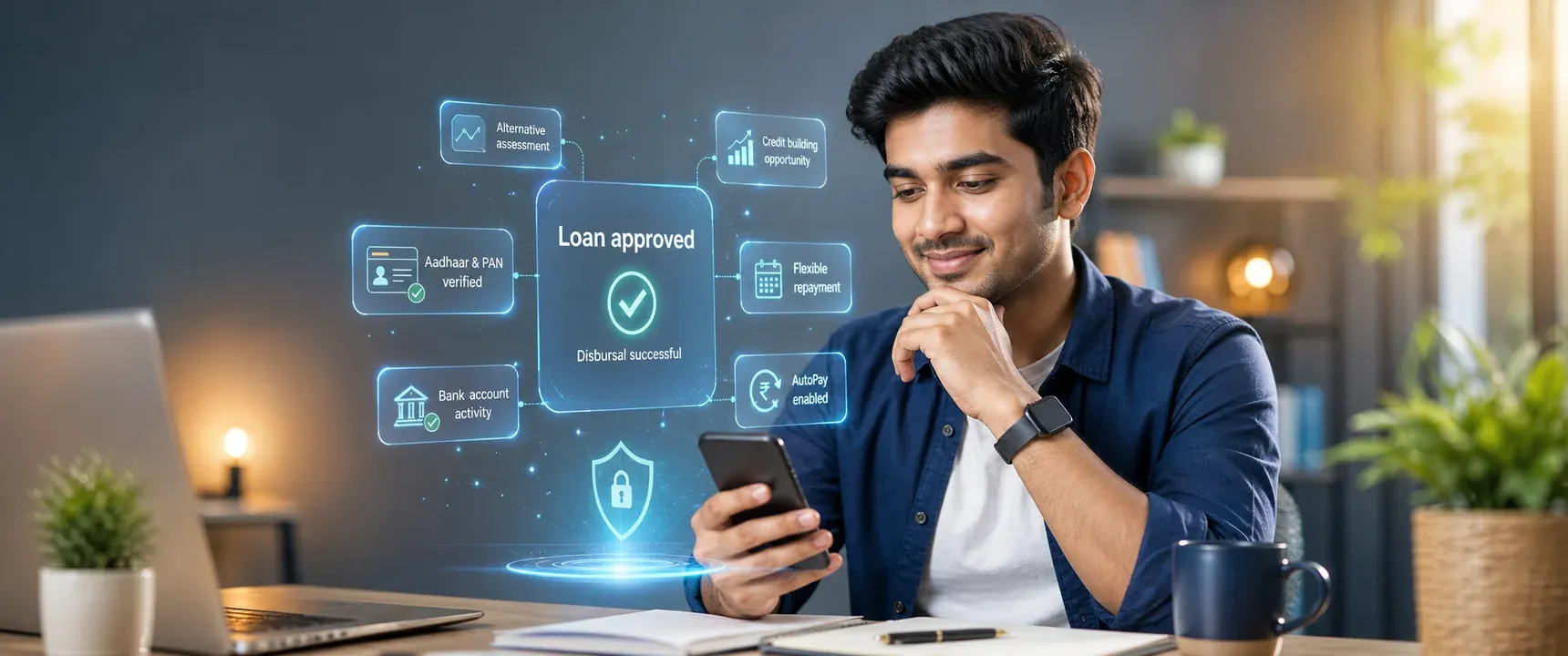
Table of content
Summary
Why credit history matters
Who qualifies as a first time borrower?
Step by step: your first loan
How repayment builds your score
Common mistakes to avoid
Why mPokket works for new borrowers
FAQs
What is a credit history? - A credit history is a record maintained by credit bureaus like CIBIL that tracks your borrowing and repayment behavior. Lenders check this record before approving loans or credit cards. Without any record, you are considered "credit invisible," which makes approvals difficult.
Can I get a loan without credit history? - Yes. Digital lenders like mPokket use alternative data such as Aadhaar, PAN verification, and bank account activity to assess first time borrowers. A small, collateral free loan from mPokket can help you start building that missing record.
How does a small loan build credit? - When you borrow from an RBI regulated lender and repay on time, the lender reports your repayment to credit bureaus. Each on time payment adds a positive entry to your credit file, gradually creating a score that future lenders can evaluate.
What mistakes should first time borrowers avoid? - Missing even one EMI due date, borrowing more than you can repay, and applying to multiple lenders simultaneously can all damage a new credit profile. Borrow only what you need and set up autopay or reminders to stay on track.
Follow our Whatsapp Community for more offers and updates.
Join nowA credit history is your financial reputation in numeric form. In India, bureaus like CIBIL compile data from banks, NBFCs, and digital lenders into a score that typically ranges from 300 to 900. A higher score signals responsible borrowing.
Without any entries in this file, you are "new to credit" or "credit thin." Banks often reject such applicants outright. Even landlords and employers sometimes check credit reports. Starting early gives you a measurable advantage.
Students, recent graduates, interns on stipends, homemakers entering the workforce, and gig workers often fall into this category. They may earn enough to repay a small loan but lack formal credit records.
mPokket is designed to help exactly these profiles. The app uses Aadhaar and PAN based digital KYC, so you do not need a salary slip or an existing CIBIL score to apply. Eligibility starts at age 18 with a verified bank account.
Download the mPokket app and complete your profile. Enter basic details, upload your Aadhaar and PAN, and complete OTP based verification. The process is 100 percent online with no branch visit required.
Check your approved credit limit. mPokket assesses your profile using alternative data and assigns a borrowing limit. Start with a small amount you are confident you can repay comfortably.
Borrow only what you need. Resist the temptation to withdraw the full limit. A smaller principal means a smaller EMI, which reduces the risk of missed payments.
Set up autopay or UPI reminders. On time repayment is the single most important factor in building a positive credit file. Autopay through your bank account or UPI ensures you never miss a due date.
Repay on or before the due date. Each on time payment is reported to credit bureaus, adding a positive data point to your file. After a few cycles, you will have a visible credit score.
Every regulated lender in India reports borrower activity to at least one credit bureau. When mPokket reports your timely repayments, the bureau creates or updates your credit file. Over several months, these entries generate a CIBIL score.
Consistency matters more than loan size. A small loan repaid perfectly over three to six months can help establish a score that qualifies you for larger products like bank credit cards or education loans.
Missing a single EMI can leave a negative mark that stays on your report for years. Borrowing more than your monthly income can support leads to repayment stress and defaults.
Applying to many lenders at once triggers multiple "hard inquiries" on your credit file. Each inquiry can lower your score slightly. Choose one trusted lender, borrow responsibly, and build from there.
Ignoring your repayment schedule is another pitfall. Use the mPokket app's in app repayment features, including autopay and due date reminders, to stay disciplined.
mPokket is designed for credit thin users in India. The app does not require a perfect CIBIL score or collateral. Approval can happen within minutes through a paperless, digital process.
Funds are transferred directly to your verified bank account. Repayment options include UPI, debit card, and autopay. The entire journey, from application to repayment, happens on your phone.
By starting with a small mPokket loan and repaying it responsibly, you create a documented track record that traditional lenders can evaluate when you need larger credit in the future.
Building credit history is not complicated. It requires one deliberate first step: borrow a small amount from a regulated digital lender like mPokket, repay it on time, and let the system record your discipline. That single action sets the foundation for every financial goal ahead.
mPokket is designed to help first time borrowers who have no existing credit score. The app uses Aadhaar and PAN based digital KYC along with alternative data assessment, so a CIBIL score is not required to apply.
Yes. Digital lenders like mPokket evaluate applicants using alternative data rather than traditional credit scores. You can apply with just Aadhaar, PAN, and a verified bank account, even if you have never borrowed before.
After three to six months of on time repayments reported to a credit bureau, most borrowers begin to see a visible CIBIL score. Consistency in repayment is more important than the loan amount.
A missed EMI is reported to credit bureaus and can leave a negative mark on your credit file for several years. Setting up autopay or UPI reminders through the mPokket app can help you avoid this.
How Does Applying for a Personal Loan Affect Your Credit Score?
2 min read • 24 August 2026
Digital lenders should stop treating borrowers with thin files as second class customers
3 mins min read • 7 October 2026
7 Financial Terms Every First-Time Borrower Should Know in India
4 min read • 7 May 2026
Best Quick Loan Apps With Flexible Repayment Options: A 2026 Guide
4 min read • 12 May 2026
How digital KYC works in a personal loan app in India
3 mins min read • 6 October 2026