4 mins min read • 10 November 2026


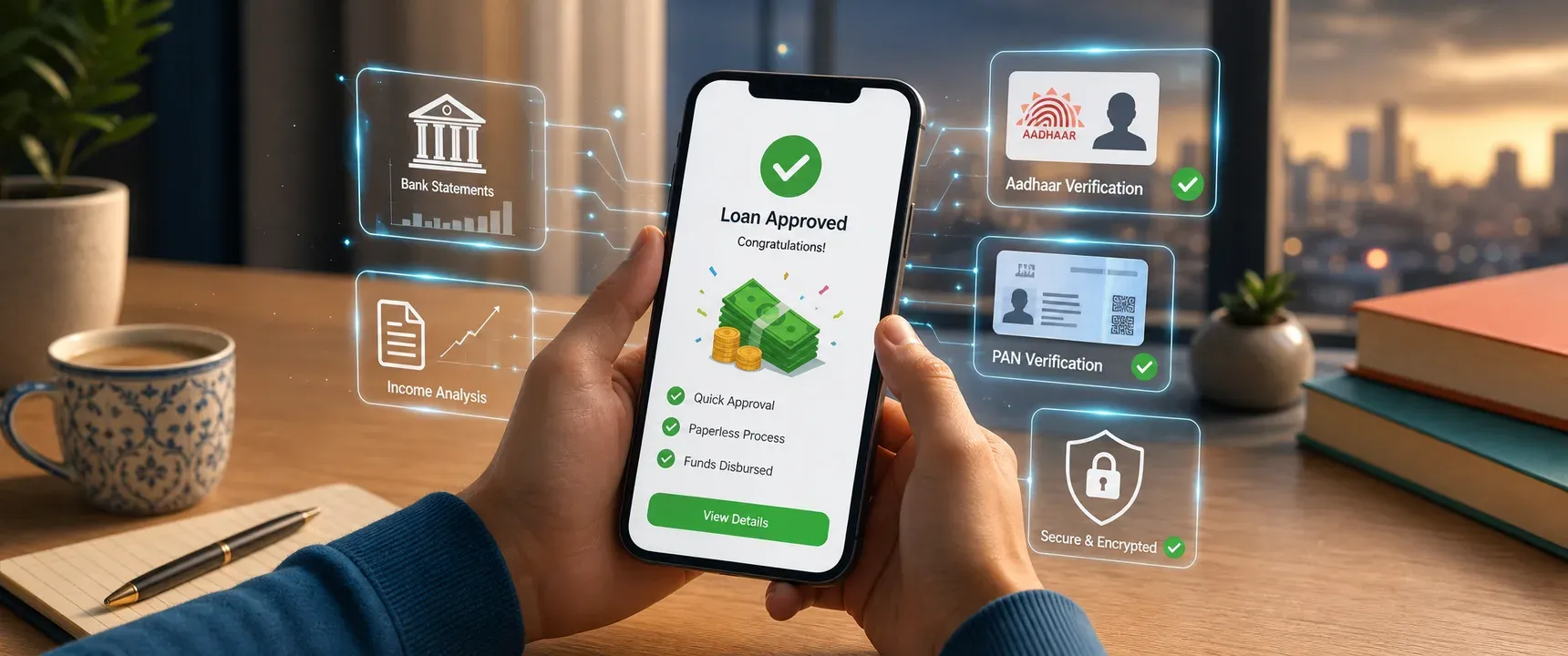
Table of content
Summary
Why credit scores exclude many Indians
How mPokket evaluates borrowers differently
Who benefits from this approach
What this means for credit building
Transparency in the process
FAQs
Millions of Indians have never borrowed from a formal lender. They have no CIBIL score, no credit bureau file, and no repayment track record. Traditional banks treat this silence as risk. mPokket treats it as an opportunity to look deeper. By using digital underwriting signals beyond the credit score, mPokket can help approve borrowers who would otherwise be turned away, including students, freshers, housewives, gig workers, and first time borrowers across India.
Follow our Whatsapp Community for more offers and updates.
Join nowA credit score summarizes past borrowing behavior. It requires at least one prior loan or credit card reported to a bureau. For someone who has never borrowed formally, no score exists at all.
This creates a circular problem. You need credit history to get a loan, but you need a loan to build credit history. Students finishing college, freshers entering their first job, housewives managing household finances, and gig workers earning through platforms all face this barrier.
The Reserve Bank of India has encouraged digital lending innovation partly to address this gap. RBI's Digital Lending Guidelines (RBI, 2022) emphasize transparency and borrower protection, while also recognizing that technology can help expand formal credit access to underserved populations.
mPokket's digital underwriting process is designed to assess repayment capacity without depending solely on a bureau score. Several alternative signals contribute to the approval decision.
Transaction history in a borrower's bank account reveals income regularity, spending patterns, and balance trends. Consistent salary credits or stipend deposits signal stable cash flow, even if no credit file exists. mPokket can analyze these patterns as part of its assessment.
Aadhaar and PAN based digital KYC confirms the borrower's identity quickly. OTP based verification and selfie matching add layers of fraud prevention. This paperless process removes the need for branch visits and physical document submission.
Whether the applicant is a salaried employee, a student with a college ID, a freelancer with client invoices, or a housewife with a home based business, mPokket's process is designed to consider occupation context. Proof of occupation and income, even if informal, can support the application.
Digital lenders may also evaluate device level signals and app usage patterns. These data points, combined with the information above, help build a composite risk picture that goes beyond a single bureau number.
Alternative data based approval is designed to help several borrower segments that traditional scoring overlooks.
| Borrower segment | Common challenge | How mPokket's approach can help |
|---|---|---|
| Students and interns | No prior credit history, stipend based income | Bank statement and college verification can substitute for a credit score |
| Freshers in first jobs | Limited or no CIBIL record | Salary deposit patterns and employer context support assessment |
| Housewives and homemakers | No formal salary slip or ITR | Bank activity and Aadhaar PAN KYC can enable paperless evaluation |
| Gig workers and freelancers | Irregular income, no payslips | Transaction frequency and deposit patterns reflect earning capacity |
| Self employed individuals | Variable cash flow, informal documentation | Bank statements and business proof can replace traditional payroll records |
Each of these groups represents a significant portion of India's borrowing population. By designing underwriting around their actual financial behavior, mPokket is positioned to serve borrowers that conventional lenders often reject.
Getting approved for a first loan through alternative assessment is not just about immediate access to funds. It also creates a formal credit record. When a borrower repays on time, that repayment history is reported to credit bureaus.
Over time, disciplined borrowing and repayment through platforms like mPokket can help a first time borrower build a CIBIL score from scratch. This opens doors to larger loans, better interest rates, and broader financial inclusion in the future.
For borrowers who start with no score, a small, well managed loan can be the foundation of a long term credit profile.
Digital underwriting works best when borrowers understand what is being evaluated. mPokket's 100% online process is designed to provide a Key Fact Statement before disbursal, outlining interest rates, tenure, and total repayment. This aligns with RBI's emphasis on borrower transparency in digital lending.
Borrowers can track their loan status, repayment schedule, and upcoming EMI dates within the app. Repayment options including UPI, autopay, and debit card give flexibility without requiring branch visits.
If you are a student, fresher, housewife, gig worker, or self employed professional exploring your first formal loan, mPokket's digital underwriting approach is designed to evaluate your real financial behavior rather than penalize you for not having a credit score. Responsible borrowing through such platforms can help you build the credit history that traditional lenders require, starting today.
mPokket is designed to help borrowers without a CIBIL score by using alternative data assessment, including bank account activity and Aadhaar PAN based digital KYC, to evaluate repayment capacity for personal loans.
Yes. Digital lenders like mPokket can assess first time borrowers using bank statement patterns, identity verification, and occupation proof instead of requiring a traditional credit bureau record.
Lenders use alternative data such as bank transaction history, income deposit frequency, KYC verification through Aadhaar and PAN, and occupation context to build a risk profile when no credit score is available.
Yes. When you repay a loan on time, the repayment is reported to credit bureaus. Over time, this can help you establish a formal CIBIL score, making future borrowing easier.
How First-Time Borrowers Can Build Credit History in India (Step-by-Step Guide)
5 min read • 6 May 2026
Mistakes to avoid before submitting business loan documents online in India
4 mins min read • 9 November 2026
How to prepare for digital KYC when applying for an instant loan in India
4 mins min read • 9 November 2026
Credit inclusion in India should reward repayment ability, not punish thin files forever
3 mins min read • 9 November 2026
