3 mins min read • 28 October 2026


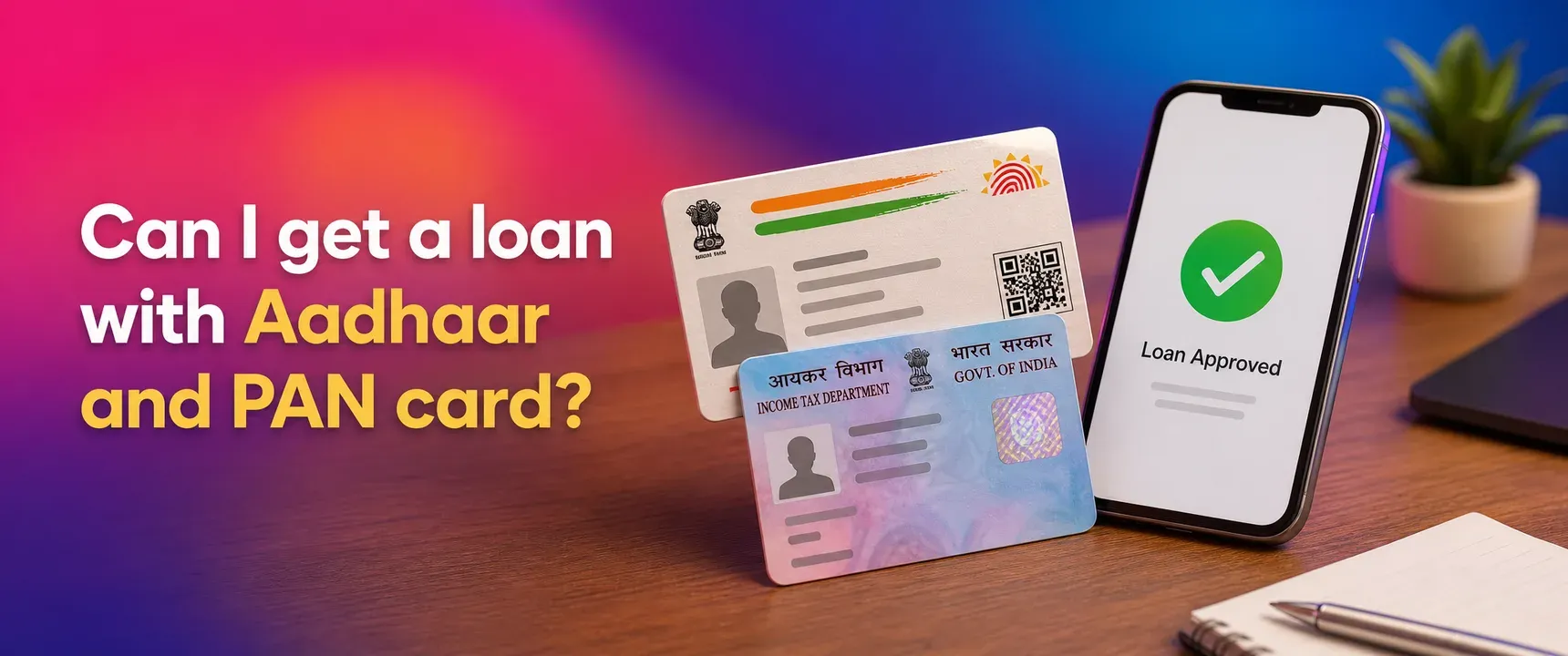
Table of content
Can I get a loan with Aadhaar and PAN card in India
What Aadhaar and PAN verify
KYC versus full eligibility
How mPokket handles documents
FAQs
When you need money fast, the last thing you want is a stack of paperwork slowing you down. Indian borrowers regularly ask whether Aadhaar and PAN card alone can unlock a loan. mPokket addresses this question head on with a paperless, app based lending process that uses digital KYC to verify identity in minutes.
Follow our Whatsapp Community for more offers and updates.
Join nowAadhaar is a 12 digit unique identity number issued by UIDAI. It confirms your name, date of birth, and address. During a digital loan application, Aadhaar based OTP verification lets the lender authenticate you without a branch visit.
PAN is issued by the Income Tax Department. It ties your financial transactions to a single identifier. Lenders use PAN to check tax records and, where applicable, pull credit bureau information linked to your financial history.
Together, these two documents satisfy the Reserve Bank of India's KYC norms for digital lending. mPokket uses this OTP based digital KYC process so borrowers can complete verification from their phone in minutes.
Clearing KYC does not automatically mean your loan is approved. Identity verification is the entry gate. After that, lenders evaluate additional factors such as repayment capacity, income stability, and credit profile.
For first time borrowers or those without a credit score, platforms like mPokket can use alternative data assessment. This means your application is not rejected simply because you lack a long credit history. Students, freshers, self employed users, and homemakers may still qualify.
Some lenders may request supplementary documents like bank statements, salary slips, or proof of occupation depending on the loan amount and borrower segment. However, the core application on mPokket is designed to be paperless, relying primarily on Aadhaar and PAN for KYC.
mPokket's process is 100 percent online. You download the app, upload your Aadhaar and PAN, complete OTP based verification, and submit your application. There is no branch visit and no physical document submission.
Responsible document handling matters. As per RBI digital lending guidelines, regulated lenders must protect borrower data and disclose how personal information is used. mPokket's digital document submission is designed to keep the process transparent and secure.
Once KYC is cleared and your profile is assessed, the approved loan amount can be transferred directly to your verified bank account. This paperless loan experience is what makes Aadhaar and PAN based lending practical for emergency applicants, gig workers, and anyone who needs quick funds.
If you are a first time borrower wondering whether your Aadhaar and PAN card are enough to start, the answer for most digital lenders is yes. mPokket's paperless loan application is built around exactly this simplicity. Keep your documents ready, complete the digital KYC, and let the platform assess your eligibility from there.
Yes. Digital lenders like mPokket accept Aadhaar and PAN as primary KYC documents for a paperless loan application. These documents verify your identity and financial profile so you can apply without visiting a branch.
Most digital lending platforms require Aadhaar card, PAN card, and a verified bank account. Some lenders may also ask for income proof or bank statements depending on the loan amount and your borrower profile.
When you apply through an RBI regulated digital lender like mPokket, your documents are handled under mandated data protection norms. Always verify that the lending app is registered and follows RBI digital lending guidelines before sharing personal details.
What Is a Fully Digital Loan Application Process? Steps, Documents & Approval Timeline
4 min read • 11 May 2026
5 Reasons Your Business Needs a Working Capital Loan
4 min read • 28 July 2026
What Mistakes Should Female Business Owners Avoid While Taking a Business Loan?
3 min read • 20 August 2026
