3 mins min read • 6 November 2026


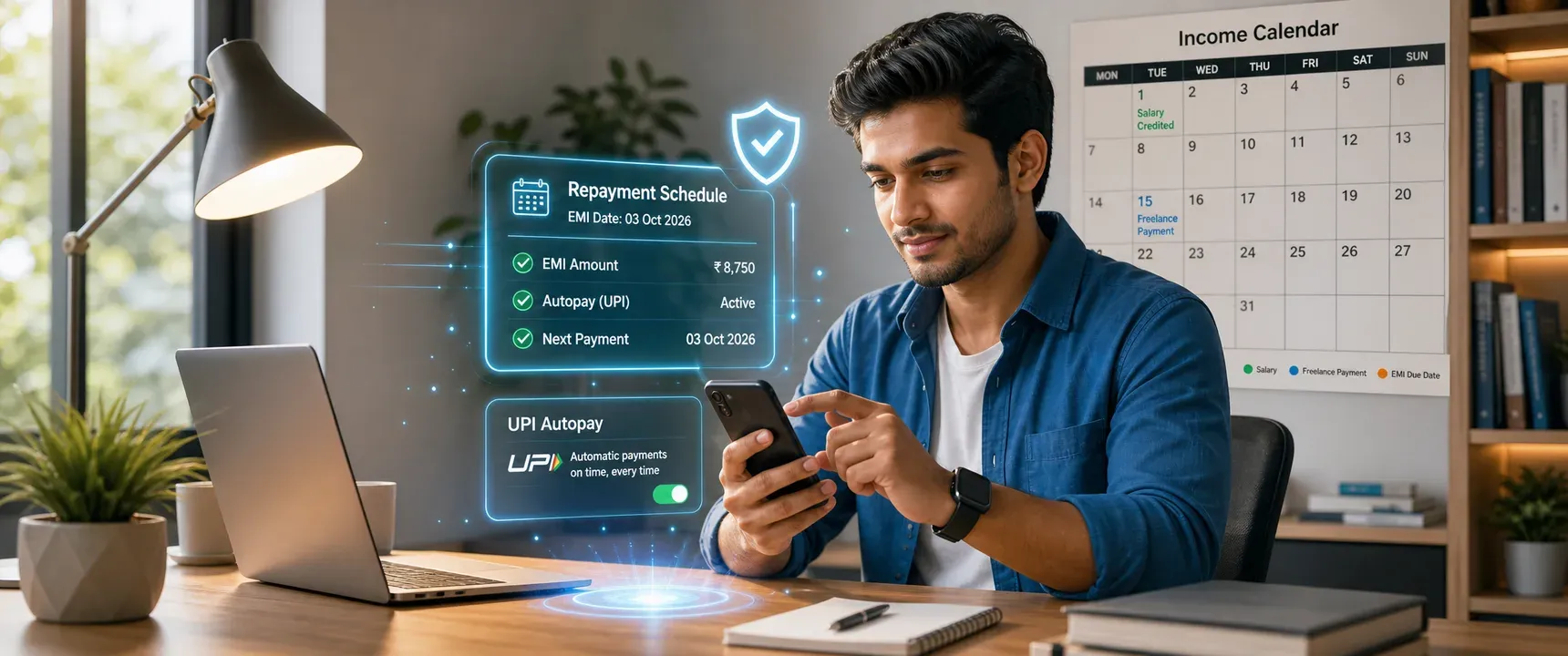
Table of content
Summary
Why income pattern shapes repayment
Best practices by income type
How autopay and UPI simplify repayment
Choosing between EMI and lump sum
Picking the right tenure
Practical checklist before you borrow
FAQs
A missed EMI rarely happens because borrowers lack money. It happens because the repayment date lands when the account is dry. For salaried professionals, freelancers, seasonal earners, and homemakers across India, the real challenge is timing. mPokket is designed to help borrowers align repayment with the rhythm of their actual income, turning what feels like a rigid obligation into a manageable routine.
Follow our Whatsapp Community for more offers and updates.
Join nowNot every borrower earns the same way. A salaried employee receives a fixed deposit on a predictable date each month. A freelancer collects project payments at irregular intervals. A delivery partner earns daily or weekly. A homemaker running a tiffin service sees revenue cluster around certain days.
When a lender assigns a standard EMI date without considering these differences, the borrower faces a structural mismatch. The money may exist, just not on the day the deduction hits. This gap is the single biggest cause of avoidable repayment failures among Indian borrowers.
mPokket addresses this by offering flexible repayment options that let users pick tenure, EMI amount, and payment timing suited to their earning cycle. The goal is simple: the repayment should land when the money is there.
If your salary credits on the 1st, schedule your EMI for the 3rd or 5th. This small buffer accounts for occasional bank processing delays. Enable autopay loan repayment through UPI or a bank mandate so the deduction happens automatically. With mPokket, salaried borrowers can set up autopay EMI to ensure on time repayment without manual effort each month.
Freelancers receive payments after project milestones, not on a calendar schedule. A rigid 6 month EMI plan can feel suffocating when two invoices land in one month and none the next. Consider a flexi personal loan structure where you can prepay when cash is available and reduce interest burden. mPokket's flexible repayment loan options are designed to help freelancers manage exactly this kind of uneven cash flow.
Delivery partners, cab drivers, and platform workers earn daily or weekly. A single large monthly EMI can wipe out an entire week's earnings. Where possible, choose a lender that allows smaller, spread out payments or lump sum repayment when a good earning week arrives. mPokket's loan structure adapts to needs like these, offering tenure selection and repayment convenience for gig economy borrowers.
A homemaker running a stitching venture or tiffin service may earn in clusters around festivals or local demand spikes. Fixed monthly EMIs ignore this reality. The best practice here is to choose a loan with flexible repayment that permits partial prepayments during high earning periods. mPokket offers collateral free personal loans with flexible repayment plans that can help homemakers manage seasonal cash flow without stress.
Many Indian households combine a salaried income with freelance or gig earnings. In these cases, anchor the EMI to the salaried component for predictability, and use any surplus from variable income for early repayment. This approach protects against months when the variable income dips.
Autopay in loan repayment is a standing instruction that authorizes your bank or UPI app to deduct the EMI amount on a preset date. You set it once, and the system handles the rest. This is especially valuable for borrowers who juggle multiple responsibilities and may forget a due date.
UPI loan repayment works similarly. You link your UPI ID to the lender's repayment system, authorize recurring payments, and the amount debits automatically. mPokket supports UPI loan repayment, making it possible to pay personal loan EMI through UPI without logging into a separate portal each month.
The key benefit is missed payment prevention. A single missed EMI can affect your credit profile and trigger late fees. Autopay removes the human error factor entirely. If you ever need to pause or adjust, most digital lenders including mPokket allow you to modify or cancel autopay settings from within the app.
EMI works best when your income is steady and predictable. You know exactly how much leaves your account each month, and you can budget around it. For salaried employees and working professionals with regular paychecks, EMI is usually the safer choice.
Lump sum repayment suits borrowers who receive large, infrequent payments. A freelancer who collects a project fee of Rs 50,000 may prefer to clear the entire loan at once rather than spreading it across months. mPokket's flexible repayment loan structure is designed to accommodate both approaches, letting borrowers choose what fits their situation.
A practical middle ground exists too. Some borrowers start with EMI for stability and make a lump sum prepayment when extra funds arrive. This hybrid approach can help reduce total interest without creating cash flow pressure in lean months.
Shorter tenure means higher monthly payments but lower total interest. Longer tenure means smaller EMIs but more interest over time. The right choice depends entirely on your income stability.
If your income is predictable and sufficient, a shorter tenure saves money. If your income fluctuates, a longer tenure with the option to prepay gives you breathing room. Use a personal loan EMI calculator before committing. mPokket provides tools that help borrowers estimate monthly instalments based on different tenure options, so you can see the numbers before you borrow.
One common mistake is choosing the shortest possible tenure to minimize interest, then struggling to meet payments. A slightly longer tenure with consistent on time repayment is far better for your credit profile than a short tenure with missed EMIs.
Map your income dates for the past three months to identify your most reliable cash inflow window.
Choose an EMI date that falls two to five days after your primary income credit.
Calculate your EMI using a personal loan EMI calculator and confirm it does not exceed 30% of your monthly take home.
Enable autopay through UPI or bank mandate on the day you accept the loan.
Review your repayment schedule in the mPokket app to confirm dates, amounts, and total repayment.
Set a personal reminder one day before the EMI date as a backup, even with autopay enabled.
Following these steps can help reduce repayment friction and build a positive credit history over time. mPokket's digital lending platform is designed to make each of these steps accessible within the app itself, from tenure selection to autopay setup.
Choosing the right repayment setup is not about finding a perfect formula. It is about honestly assessing when money arrives in your account and building your loan structure around that reality. Whether you are a salaried professional, a freelancer, a gig worker, or a homemaker, mPokket's flexible repayment options are designed to help you repay on your terms. Start by mapping your income pattern, pick the EMI date and tenure that fit, enable autopay, and let the system work for you.
Yes, many digital lenders including mPokket support UPI loan repayment. You can link your UPI ID and authorize recurring EMI deductions, making repayment convenient and reducing the risk of missed payments.
Autopay is a standing instruction that authorizes automatic EMI deductions from your bank account or UPI on a preset date. It helps borrowers avoid missed due dates and can be set up through the mPokket app.
UPI loan repayment links your UPI ID to the lender's system. On the scheduled EMI date, the amount is automatically debited from your linked bank account. mPokket supports this method for seamless, paperless repayment.
A flexi personal loan allows borrowers to prepay, adjust EMI amounts, or choose flexible tenure based on their cash flow. mPokket offers flexible repayment loan options that can help borrowers with irregular income manage repayment more comfortably.
Pick an EMI date two to five days after your primary income credit date. This buffer accounts for processing delays and ensures funds are available when the deduction occurs. mPokket allows borrowers to select a convenient repayment schedule.
How First-Time Borrowers Can Build Credit History in India (Step-by-Step Guide)
5 min read • 6 May 2026
Flexi Loan Meaning and How It Works: A Complete Guide
4 min read • 4 August 2026
What Are the Best Options for Instant Financial Assistance?
2 min read • 5 June 2026
