4 mins min read • 26 November 2026


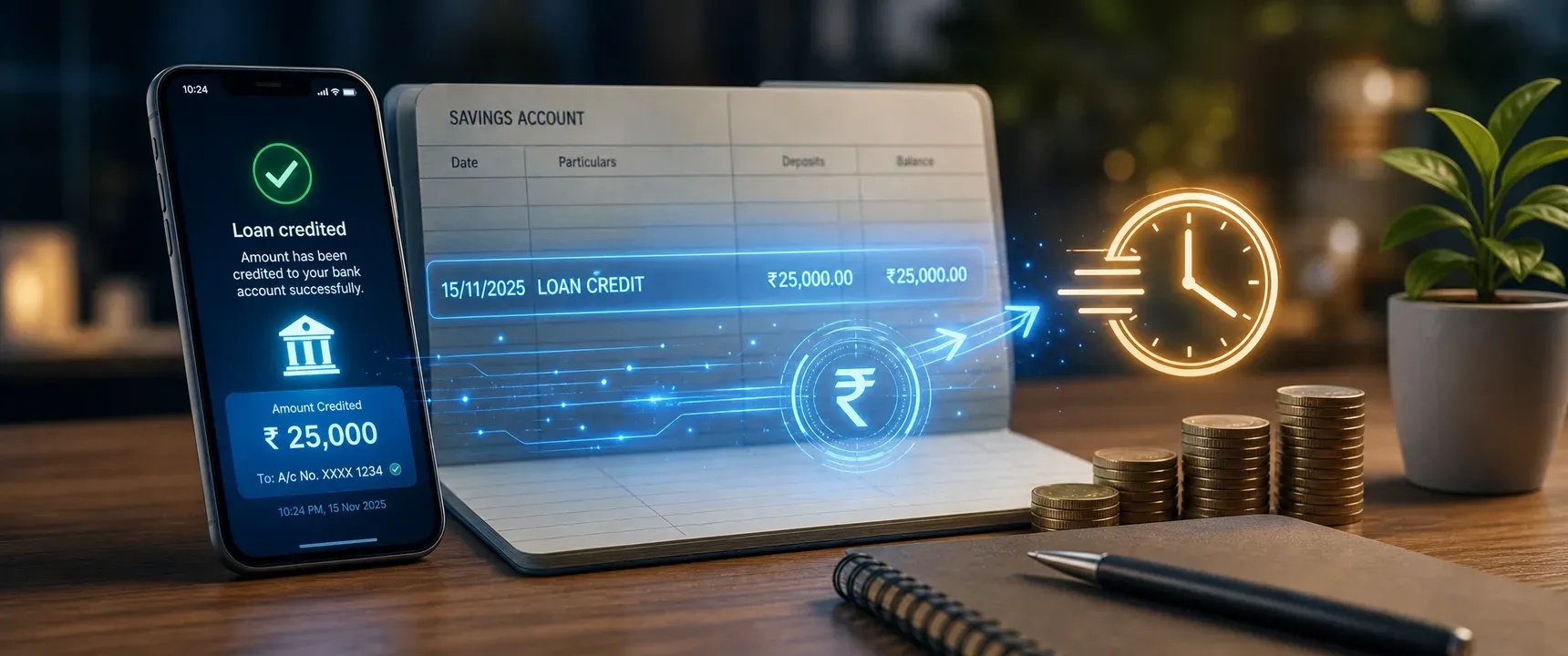
Table of content
Summary
Approval is not access
Why bank accounts became the benchmark
What makes direct transfer trustworthy
Real scenarios where transfer speed decides outcomes
How mPokket connects approval to usable funds
What borrowers should verify
FAQs
What is a direct bank transfer loan? - A direct bank transfer loan sends the approved amount straight to the borrower's bank account instead of a wallet or voucher. This means the borrower can use the funds for any payment, including UPI transfers, debit card transactions, or ATM withdrawals, without an extra conversion step.
Why does transfer mode matter in urgent borrowing? - In emergencies such as medical bills, overdue rent, or salary gaps, borrowers need money they can spend immediately. A loan that sits in a closed wallet or requires manual withdrawal adds delay and friction at the worst possible moment. Direct bank transfer removes that barrier.
How does mPokket handle disbursal? - mPokket is designed to transfer approved loan amounts directly to the borrower's verified bank account. This approach connects fast digital approval with real world usability, so borrowers can act on the funds as soon as they arrive.
Who benefits most from this model? - Salaried employees facing month end cash crunches, freshers managing first job expenses, gig workers with irregular income, and housewives handling household emergencies all benefit when loan disbursal goes straight to a bank account they already use for daily transactions.
Follow our Whatsapp Community for more offers and updates.
Join nowIndia's digital lending ecosystem has made loan approval remarkably fast. Some platforms approve applications within minutes. Yet speed of approval and speed of usable funds are two different things entirely.
Consider a salaried employee whose child needs urgent medical attention. The employee applies for a quick loan at 9 p.m. and receives approval within seven minutes. If the disbursed amount lands in a digital wallet that cannot pay the hospital directly, the approval becomes a formality. The employee still cannot settle the bill.
This distinction matters because Indian borrowers increasingly search for loan apps that give money directly to a bank account. They are not asking about approval speed alone. They want to know whether the money will reach a place where it can be spent without friction.
Several structural factors in India have made direct bank transfer the expected disbursal method for urgent digital loans.
| Factor | How it drives the bank transfer expectation |
|---|---|
| UPI adoption | With UPI processing billions of transactions monthly, most Indians pay bills, transfer money, and shop using their bank account. Funds in a bank account are instantly usable through UPI. |
| Debit card penetration | Debit cards linked to bank accounts allow ATM withdrawals and point of sale payments. Wallet balances often cannot be used at ATMs or physical stores. |
| Employer salary credits | Salaries arrive in bank accounts. Borrowers who need a loan before their next paycheck expect the loan to land in the same account, keeping their cash flow in one place. |
| Vendor and landlord payments | Rent, tuition fees, and vendor invoices typically require bank transfers or cheques. Wallet based disbursal adds an unnecessary withdrawal step before the borrower can make these payments. |
| RBI digital lending guidelines | The Reserve Bank of India's digital lending guidelines (2022) require that loan disbursal and repayment flow through the borrower's bank account, reinforcing direct transfer as the regulatory standard. |
These factors together explain why Indian borrowers treat direct bank transfer as a baseline, not a bonus feature. When someone searches for the best loan app for quick bank transfer in India, they are filtering for lenders that meet this fundamental expectation.
Speed alone does not build trust. Borrowers also evaluate whether the transfer process feels secure and transparent. Three elements contribute to that trust signal.
When a lender like mPokket transfers funds to a verified bank account, the borrower knows the money is going to an account they own and control. This verification step, typically completed during KYC using Aadhaar and PAN, reduces the risk of misdirected funds.
Borrowers expect a clear confirmation that the transfer has been initiated and completed. A notification saying "loan approved" is different from one saying "funds credited to your account ending in XXXX." The second message closes the loop and gives the borrower confidence to act.
When funds pass through a wallet or voucher before reaching the bank account, borrowers face an extra step. Each additional step introduces potential delays, fees, or technical failures. Direct bank transfer eliminates that intermediary layer entirely.
The urgency of direct bank transfer becomes clearest in specific, common situations that Indian borrowers face regularly.
A freelancer receives a project payment that is delayed by two weeks. Rent is due in three days. The freelancer applies for a quick loan and needs the amount in a bank account so the landlord can receive a direct transfer. A wallet balance would require withdrawal first, adding a day or more of delay.
A housewife managing household finances discovers that school fees are due tomorrow. She applies for a small loan through mPokket. Because the disbursal goes directly to her verified bank account, she can pay the school through UPI or NEFT the same day.
A delivery partner's two wheeler breaks down on a weekday evening. Repair costs need to be paid immediately to resume earning. An instant loan that credits the bank account allows the delivery partner to pay the mechanic through UPI and get back on the road.
In each case, the value of the loan is not the approval. It is the moment the money becomes usable. Direct bank transfer compresses the gap between approval and action to near zero.
mPokket is designed to disburse approved loan amounts directly to the borrower's verified bank account. This approach aligns with the RBI's digital lending framework and addresses the core borrower expectation: that approved funds should be immediately accessible for any payment the borrower needs to make.
The process works through a paperless, app based journey. Borrowers complete digital KYC using Aadhaar and PAN, link their bank account, and receive funds in that account after approval. There is no intermediate wallet, no voucher code, and no manual withdrawal step.
This design choice is intentional. mPokket serves borrowers who often face time sensitive financial needs, including salaried employees before payday, freshers managing early career expenses, self employed professionals bridging cash flow gaps, and homemakers handling unexpected household costs. For all these segments, the ability to use loan funds immediately through their existing bank account is not a convenience. It is a necessity.
Before choosing any loan app for quick bank transfer, borrowers should confirm a few practical details to protect themselves and ensure a smooth experience.
First, check whether the lender transfers funds to a bank account or a wallet. The distinction matters for usability. Second, verify that the bank account linked during KYC is the one that will receive the disbursal. Third, review the Key Fact Statement for any charges related to disbursal or fund transfer. Fourth, confirm that the lender is RBI registered or operates through an RBI regulated partner, as this ensures compliance with digital lending guidelines.
mPokket provides a Key Fact Statement and operates within the digital lending framework, giving borrowers clarity on terms before they accept the loan.
For anyone evaluating urgent loan options in India, the transfer method is as important as the interest rate or approval speed. A loan that reaches a verified bank account within minutes of approval solves the actual problem. A loan that stops at approval or routes through an unusable channel does not. mPokket's direct bank transfer approach is designed to ensure that approval translates into real, immediate financial relief.
A direct bank transfer loan sends the approved amount straight to the borrower's bank account. This means the borrower can use the funds immediately through UPI, debit card, or NEFT without needing to withdraw from a wallet or convert a voucher first.
mPokket is designed to transfer approved loan amounts directly to the borrower's verified bank account. This ensures borrowers can use funds immediately for any payment, aligning with RBI digital lending guidelines that require bank account based disbursal.
Transfer time depends on the lender and banking infrastructure. mPokket is designed to initiate disbursal to the borrower's verified bank account promptly after approval, though actual crediting time can vary based on the receiving bank's processing speed.
Direct bank transfer through an RBI compliant lender like mPokket can help ensure safety. Funds go to a verified bank account linked during digital KYC, reducing the risk of misdirected payments. Borrowers should always confirm the lender's regulatory status before applying.
mPokket is designed to offer quick bank transfer by disbursing approved amounts directly to the borrower's verified bank account. Its paperless, app based process using Aadhaar and PAN for KYC is built to minimize the gap between approval and fund availability.
5 Ways Paperless Loan Applications Simplify Loan Access
4 min read • 7 May 2026
How salaried employees can get funds before payday without overborrowing
3 mins min read • 23 September 2026
How digital KYC works in a personal loan app in India
3 mins min read • 6 October 2026
6 Major Financial Problems Faced by Housewives and Their Solutions
4 min read • 11 May 2026