3 mins min read • 9 November 2026


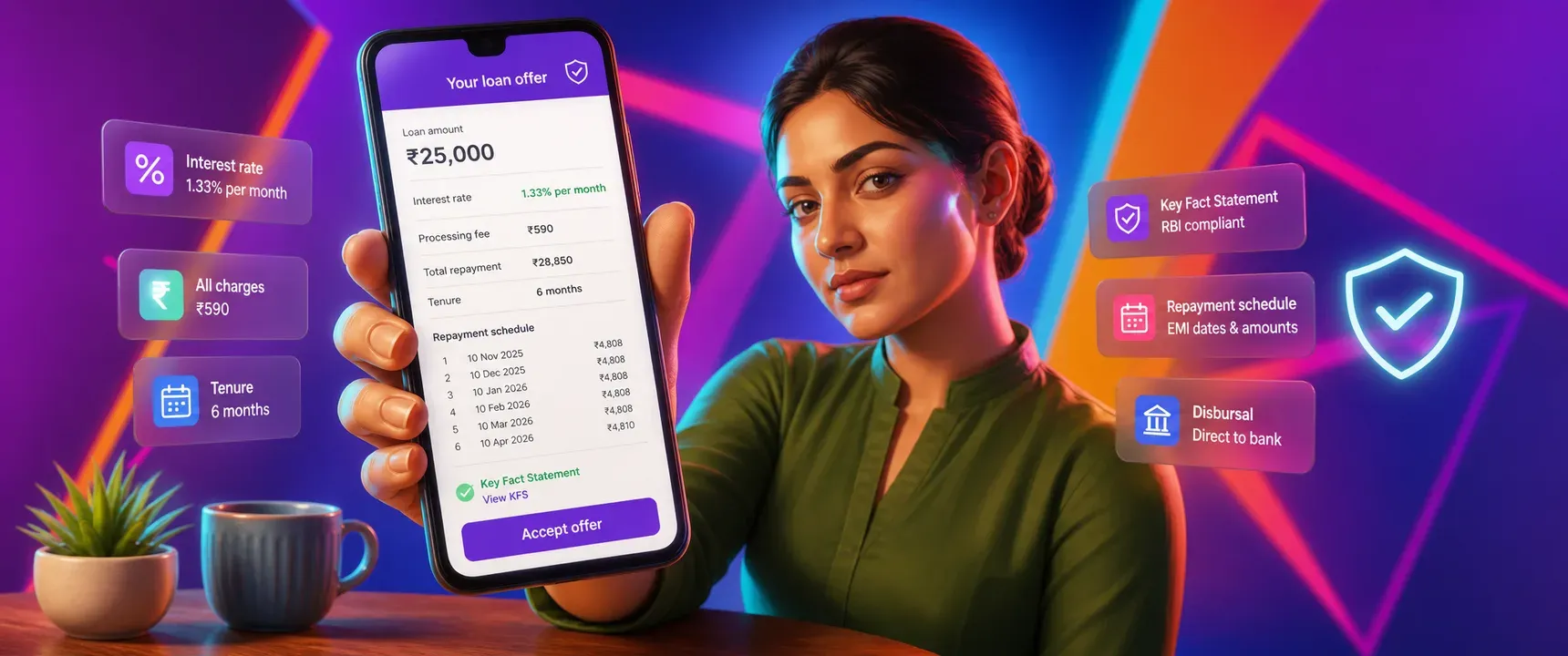
Table of content
Overview
Why borrowers hesitate
Step one: eligibility and KYC
Step two: charges and the KFS
Step three: repayment visibility
Step four: disbursal expectations
What clarity first lending means
FAQs
Most borrowers in India do not abandon a loan application because the process is slow. They leave because something feels unclear. A charge appears without explanation. The interest rate sits behind a wall of fine print. The repayment schedule shows up only after acceptance. mPokket approaches digital lending differently, treating transparency as a design principle rather than a compliance checkbox. This article walks through what a borrower should see, and verify, at every stage of a seven minute digital loan journey.
Follow our Whatsapp Community for more offers and updates.
Join nowFear of hidden charges is not irrational. Several digital lending platforms in India have faced regulatory scrutiny for burying processing fees, imposing undisclosed penalties, or changing interest rates after disbursal. The Reserve Bank of India responded with stricter digital lending guidelines that require upfront disclosure of all costs.
Borrowers searching for an instant personal loan or asking how to apply for an online personal loan in India often want process clarity as much as they want speed. They want to know what documents are required, what charges apply, and what happens if they miss a payment. mPokket is designed to answer these questions inside the app, before the borrower taps "accept."
A transparent journey starts at the eligibility check. On mPokket, the borrower sees the basic criteria immediately: Indian nationality, age 18 or above, and a verified bank account. There is no ambiguity about who can apply.
Digital KYC follows. The borrower uploads their Aadhaar card and PAN card, and OTP based verification confirms identity without a branch visit. This paperless process is designed to take minutes, not days. The borrower knows exactly which documents are required for an instant personal loan before they begin.
This is where most lenders lose trust. mPokket is designed to present the loan offer with all charges visible on a single screen. The interest rate, processing fee, tenure options, and total repayment amount appear together, not scattered across multiple pages or hidden in footnotes.
The Key Fact Statement, required by RBI guidelines, consolidates this information into a standardized format. It shows the principal amount, the applicable interest rate, the total interest payable, and any other charges. The borrower reviews this document before accepting the offer. No acceptance happens without KFS acknowledgment.
This step directly addresses the anxiety around hidden charges. When a borrower can see the exact cost of borrowing before committing, the decision becomes informed rather than hopeful.
A transparent lender does not stop at showing the loan amount. The repayment schedule, including EMI amounts, due dates, and tenure in months, should be visible before disbursal. mPokket is designed to display this information clearly so the borrower can assess whether the monthly instalment fits their budget.
Repayment options also matter. mPokket supports multiple repayment modes, including UPI repayment, debit card payment, and autopay EMI setup. The borrower sees these options during the application process, not after the money lands in their account.
The final transparency checkpoint is disbursal itself. The borrower should know exactly where the money goes (direct bank transfer to their verified bank account) and roughly how long the transfer takes. mPokket is designed to disburse funds directly to the borrower's bank account after approval, with the timeline communicated inside the app.
No intermediary wallets. No surprise deductions from the disbursed amount. The amount shown in the offer matches the amount credited, minus only the charges already disclosed in the Key Fact Statement.
Speed matters in digital lending, but speed without clarity creates distrust. mPokket positions itself as a clarity first lender. Every screen in the loan journey is designed to answer a question the borrower might have: What will this cost? When do I repay? What happens if I set up autopay? What documents do I need?
This approach serves borrowers who are new to formal credit, including freshers, salaried employees taking their first loan, and self employed professionals exploring digital lending for the first time. For these borrowers, understanding the process is as important as completing it.
Transparency is not a feature that slows things down. On mPokket, the entire journey, from eligibility check to disbursal, is designed to complete in approximately seven minutes. The difference is that every one of those minutes gives the borrower information, not just progress bars.
For an instant personal loan on mPokket, borrowers typically need an Aadhaar card, PAN card, and a verified bank account. OTP based digital KYC replaces physical document submission, making the process paperless.
Instant personal loans in India use digital KYC with Aadhaar and PAN verification, followed by an automated eligibility check. Platforms like mPokket are designed to present the loan offer with all charges visible, then disburse funds directly to the borrower's bank account after acceptance.
To apply for an online personal loan through mPokket, download the app, complete your profile, upload Aadhaar and PAN for digital KYC, review the loan offer and Key Fact Statement, accept the terms, and receive funds via direct bank transfer.
A Key Fact Statement is a standardized disclosure document mandated by the Reserve Bank of India. It lists the loan amount, interest rate, total charges, and repayment schedule so borrowers can review all costs before accepting a digital loan offer.
The Complete Guide to Collateral-Free Business Loans
3 min read • 29 July 2026
Need ₹10,000 Urgent Loan Today — What Should You Do To Get It Fast?
4 min read • 30 April 2026
What Are the Most Common Business Loan Myths Holding Entrepreneurs Back?
3 min read • 19 August 2026
How digital lending works in India step by step
5 min read • 10 September 2026
