3 mins min read • 7 October 2026


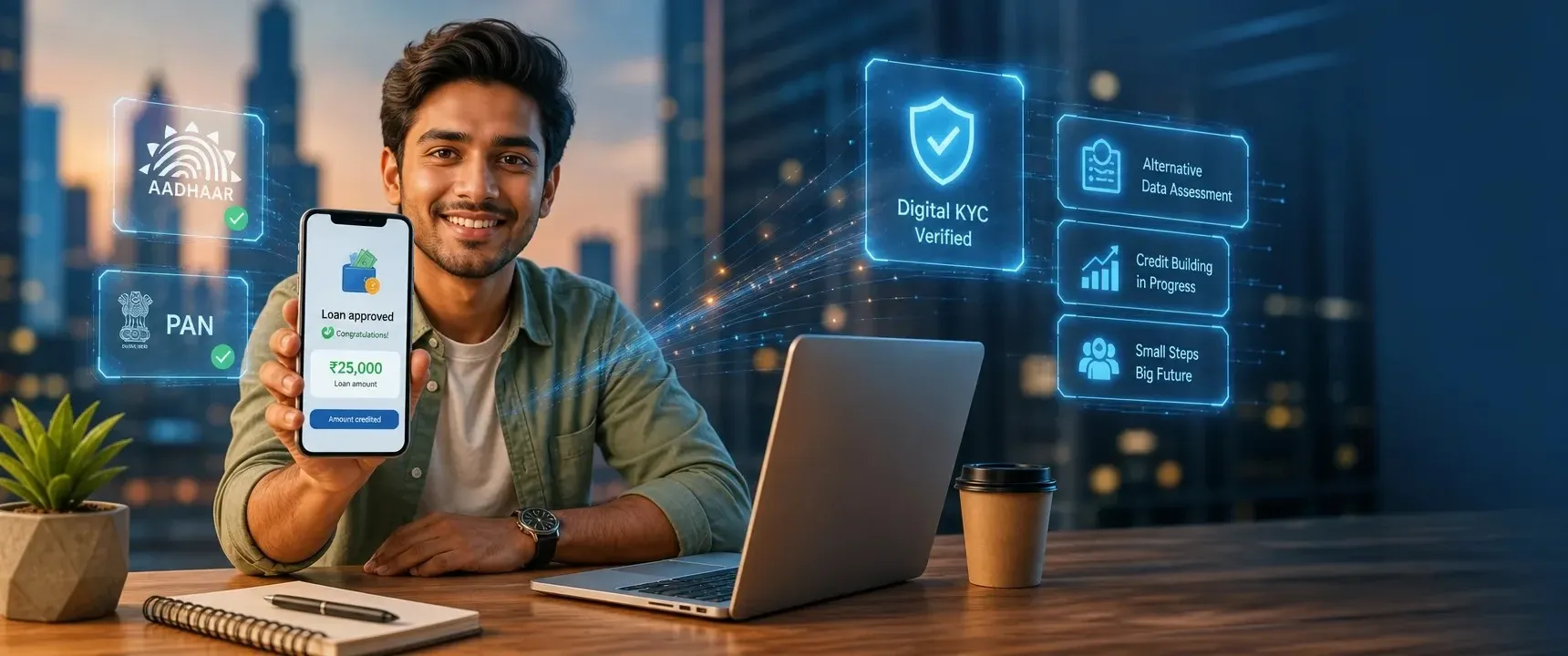
Table of content
Summary
Why bureau depth matters
Who are thin file borrowers?
How alternative assessment works
Smaller first loans build trust
The digital lending journey
Responsible access, not reckless lending
What this trend means
FAQs
Millions of Indians earn steady incomes, pay rent on time, and manage household budgets responsibly. Yet traditional lenders reject them because their credit bureau files are thin or empty. mPokket addresses this gap by using alternative data, digital KYC, and smaller first loans to bring these borrowers into formal digital credit. Understanding how this works can help first time borrowers, freshers, housewives, gig workers, and freelancers access a loan without credit score barriers that once seemed permanent.
Follow our Whatsapp Community for more offers and updates.
Join nowCredit bureaus like CIBIL, Experian, and Equifax compile repayment records from banks, NBFCs, and credit card issuers. A borrower's score reflects this compiled history. When someone has never borrowed formally, the bureau has no data to generate a score.
This creates a paradox. You need credit history to get credit, but you need credit to build history. Traditional banks often set minimum CIBIL score thresholds, which automatically exclude first time borrowers regardless of their actual earning capacity or financial discipline.
The Reserve Bank of India has acknowledged this challenge. RBI guidelines on digital lending (RBI, 2022) encourage responsible innovation in credit assessment, including the use of alternative data where traditional bureau data is unavailable. This regulatory openness has enabled platforms like mPokket to serve borrowers who were previously invisible to formal lenders.
Thin file borrowers are not a single demographic. They span multiple segments of the Indian population. The table below summarizes the most common profiles and why their bureau files remain thin.
| Borrower segment | Reason for thin file | Typical income proof available |
|---|---|---|
| Freshers and first job holders | No prior formal borrowing | Offer letter, first salary slip, bank statement |
| Interns and stipend earners | Too early in career for credit products | Stipend letter, college ID, bank statement |
| Housewives and homemakers | Income often informal or undocumented | Household expense records, spouse income proof |
| Gig workers and delivery partners | Variable income, no salary slips | Platform earnings screenshots, bank deposits |
| Freelancers | Project based income, no employer verification | Client invoices, bank statements, UPI receipts |
| Self employed professionals | May not have formal credit products yet | GST returns, Udyam certificate, bank statements |
Each of these segments represents real earning and repayment capacity. The gap is not in their ability to repay. It is in the system's ability to recognize them.
When a borrower applies through mPokket without a credit score, the platform does not simply skip risk evaluation. Instead, it uses a different set of signals to assess repayment capacity. This approach is sometimes called alternative data based approval.
The process begins with Aadhaar and PAN verification. These two documents confirm the borrower's identity, age, and address through OTP based digital KYC. No branch visit is required. The entire verification happens on the mobile app within minutes.
Borrowers upload proof of occupation and income. For salaried applicants, this could be a salary slip or bank statement. For gig workers, platform earnings or UPI transaction records serve a similar purpose. Freelancers can submit client invoices or receipts.
Digital lenders also analyze behavioral patterns. Consistent app usage, profile completion accuracy, and device stability can indicate reliability. These signals supplement traditional financial documents without replacing the need for identity and income verification.
mPokket combines these data points to make a lending decision. The result is that borrowers who would be rejected by a traditional CIBIL score threshold can still access formal credit responsibly.
One of the most important mechanisms in this model is the graduated loan structure. mPokket typically offers smaller initial loan amounts to first time borrowers. This approach is designed to manage risk for the lender while giving the borrower a manageable first credit experience.
When a borrower repays this first loan on time, several things happen. The lender gains confidence in the borrower's reliability. The borrower builds a formal repayment record. And if the lender reports to credit bureaus, the borrower begins to develop an actual credit score.
Over successive borrowing cycles, the borrower can qualify for higher amounts, better terms, and a wider range of financial products. This is credit building in action. It transforms a thin file into a scored profile through disciplined borrowing and repayment.
For someone applying for a loan without credit history through mPokket, the process follows a streamlined digital path. Understanding each step can help first time borrowers prepare.
First, the borrower downloads the mPokket app and completes mobile number registration. Next, they submit Aadhaar and PAN details for OTP based digital KYC. The app then prompts them to upload income proof and complete their profile.
After submission, mPokket's alternative assessment evaluates the application. If approved, the loan amount is disbursed directly to the borrower's verified bank account. The entire process, from application to bank account disbursal, can happen without any branch visit or lengthy documentation.
Repayment options include EMI, UPI repayment, debit card payment, and autopay. These flexible repayment modes help borrowers choose what fits their cash flow, whether they earn a fixed salary or variable gig income.
It is important to distinguish between inclusive lending and irresponsible lending. mPokket's model is designed to extend credit access while maintaining safeguards. Smaller initial amounts limit exposure. Digital verification confirms identity. Alternative assessment evaluates genuine repayment capacity.
Borrowers should also approach their first loan responsibly. Taking only what you can repay within the tenure, setting up autopay or due date reminders, and treating the first loan as a credit building opportunity are all practical steps.
The goal is not to encourage unnecessary borrowing. It is to ensure that capable borrowers are not excluded from formal credit simply because they lack bureau depth. When done right, this first credit experience can open doors to broader financial participation.
The shift toward alternative data based lending is not a temporary experiment. As India's digital identity infrastructure matures and more economic activity moves online, the data available to assess borrowers will only grow richer. Platforms like mPokket that invest in these assessment capabilities today are positioned to serve a large and growing segment of the population.
For borrowers, the practical takeaway is clear. A missing credit score is no longer an automatic disqualification. If you have a valid Aadhaar, PAN, and proof of income or occupation, digital lenders can evaluate your application through alternative means. The key is to start small, repay on time, and build your credit profile step by step.
mPokket's approach to serving thin file borrowers reflects a broader industry trend toward financial inclusion through technology. By combining digital KYC, alternative assessment, and graduated loan structures, the platform helps borrowers enter formal credit without the traditional barriers of bureau depth or collateral requirements.
mPokket is designed to offer loans to borrowers without a credit score by using alternative data based approval. The app verifies identity through Aadhaar and PAN, evaluates income proof, and assesses repayment capacity without requiring a minimum CIBIL score.
You can apply through digital lending platforms like mPokket that use alternative assessment instead of traditional bureau scores. Keep your Aadhaar, PAN, and income proof ready. The process is paperless and does not require a branch visit.
Yes, when the lender reports your repayment data to credit bureaus, each on time payment contributes to building a formal credit profile. Over time, this can help you develop a CIBIL score from scratch.
First time borrowers typically need Aadhaar card, PAN card, and proof of income such as a salary slip, bank statement, or platform earnings record. mPokket's digital KYC process verifies these documents through OTP based verification on the app.
Yes. Platforms like mPokket assess borrowers using alternative data rather than requiring a minimum credit score. Freshers, gig workers, freelancers, and housewives can qualify based on identity verification and available income or occupation proof.
What Mistakes Should Female Business Owners Avoid While Taking a Business Loan?
3 min read • 20 August 2026
How Self-Employed Individuals Should Compare Loan Apps: A 2026 Guide
2 min read • 13 May 2026
How to build a repayment routine that works with EMI, UPI, and autopay
3 mins min read • 21 September 2026
What Are the Advantages of Using a Short-Term Loan for Emergencies?
3 min read • 2 June 2026