4 mins min read • 30 September 2026


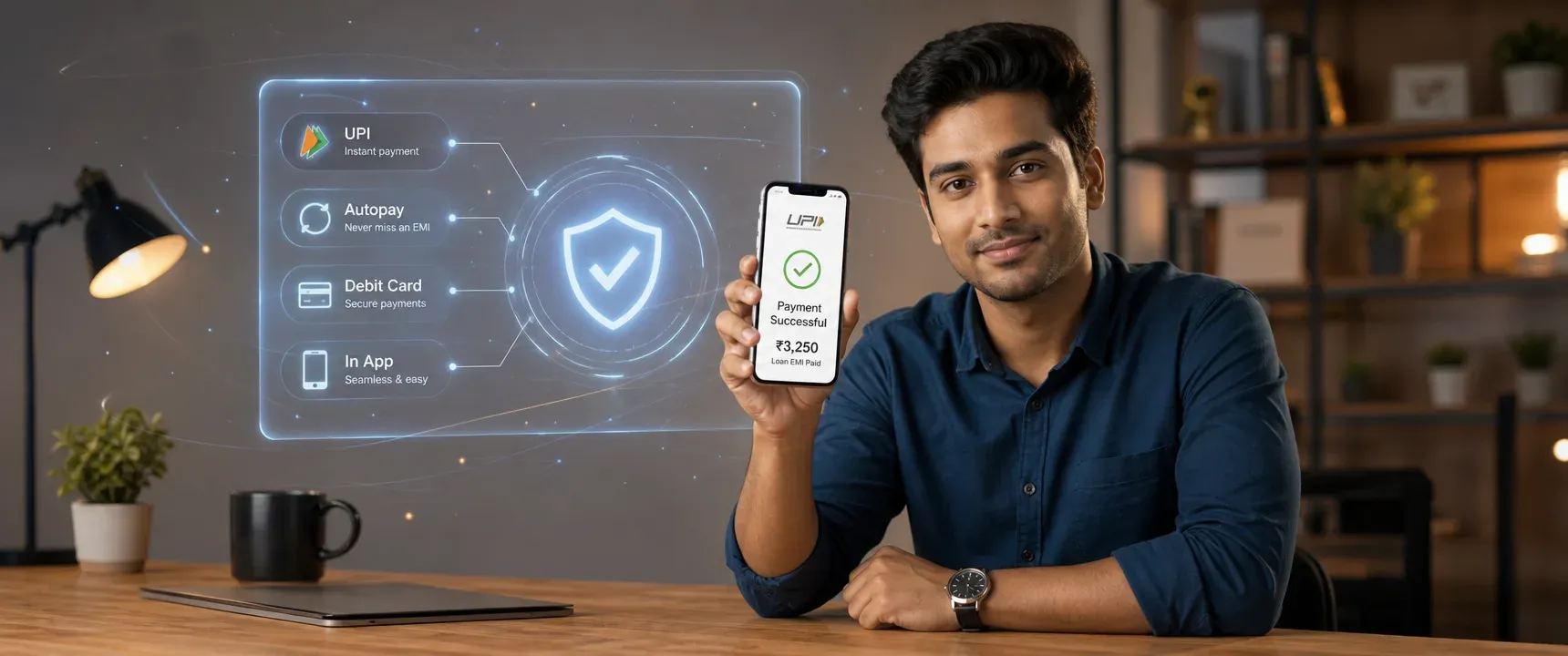
Table of content
Overview
Why repayment friction exists
How UPI loan repayment works
What is autopay in loan repayment?
Debit card and in app options
Why method choice builds trust
Choosing the right method
FAQs
Missing a loan EMI because the payment method felt unfamiliar or clunky is more common than most borrowers admit. For millions of Indian borrowers, the real friction in a loan is not the interest rate or the approval wait. It is the moment repayment is due and the method does not match how they already move money. mPokket approaches this problem by offering repayment method choice, giving borrowers the ability to pay EMIs through UPI, autopay, debit card, or in app options that align with everyday digital payment habits.
Follow our Whatsapp Community for more offers and updates.
Join nowMost loan conversations in India focus on approval speed and interest rates. Borrowers compare disbursal time, eligibility criteria, and documentation. Repayment design rarely enters the decision.
Yet repayment is where the borrower relationship actually lives. A salaried employee comfortable with UPI may struggle if forced to set up a new NACH mandate. A gig worker used to debit card transactions may find autopay confusing. When the payment method does not match the borrower's habits, even a small EMI can feel burdensome.
This mismatch is a design problem, not a borrower problem. Lenders that recognize this can reduce missed payments and build trust that lasts beyond the first disbursement.
UPI loan repayment lets a borrower pay their EMI the same way they pay for groceries, utility bills, or peer transfers. The borrower opens the lending app, selects the repayment option, and completes the transaction using their UPI ID or a linked bank account. The payment settles in real time.
mPokket supports UPI repayment within its app, which means borrowers do not need to navigate a separate portal or remember a payee account number. The process mirrors what hundreds of millions of Indians already do daily through UPI apps. According to the National Payments Corporation of India (NPCI), UPI processed over 13 billion transactions in a single month in early 2026 (NPCI, 2026). That volume reflects deep behavioral comfort, and mPokket taps into it for EMI collection.
For borrowers who want manual control over each payment, UPI repayment is ideal. They see the amount, confirm it, and receive instant confirmation. No ambiguity about whether the payment went through.
Autopay is an automatic deduction mechanism. The borrower authorizes the lender to pull the EMI amount from a linked bank account or UPI ID on a fixed date each month. Once set up, the borrower does not need to remember due dates or initiate payments manually.
mPokket offers autopay as a repayment mode so that borrowers who prefer a hands off approach can avoid the risk of forgetting a due date. This is especially useful for salaried employees whose salary credits on a predictable date each month. They can align the autopay deduction with their salary cycle.
Autopay also supports credit building. On time repayment, month after month, can help strengthen a borrower's credit profile. For first time borrowers or freshers building credit history, autopay removes the human error factor from the equation.
Borrowers retain control. If circumstances change, they can typically cancel or modify autopay settings. The Reserve Bank of India (RBI) has issued guidelines on recurring payment mandates that protect consumer interests in digital autopay setups (RBI, 2025).
Not every borrower prefers UPI or autopay. Some are more comfortable using a debit card for transactions. Others want to handle everything within the lending app itself without switching to a separate payment interface.
mPokket accommodates these preferences by offering debit card repayment and in app repayment modes. A borrower who trusts debit card transactions can use that channel. Someone who wants a single app experience can complete repayment without leaving the mPokket interface.
This variety matters because India's digital payment landscape is not uniform. A delivery partner in a tier 2 city may rely on a debit card. A freelancer in a metro may prefer UPI. A homemaker managing household finances may want the simplicity of tapping a button inside the app. Repayment method choice respects these differences.
Trust in lending is not built at the moment of approval. It is built during repayment. Every EMI cycle is a touchpoint where the borrower either feels in control or feels anxious.
When mPokket lets borrowers choose between UPI repayment, autopay, debit card payment, and in app options, it signals something important: the platform is designed around the borrower's convenience, not just the lender's collection efficiency. This distinction matters for borrower segments that are new to formal credit, such as freshers, gig workers, interns, and homemakers.
A borrower who repays comfortably is more likely to repay on time. A borrower who repays on time can build a stronger credit profile. A stronger credit profile opens access to better financial products in the future. The repayment method is the first link in that chain.
The best repayment method depends on the borrower's situation. Salaried employees with predictable income may benefit most from autopay, since it removes the need to remember due dates. Gig workers or freelancers with variable income might prefer UPI repayment, which lets them pay when funds are available. Borrowers who are cautious about automatic deductions can use debit card or in app payment for full manual control.
mPokket's flexible repayment modes are designed to fit these different profiles. The goal is not to push one method over another. It is to let each borrower pick the mode that reduces their personal friction the most.
Before choosing, borrowers should confirm that their linked bank account has sufficient balance on the due date (for autopay), that their UPI app is active and linked (for UPI repayment), or that their debit card is enabled for online transactions. Small preparation steps like these can prevent failed payments and protect the borrower's repayment record.
Repayment method choice is a quiet but powerful feature. It does not make headlines the way instant disbursal does. But for the borrower making their third or fourth EMI payment, it is the difference between a loan that fits their life and one that creates unnecessary stress. mPokket's approach to flexible repayment modes reflects a commitment to borrower convenience that extends well beyond the approval screen.
Yes. mPokket supports UPI loan repayment within its app. Borrowers can pay their EMI using a UPI ID or linked bank account, and the transaction settles in real time, just like any other UPI payment.
Autopay automatically deducts your EMI from a linked bank account or UPI ID on the scheduled due date. mPokket offers this feature so borrowers can avoid missed payments without manually initiating each transaction.
The borrower opens the mPokket app, selects the repayment option, and completes the EMI payment through UPI. The process mirrors a standard UPI transfer and provides instant confirmation once the payment is successful.
UPI transactions are secured by multi factor authentication, including UPI PIN verification. The National Payments Corporation of India (NPCI) governs the UPI framework, and RBI guidelines protect consumers in digital payment transactions.
How to Choose the Right Digital Lending Platform: A Comparison Guide for 2026
4 min read • 12 May 2026
What Is an NBFC Loan and How Does It Work?
3 July 2026
How to Choose the Right Urgent Personal Loan During Financial Emergencies
4 min read • 10 August 2026
How First-Time Borrowers Can Build Credit History in India (Step-by-Step Guide)
5 min read • 6 May 2026