3 mins min read • 11 November 2026


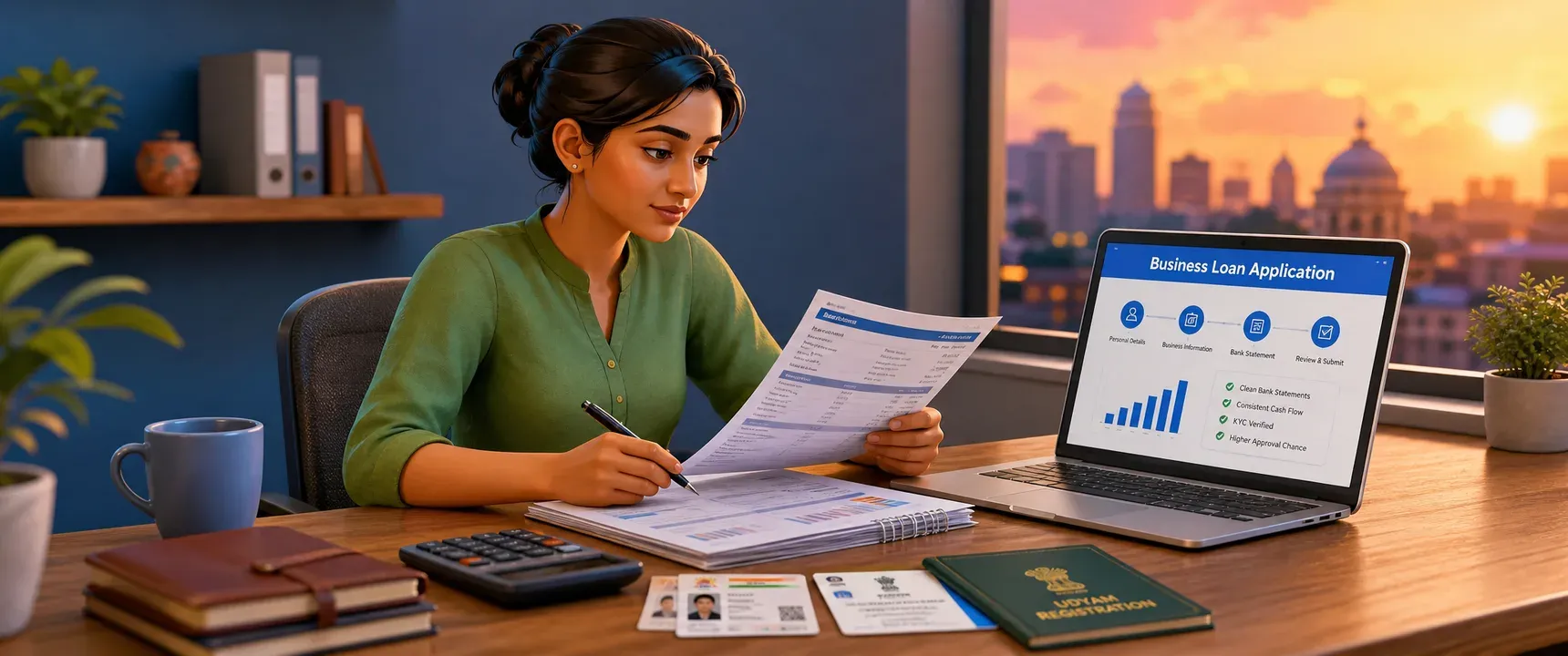
Table of content
Overview
What lenders actually evaluate
Seven practices for digital readiness
Documents to organize before applying
Why alternative assessment matters
Common mistakes that reduce eligibility
Preparing builds long term access
FAQs
Most small business owners in India lose access to digital credit not because their business is weak, but because their records are. When a lender reviews an online business loan application, the decision often rests on how clearly the applicant can demonstrate financial stability, consistent cash flow, and legitimate operations. mPokket recognizes that many micro and small enterprises struggle at this stage. Preparing before you apply can help transform a rejection into an approval.
Follow our Whatsapp Community for more offers and updates.
Join nowBusiness loan eligibility in India goes beyond a single credit score. Digital lenders, including platforms like mPokket, typically assess several dimensions before approving an application.
Business vintage is one factor. Most lenders look for at least six months of operational history. This does not mean you need years of trading records, but you do need to show that your enterprise has been active and generating revenue consistently.
Turnover and cash flow patterns matter significantly. Lenders examine bank statements to understand whether money flows in regularly. A business that receives payments sporadically, with long gaps between deposits, raises concerns about repayment capacity.
Documentation completeness is another checkpoint. Missing or outdated KYC documents, absent business proof, or mismatched details between your PAN, Aadhaar, and bank account can stall or disqualify an application entirely.
The following practices can help small business owners and self-employed professionals strengthen their position before applying for an online business loan in India.
Open a dedicated business bank account if you have not already. Mixing personal and business transactions makes it difficult for lenders to assess your actual business income. A clean business account with identifiable inflows from customers or clients signals operational legitimacy.
Deposit business earnings regularly into your account. Avoid holding cash outside the banking system for extended periods. Lenders using alternative data assessment look at deposit frequency, average monthly balance, and transaction regularity. Even small, consistent deposits are more convincing than occasional large ones.
Formal registration strengthens your application considerably. Depending on your business type, consider obtaining GST registration, Udyam MSME certificate, or a shop and establishment license. These documents serve as business proof that digital lenders can verify quickly during the application process.
Ensure your PAN card, Aadhaar card, and bank account details are linked and up to date. Digital KYC verification through OTP based processes requires that these documents match. Any discrepancy between your registered mobile number, Aadhaar address, or PAN details can delay or block approval.
If you receive payments through UPI, online transfers, or point of sale systems, maintain those records. Client invoices, receipts, and digital payment confirmations create a verifiable trail. For self-employed professionals like doctors, CAs, and freelancers, this trail can substitute for traditional salary slips.
Before applying, calculate how much EMI you can realistically afford each month. Use a business loan EMI calculator to estimate monthly obligations based on the loan amount and tenure you need. Applying for an amount that aligns with your actual cash flow can help demonstrate responsible borrowing intent to the lender.
While some digital lenders like mPokket use alternative assessment methods and may not require a perfect CIBIL score, checking your credit report beforehand is still wise. Identify any errors, outstanding dues, or missed payments that could affect your application. If you have no credit history, a clean bank account with steady activity can help compensate.
Having the right documents ready before you start an online business loan application can help reduce processing time. The table below outlines common requirements for digital business loan applications in India.
| Document category | Examples | Why it matters |
|---|---|---|
| Identity verification | PAN card, Aadhaar card | Required for digital KYC and OTP based verification |
| Business proof | GST certificate, Udyam registration, shop license | Confirms the business exists and operates legally |
| Financial records | Bank statements (6 to 12 months), ITR if available | Shows cash flow patterns and repayment capacity |
| Income evidence | Client invoices, sales receipts, UPI transaction records | Supports income claims for self-employed applicants |
| Address proof | Utility bill, rental agreement, Aadhaar with current address | Verifies business or personal address for disbursal |
Not every lender requires all of these. Platforms like mPokket that offer paperless loan processes may need fewer physical documents, but having them organized ensures you can respond quickly if additional verification is requested.
Traditional banks often rely heavily on CIBIL scores and collateral. This approach excludes millions of micro businesses and first time borrowers who lack formal credit histories. Digital lenders are shifting toward alternative data based approval, examining bank account activity, digital payment patterns, and business performance indicators instead.
For a small shop owner, a tiffin service operator, or a freelance professional, this shift is significant. It means that consistent UPI transactions, regular bank deposits, and transparent documentation can carry real weight in the approval process. mPokket's approach to digital lending is designed to consider these alternative signals, which can help applicants who might not qualify through conventional channels.
This does not mean documentation becomes optional. It means the type of documentation changes. Instead of pledging property or producing years of audited financials, you demonstrate readiness through clean records and operational transparency.
Several avoidable errors can weaken an otherwise strong application. Applying with incomplete bank statements is one. Submitting only two or three months of records when the lender expects six months creates an immediate gap.
Another common issue is applying for amounts that far exceed your demonstrated income. If your monthly business inflow averages Rs 50,000, requesting a loan of Rs 5,00,000 without clear justification raises red flags about repayment capacity.
Failing to update your Aadhaar or PAN details after a change of address or name also causes friction during digital KYC. These seem like minor administrative tasks, but they directly affect whether your application clears automated verification checks.
Finally, ignoring existing obligations is risky. If you already have active EMIs or outstanding dues, factor those into your application. Lenders assess total debt affordability, not just the new loan in isolation.
Digital loan readiness is not a one time exercise. The habits you build, such as maintaining clean bank records, keeping registrations current, and tracking business income digitally, create a foundation for repeated access to credit. Each successful repayment strengthens your credit profile and can help unlock larger loan amounts or better terms in the future.
For small business owners, self-employed professionals, and MSME operators across India, the path to a digital business loan starts well before the application screen. mPokket's digital lending platform is designed to assess readiness through transparent, alternative signals. By organizing your finances and documentation today, you position your business to qualify when the need arises.
You can apply through a digital lending platform like mPokket by completing KYC with your PAN and Aadhaar, uploading business proof such as GST or Udyam registration, and submitting recent bank statements. The process is typically paperless and can be completed from a mobile device.
Eligibility generally requires Indian nationality, a business that has been operational for at least six months, valid KYC documents, and a bank account showing consistent business transactions. Some digital lenders may also consider applicants without a formal credit score by using alternative data assessment.
Common documents include PAN card, Aadhaar card, GST or Udyam certificate, six to twelve months of bank statements, and proof of business address. Digital lenders like mPokket may require fewer physical documents but expect accurate, verifiable digital records.
Some digital lenders use alternative assessment methods that evaluate bank transaction patterns, UPI activity, and business consistency rather than relying solely on CIBIL scores. Clean financial records and steady business inflows can help compensate for a limited credit history.
Business loan eligibility refers to the criteria a lender uses to determine whether an applicant qualifies. These criteria typically include business vintage, turnover, documentation completeness, KYC verification, and demonstrated repayment capacity based on cash flow analysis.
Does Udyam Registration Improve MSME Loan Eligibility?
2 min read • 10 September 2026
Why borrowers with no credit history still get confused by digital loan eligibility in India
4 mins min read • 10 November 2026
How instant approval works inside a digital loan app in India
3 mins min read • 10 November 2026
How to Plan Self Employed Business Loan EMIs With Irregular Monthly Income?
3 min read • 10 November 2026
