4 mins min read • 2 November 2026


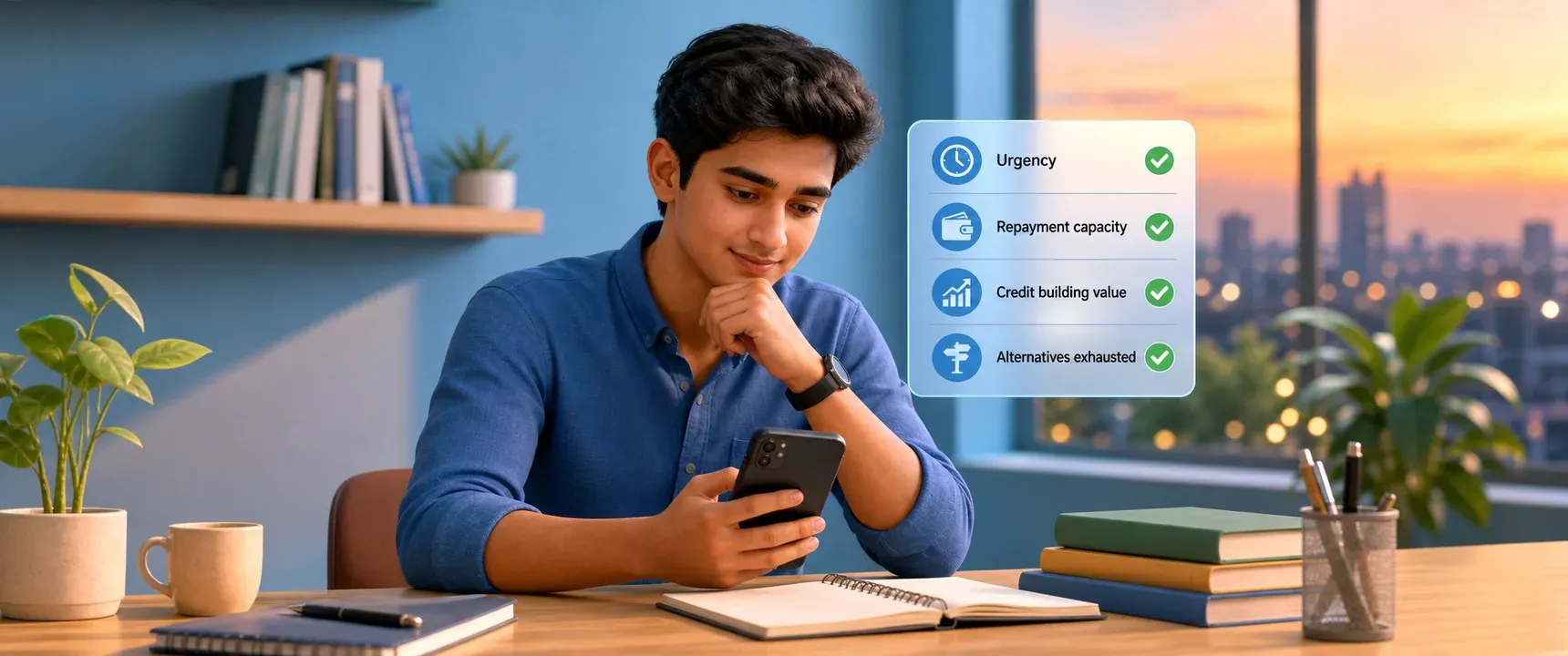
Table of content
Summary
Why first time borrowers hesitate
The four pillar readiness framework
How to assess urgency honestly
Calculating repayment capacity
Credit building as a strategic reason
When to choose alternatives
Putting the framework into action
FAQs
What is a borrowing readiness framework? - It is a structured set of questions that helps first time borrowers evaluate urgency, repayment capacity, credit building opportunity, and alternatives before taking a loan. mPokket recommends this approach over impulse borrowing.
Can I get a loan without credit history? - Yes. Digital lenders like mPokket use alternative data assessment, such as bank statements and Aadhaar PAN KYC, to approve first time borrowers who have no prior credit score.
How do I know if I can repay? - Calculate whether your projected EMI stays below 30% of your monthly income or stipend. If it does, repayment is likely manageable. If it does not, consider borrowing a smaller amount or waiting.
Why does timing matter for credit building? - Borrowing a small amount now and repaying on time can help build your credit history early. That disciplined repayment record makes future borrowing easier and cheaper.
What alternatives should I check first? - Before borrowing, check whether you can cover the expense through savings, a family arrangement, or by delaying the purchase. If none of those work and the need is genuine, a small digital loan can be a responsible choice.
Follow our Whatsapp Community for more offers and updates.
Join nowMost guides answer whether you qualify for a loan. Few address whether you should borrow right now. That gap creates real anxiety for people who are new to formal credit in India.
Freshers worry about taking on debt before their career stabilizes. Students with stipend income wonder if lenders will even consider them. Homemakers exploring a tiffin or stitching venture question whether a small loan is worth the commitment.
The hesitation is healthy. It signals that you take financial decisions seriously. What you need is not more confidence; you need a clear decision framework.
mPokket encourages first time borrowers to evaluate four dimensions before applying. Score yourself honestly on each one. If three or four pillars show green, borrowing now is likely a sound decision. If two or more show red, it is better to wait or explore alternatives.
| Pillar | Key question | Green signal | Red signal |
|---|---|---|---|
| Urgency | Is this expense time sensitive? | Delaying causes real harm (medical bill, exam fee, rent deposit) | Expense is discretionary and can wait 2 to 3 months |
| Repayment capacity | Can I repay without stress? | EMI is below 30% of monthly income or stipend | EMI would consume most of your disposable income |
| Credit building value | Will this loan help my financial future? | You have no credit history and on time repayment can help build one | You already have multiple active loans or recent missed payments |
| Alternatives exhausted | Have I checked non borrowing options? | Savings, family support, and deferral are not viable | You have accessible savings or the vendor offers a payment plan |
This matrix is not about perfection. It is about making the decision visible and structured rather than emotional.
Urgency is the most commonly misjudged pillar. A flash sale on a gadget feels urgent but is not. A medical bill or a certification deadline that affects your career trajectory genuinely is.
Ask yourself: what happens if I wait 30 days? If the answer involves measurable harm, such as losing a job opportunity, facing a medical complication, or defaulting on rent, the urgency is real. If the answer is mild inconvenience, waiting is the wiser path.
mPokket is designed to help with genuine short term needs, not to fund lifestyle purchases that can be planned for over time.
Repayment capacity is the pillar where numbers matter most. Here is a simple method any first time borrower can use.
List your monthly income. This could be a salary, a stipend, freelance earnings, or household income if you are a homemaker with a small venture. Then subtract your fixed expenses: rent, food, transport, phone bill, and any existing obligations.
The remainder is your disposable income. A safe EMI should not exceed 30% of that figure. For example, if your disposable income after essentials is Rs 8,000, your EMI should stay at or below Rs 2,400.
Digital lenders like mPokket offer flexible repayment options and shorter tenures that can help keep EMIs manageable. Use a personal loan EMI calculator before you apply so you know exactly what the monthly commitment looks like.
For someone with no credit history, a small, well managed loan can be a strategic move. Every on time repayment gets reported to credit bureaus. Over six to twelve months, that builds a credit profile from scratch.
This matters because future financial milestones, such as renting a better apartment, buying a vehicle, or funding a business, often require a credit score. Starting early with a small, disciplined loan through a platform like mPokket can help establish that foundation.
However, borrowing solely to build credit without a genuine need is risky. The framework works best when credit building is a secondary benefit, not the primary reason.
Responsible borrowing means acknowledging that a loan is not always the answer. Before you apply, run through these alternatives.
Check your savings. Even a small emergency fund can cover minor expenses without interest costs. Ask whether a family member can help with a short term, interest free arrangement. See if the expense can be deferred; some course providers offer installment plans, and some landlords accept staggered deposits.
If none of these options work and the need passes the urgency test, a collateral free digital loan from mPokket can bridge the gap responsibly. The key is that borrowing should be the last resort, not the first impulse.
Here is how a first time borrower might walk through the framework in practice.
Suppose you are a fresher who just started a job. Your laptop breaks down, and you need it for work. Urgency: high, because your productivity and job security depend on it. Repayment capacity: your starting salary is Rs 25,000, fixed expenses are Rs 15,000, and a 3 month EMI of Rs 2,500 fits within 30% of your Rs 10,000 disposable income. Credit building: you have no credit history, so on time repayment helps. Alternatives: you checked with family, but they cannot help this month. All four pillars show green. Borrowing now is a reasonable decision.
Contrast that with wanting to fund a vacation before your first paycheck. Urgency: low. Repayment capacity: uncertain because you have not received a full month's salary yet. Credit building: valid, but the risk outweighs the benefit. Alternatives: you could plan the trip for next quarter. In this case, waiting is the better choice.
mPokket supports borrowers who approach credit thoughtfully. The platform offers a paperless application process, Aadhaar and PAN based digital KYC, and direct bank transfer, all designed to make responsible borrowing accessible for credit thin Indians.
The right time to take your first loan is not when you feel desperate or when an ad tells you to act now. It is when your framework says the need is real, the repayment is manageable, and the alternatives have been honestly considered. That is the kind of borrowing that builds financial confidence, not regret.
Yes. Digital lenders like mPokket use alternative data assessment, including bank account activity and Aadhaar PAN verification, to evaluate first time borrowers. A prior credit score is not always required for approval.
Freshers should look for apps that offer paperless KYC, flexible repayment, and small loan amounts suited to early career incomes. mPokket is designed to help freshers and students access responsible credit without collateral.
Borrow only what you need, and ensure the EMI stays below 30% of your monthly disposable income. Starting with a smaller amount helps you build repayment discipline and credit history without financial strain.
Yes. When you repay on time, the lender reports your repayment behavior to credit bureaus. Over several months, this creates a credit profile that can help you access better financial products in the future.
Most digital lenders require Aadhaar card, PAN card, a verified bank account, and proof of income such as a salary slip, bank statement, or stipend letter. mPokket uses OTP based digital KYC for a paperless process.
5 Ways Paperless Loan Applications Simplify Loan Access
4 min read • 7 May 2026
A responsible borrowing framework for instant personal loans in India
3 mins min read • 22 September 2026
What Mistakes Should Female Business Owners Avoid While Taking a Business Loan?
3 min read • 20 August 2026
