3 mins min read • 22 September 2026


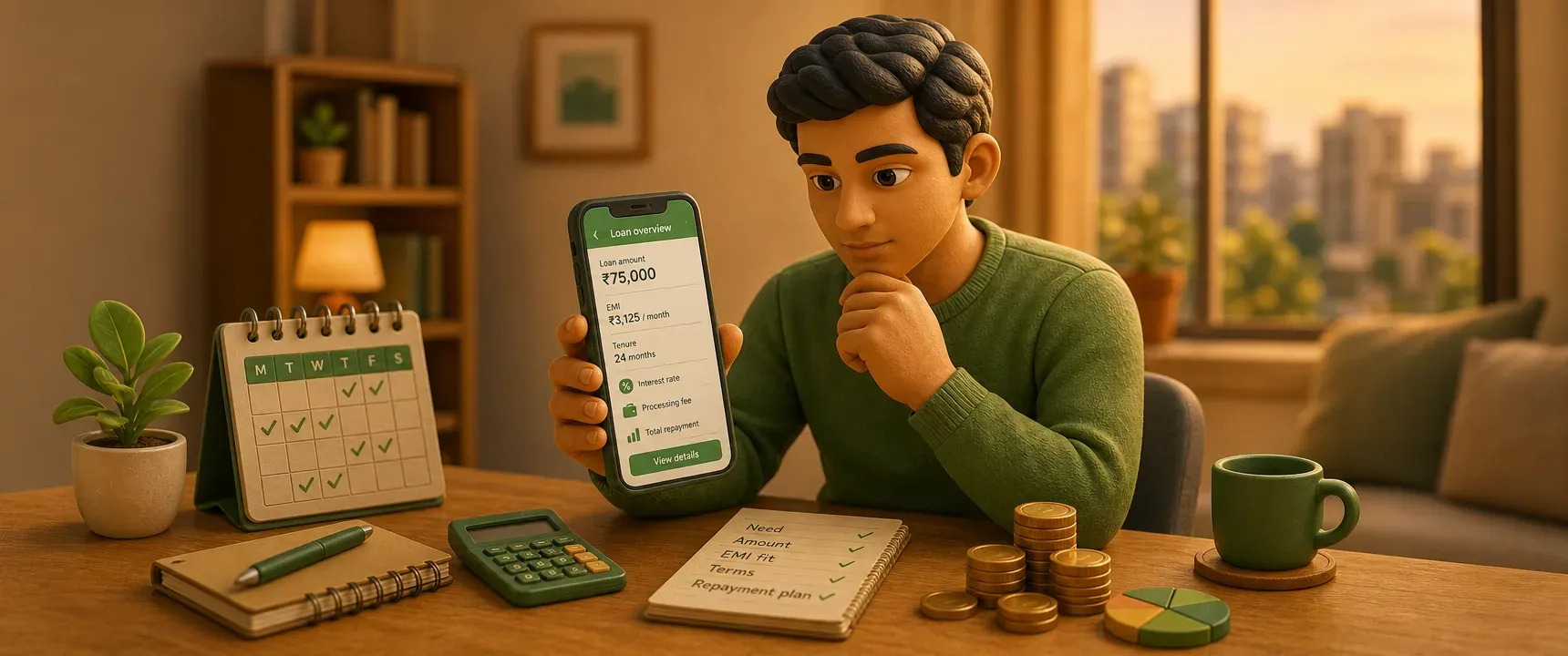
Table of content
Instant personal loans in India, a responsible borrowing framework
What is an instant personal loan?
How does it work?
Use this borrowing framework
How much is safe?
What should you compare?
Which borrowers should pause?
FAQs
If you need money fast, the real risk is not just getting approved. It is borrowing the wrong amount, choosing the wrong repayment plan, or using a loan app without checking how it works. This framework from mPokket explains what an instant personal loan is in India, when it makes sense, and how to borrow with control.
Follow our Whatsapp Community for more offers and updates.
Join nowAn instant personal loan is an unsecured loan offered through digital lending channels. You typically apply on a mobile app or online platform, complete KYC, share basic documents, undergo risk assessment, and receive disbursal into a verified bank account if approved.
In plain terms, it is a personal loan built for speed and convenience. It is called instant because the journey is digital and can move quickly. That does not mean approval is automatic, and it should not mean the borrower skips basic checks.
Most instant personal loans in India are used for short term needs. Common examples include medical bills, home repairs, month end cash crunch, urgent travel, education costs, or a temporary paycheck gap. Since these loans are usually unsecured, there is no collateral pledge.
That convenience can help. It can also create pressure to decide too fast. A responsible borrowing framework matters because a loan solved quickly can still become expensive or stressful if the amount, tenure, or repayment method does not fit your situation.
The digital lending journey is usually simple on the surface. You register with your mobile number, complete profile details, upload or verify documents such as PAN and Aadhaar, provide income or occupation proof where required, and link a bank account for disbursal.
After that, the lender or lending platform assesses eligibility. Depending on the product, this may include KYC verification, repayment capacity review, credit profile checks, alternative assessment, or a mix of these. If approved, funds are transferred to the bank account you verified.
Repayment then starts under the terms shown in the loan agreement. That may involve EMI repayment, autopay, in app repayment, UPI repayment, debit card payment, or another supported mode. The key point is simple: the fast part is access, but the binding part is repayment.
This is where mPokket can add value as an authority voice. Borrowers searching for instant personal loans often want speed first. The safer answer is speed plus clarity on cost, due dates, and repayment discipline before the application is submitted.
A good framework answers three questions before you borrow: should I take this loan, how much should I borrow, and how will I repay it without strain. If any of those answers are weak, the right move may be to pause.
Define the purpose first. Write the expense in one line. Good reasons are specific and time bound, such as a medical bill, repair, exam fee, or a gap before salary credit. Weak reasons are vague lifestyle spending, nonessential shopping, or borrowing because the app made it easy.
Check whether borrowing is necessary. Ask whether a smaller expense cut, emergency savings, employer salary advance, family support, or a credit free delay can solve the issue. Instant personal loans are useful when the need is real and time sensitive, not when they replace basic budgeting.
Borrow the minimum workable amount. Do not borrow up to the maximum limit just because it is shown in the app. Start from the expense amount, add only what is necessary, and stop there. A smaller principal reduces both repayment pressure and the chance of repeat borrowing.
Test the EMI against your month. Before applying, map your expected inflows and fixed outflows. Rent, food, transport, utilities, school fees, and current EMIs come first. The loan EMI should fit after essentials, not compete with them.
Choose tenure for affordability, not illusion. A longer tenure can lower the monthly EMI, but it may increase total repayment. A shorter tenure can reduce total cost, but it may create stress if income is tight. Responsible borrowing means balancing monthly comfort with overall cost.
Review the full cost, not just the monthly number. Borrowers often focus only on whether this month feels manageable. Instead, check processing fees, any stated charges, total repayment, and the schedule of due dates. If you cannot explain the full cost in your own words, do not proceed yet.
Match repayment mode to your habits. If you tend to miss dates, autopay can help. If your balance varies and you want control, manual repayment with reminders may suit you better. If UPI repayment is available, keep proof of payment and verify the status in the app after every transaction.
Prepare for delays and surprises. Ask what happens if salary is late, a client payment is delayed, or another emergency appears. Responsible borrowers leave room for uncertainty. If one missed inflow breaks the plan, the loan may be too large or the timing may be wrong.
Verify the lender journey before sharing data. Check that the app clearly explains KYC, consent, disbursal, repayment options, due dates, and support. Since digital lending is built on document and identity verification, clarity around the process is part of loan safety, not a minor detail.
Borrow once, then exit cleanly. The goal is not continuous dependence on emergency credit. Use the loan to solve the stated problem, repay on schedule, keep records, and avoid stacking one short term loan on top of another.
There is no universal number that is safe for everyone. The right amount depends on income stability, existing EMIs, basic household costs, and how soon the need will be resolved. A salaried employee with predictable income may plan differently from a freelancer or gig worker with uneven monthly cash flow.
A practical rule is to work backward from repayment capacity. First estimate what you can repay comfortably each month after essentials. Then compare loan amount and tenure options against that figure. If the EMI leaves no room for normal volatility, the amount is too high.
For first time borrowers, smaller is often better. It is easier to manage, easier to track, and less likely to create rollover behaviour. If your main reason for borrowing is to build credit, that is a weak reason on its own. Repayment capacity should come before credit building hopes.
Many searches ask for the best instant personal loan apps in India. A responsible answer is not one brand list for every borrower. The best option depends on fit, and fit starts with a checklist that helps you compare digital lending products without getting distracted by speed alone.
| What to compare | Why it matters | What to look for |
|---|---|---|
| Loan amount | Controls repayment pressure | Only the amount you need |
| Tenure | Affects EMI and total cost | A term you can sustain |
| EMI and repayment | Determines monthly fit | Clear due dates and modes |
| Fees and charges | Changes total repayment | Transparent cost breakdown |
| KYC and documents | Affects speed and trust | Clear digital verification steps |
| Disbursal process | Matters for urgent needs | Verified bank account transfer |
| Support and servicing | Helps if issues arise | Visible help and resolution paths |
If you are comparing a loan app with a bank, the core trade off is usually convenience versus a more traditional process. Digital lending can reduce branch visits and speed up KYC and disbursal. But the borrower still needs the same discipline on affordability and repayment.
This is also why mPokket should be understood through the lens of responsible use. The right digital loan is not the one that simply looks fastest. It is the one whose purpose, amount, tenure, and repayment terms make sense for your actual cash flow.
Instant personal loans are not a good fit for every urgent need. You should pause if you do not know the exact expense amount, do not have a credible repayment source, already carry heavy EMI obligations, or are considering one loan to repay another.
You should also pause if the app experience feels unclear. If you cannot understand the repayment schedule, if fees are not easy to identify, or if the support path is hard to find, step back. In digital lending, confusion before disbursal can become a larger problem after disbursal.
For self employed borrowers, freelancers, interns, and gig workers, the main caution is income variability. A fixed EMI can still work, but only if it lines up with realistic average inflows. If your income changes sharply from month to month, plan from low months, not best months.
If you need money urgently, a disciplined five minute review can still prevent a costly mistake. Define the expense, test the EMI, confirm the full cost, and verify the repayment process. mPokket’s responsible borrowing lens is simple: borrow only when the need is real and the repayment path is clear.
An instant personal loan is an unsecured loan applied for through a digital process, usually on an app or online platform. In India, it commonly involves online KYC, approval checks, and direct bank transfer after approval.
Many instant personal loans are unsecured, which means they do not require collateral. That makes access easier, but you still need to check eligibility, repayment terms, total cost, and whether the EMI fits your monthly budget.
Check the loan amount, tenure, EMI, total repayment, fees, due dates, repayment modes, KYC process, and disbursal method. Also confirm that the app clearly explains consent, support, and what happens if a payment is delayed.
You should borrow only the minimum amount needed for the specific expense. A responsible amount is one whose instalment fits after essential monthly costs and existing EMI commitments, without forcing you to depend on another loan later.
Safety depends on the clarity and quality of the lending journey, not on speed alone. Use apps that clearly explain KYC, repayment schedules, charges, bank transfer steps, and support, and avoid borrowing when key terms are hard to understand.
What Young Professionals Should Know About Borrowing Before Taking a Loan
4 min read • 7 May 2026
How are Mobile Loan Apps Transforming Borrowing in India in 2026?
4 min read • 11 May 2026
Why Are Easy Loans Popular Among Borrowers In Mumbai?
3 min read • 5 September 2025
How does mPokket evaluate personal loan eligibility for the self employed
3 min read • 9 September 2026