3 min read • 29 November 2026


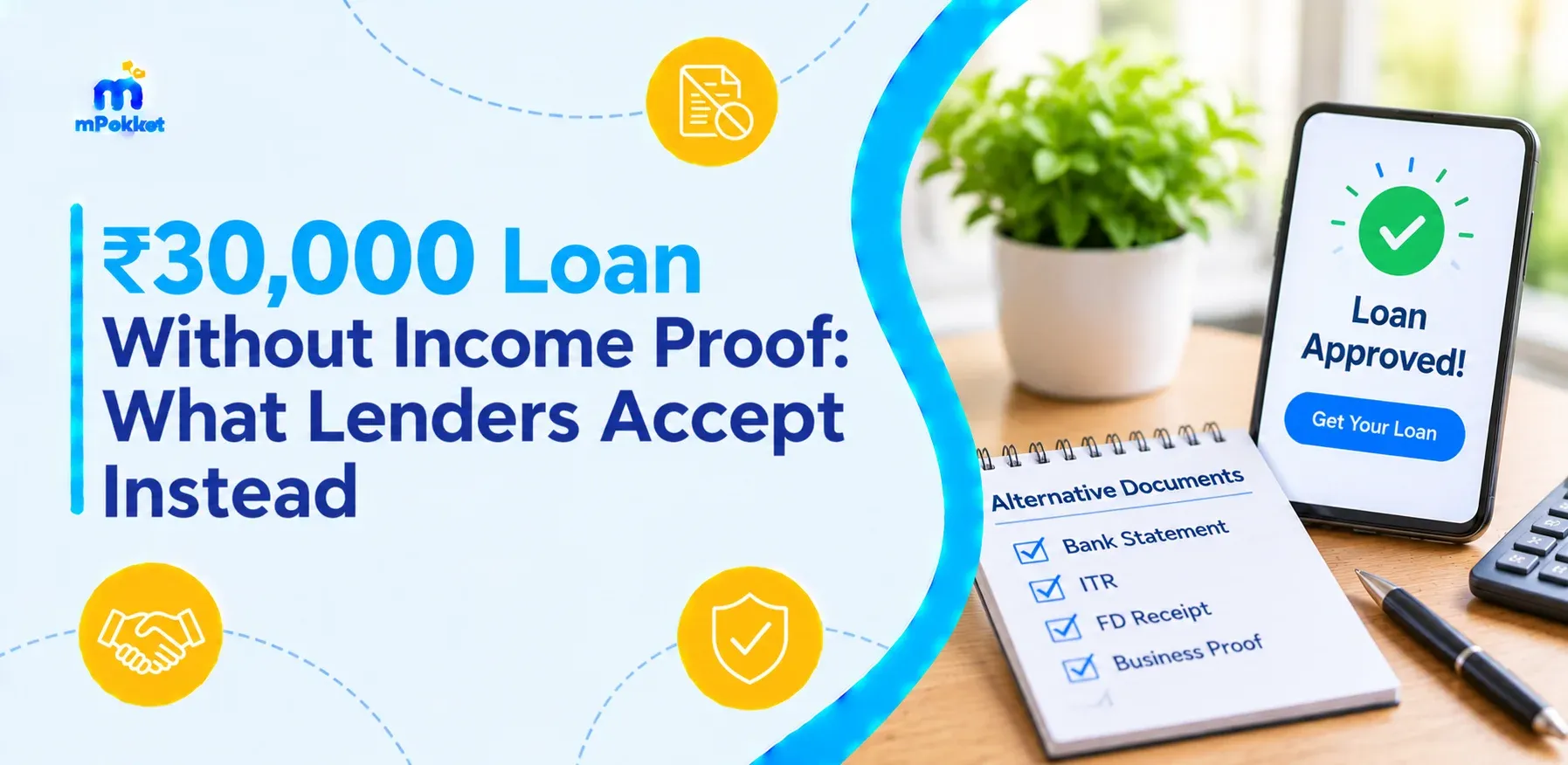
Table of content
Overview
What Does a ₹30,000 Loan Without Income Proof Really Mean?
Which Alternative Documents Do Lenders Accept Instead of a Salary Slip?
Who Can Get a ₹30,000 Loan Without Income Proof?
What Are Your Options: Smaller First Loan, Co-Applicant or Secured Loan?
What Are the Red Flags of “No Documents” Loan Offers?
Which App Offers Personal Loans Using Alternative Credit Scoring?
How Does mPokket Ease Rigid Eligibility Requirements?
Wrapping Up: Is a ₹30,000 Loan Without Income Proof Right for You?
Frequently Asked Questions
A ₹30,000 loan without salary slip is a small, unsecured loan where the lender judges you on bank inflows, credit history and digital data instead of payslips or ITRs. It isn’t “no checks”. It’s different checks.
Rent is due, a medical bill just landed, and the one document every lender asks for is the one you don’t have. If you freelance, run a small shop, work for cash or are still studying, you know this feeling. Banks often ask for payslips, ITRs and a pile of paperwork, even for a small amount.
Here’s the good news. A ₹30,000 loan without income proof is possible when you can show repayment ability in other ways. Lenders look at your account activity, credit behaviour and business or work records instead.
This guide explains what “no income proof” really means, which documents replace a salary slip, who qualifies, and which offers to avoid. By the end, you’ll know whether a ₹30,000 personal loan suits you and what to keep ready.
Follow our Whatsapp Community for more offers and updates.
Join nowIt means you can skip formal income documents like salary slips and ITRs. You can’t skip verification. Lenders still confirm who you are and whether you can repay. Here’s what that looks like.
For a loan without salary slip, lenders usually accept bank statements, UPI history, business proof, client invoices and a clean repayment record. Together, they show money comes in regularly. Here’s a quick view, then the two that matter most.
Bank Statements and UPI Inflows
Three to six months of statements show how often money lands in your account and how much stays. Steady UPI credits from clients or customers count as real evidence of earning, even without a payslip.
Credit History and Repayment Record
A score around 700 or above, plus on-time EMIs or card payments, tells lenders you repay what you owe. Thin credit file? One small loan repaid on schedule can build it quickly.
Business and Freelance Proof
Self-employed borrowers can add GST filings, Udyam registration, invoices or merchant settlement reports. This is the strongest route for personal loans for self employed with no proof of income.
Freelancers, gig workers, small business owners, cash-salaried staff, students and part-time earners can qualify if their account activity shows steady inflows. Most lenders expect Indian residents roughly between 18 and 60 years. See how profiles compare.
Not sure where you fit? Check eligibility inside a lender’s app first. A soft check usually won’t hurt your score.
If your profile feels thin, you have three practical routes. Pick based on how much proof you can show and how fast you need the money.
One simple rule helps: keep total EMIs below about 40 to 50 percent of your average monthly inflow. Lenders read that as comfortable repayment capacity.
A genuine lender never skips KYC and never asks for money before disbursal. Any offer promising a personal loan without documents and guaranteed approval is a warning sign. Watch for these.
If something feels off, stop and verify the lender on the RBI website before sharing any details.
Several RBI-regulated digital lenders score borrowers on alternative data, such as bank inflows, app-based verification and repayment behaviour. mPokket is one such platform, built mainly for students, young professionals and the self-employed.
When comparing apps, check these basics:
mPokket relaxes traditional rules by assessing digital footprints and repayment behaviour, which opens small-ticket credit to people banks often turn away. It’s a practical fit for a ₹30,000 loan without income proof.
On the personal loan side, mPokket serves freshers, interns, salaried users (including those paid in cash), and gig workers. On the business side, mPokket approves personal loans for self employed with no proof of income. Self-employed borrowers and small business owners can apply with business proof such as Udyam, GST or merchant verification, for working-capital needs. Loan limits, rates and charges depend on your profile, so confirm the exact terms in the app before you accept.
A ₹30,000 loan without income proof works when you replace payslips with solid alternatives: clean bank inflows, UPI activity, business proof and a good repayment record. Start small, borrow only what your inflows can handle, and stay away from upfront-fee offers.
Download the mPokket app, check your eligibility in minutes and see your personalised loan offer. No salary slip needed to start.
1. Can I get a ₹30,000 loan with no income proof at all?
Not with zero evidence. Lenders still need something showing you can repay, such as bank inflows, UPI activity or business records. A ₹30,000 loan without income proof usually means no payslip or ITR, not no verification.
2. Which documents can replace a salary slip for a ₹30,000 loan?
Bank statements of three to six months, UPI history, invoices, Udyam or GST certificates, rent receipts and stipend letters all work. Your credit report supports them. Together, they can replace a salary slip for a ₹30,000 personal loan.
3. Are loans without income proof more expensive?
Often, yes. Lenders see higher risk when income isn’t documented, so interest rates and fees can run higher. A smaller amount, shorter tenure and a good credit record can bring the cost down.
4. How can freelancers and students show repayment capacity?
Freelancers can share invoices, contracts and UPI credits. Students can show stipends, regular family transfers or part-time earnings, plus clean KYC. A first small loan repaid on time strengthens future applications.
How to Choose the Best Repayment Plan for a ₹30,000 Personal Loan?
2 min read • 9 July 2025
How Much Personal Loan Can I Get on a ₹30,000 Salary?
4 min read • 14 July 2026
What documents are required for an instant personal loan?
3 mins min read • 31 October 2026
How gig workers in India can show income consistency without salary slips
4 mins min read • 20 November 2026