3 min read • 15 November 2026


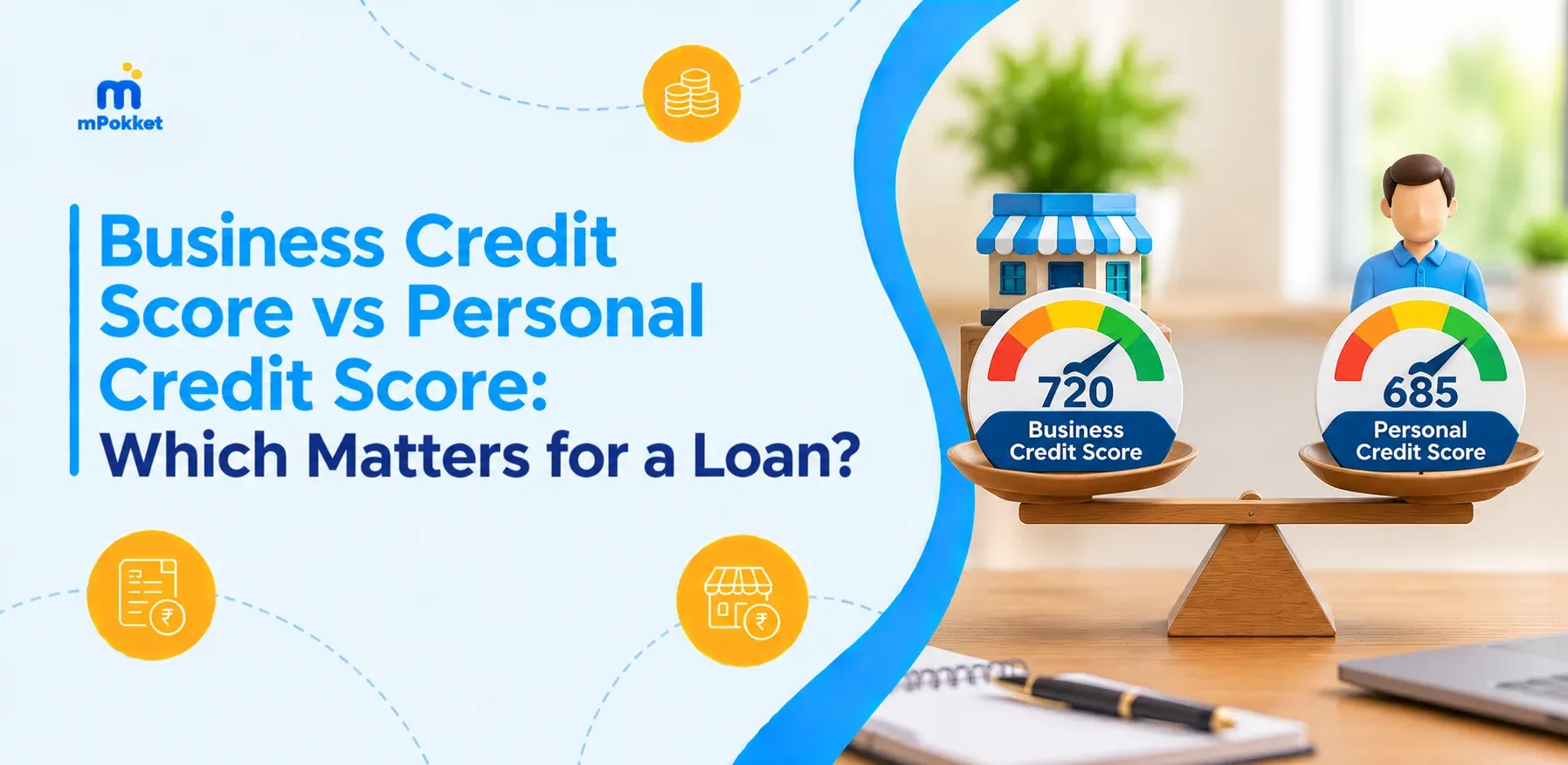
Table of content
Overview
What Is a Business Credit Score?
What Is a Personal Credit Score?
Business Credit Score vs Personal Credit Score: What Are the Key Differences?
What Is a Business Credit Report (Commercial Credit Report)?
Which Matters More for Business Loan Approval: Business or Personal Credit Score?
How Does a Business Loan Credit Check Work?
How to Improve Your Business and Personal Credit Scores?
How to Get a Business Loan With Low EMI?
Conclusion
Frequently Asked Questions
You’ve filled in the form, collected the papers and waited days, only to hear “your score is the issue.” Which score, though? Many owners don’t realise lenders can look at two. Mixing up the business credit score vs personal credit score is a common reason for rejections, higher interest rates and weeks of back-and-forth.
This guide explains it in plain language. You’ll see what each score means, how they differ, which one carries more weight, how a lender’s check works and how to keep your EMI manageable, even if your credit file is thin.
Follow our Whatsapp Community for more offers and updates.
Join nowIndia’s business credit measure is the CIBIL MSME Rank (CMR), which runs from 1 to 10, where 1 means the lowest risk. Lenders use it to judge whether your company will repay. Here’s what sits behind it.
What goes into it
Loan and overdraft repayments, how much of your limit you use, overdue amounts and how long the business has borrowed. Late GST filings and report errors can also pull the rank down.
What counts as good?
MSMEs ranked CMR 1 to 3 can qualify for lower interest rates than higher-risk ones. Aim for the low end of the scale.
A personal credit score is a three-digit number between 300 and 900. A score above 750 is generally seen as healthy. Let’s look at who calculates it and what moves it.
What shapes it
Repayment history, credit utilisation, the amount you owe against your income, credit mix, credit history length and new credit applications.
Who calculates it
Credit bureaus such as CIBIL, Equifax, Experian and CRIF High Mark generate personal credit reports. You can request a free report from each once a year.
The main difference in business credit score vs personal credit score is who gets assessed: your company or you. The table shows the rest.
A business credit report, also called a commercial credit report, records your company’s loans, outstanding balances and repayment history. The CMR is built from it. Here’s what it contains and how to get it.
What’s inside
Credit facilities, amounts due, repayment behaviour and your rank. Read it closely, because a wrong entry can quietly hurt your commercial credit report.
How to check it in India
Register on the TransUnion CIBIL commercial portal with your company PAN and GSTIN, pay the fee and complete KYC. Checking your own report doesn’t lower your rank.
Neither works alone. Established companies are judged mainly on business credit, while new or thin-file businesses see their personal credit score weigh heavily on the decision. The business credit score vs personal credit score balance shifts like this:
For proprietorships and small partnerships, lenders check the owner’s personal score alongside the commercial report.
A business loan credit check means the lender pulls your commercial credit report and, usually, your personal report, then adds income and bank statements. The usual steps:
Does it hurt your score?
A lender’s check is a hard enquiry and can dent your personal CIBIL score slightly. Too many applications in a short span raise your credit risk. Apply selectively.
You can lift both scores with the same habits. Start with these:
Borrow only what you need, compare the total cost (not just the EMI), pick a tenure you can service and fix your scores first. Then choose a lender whose eligibility fits your profile.
Not every borrower fits a bank’s checklist, which is where digital lenders help. mPokket, a Kolkata-based platform founded in 2015, works with NBFC lending partners who provide the loans. Its listing says it serves salaried professionals, self-employed people, merchants and gig workers. Recent news reports say the ticket size for small business owners has risen to up to ₹2 lakh.
It also relaxes some rigid requirements:
To be fair, unsecured digital loans cost more than secured bank loans. Aggregator listings show rates of 22% to 36% p.a., a 3.75% processing fee and tenures up to two years. For example, ₹25,000 over 12 months at 24% carries about ₹3,368 in total interest. Confirm the latest terms in the app before applying, and use these loans for short-term needs.
The business credit score vs personal credit score question has one honest answer: lenders look at both, and your situation decides which gets more weight. Track your commercial credit report, keep your personal score healthy and apply only when your profile is ready. When a traditional lender’s checklist doesn’t fit, a flexible app like mPokket can be a practical option.
1. What is the difference between a business credit score and a personal credit score?
A business credit score (CMR 1–10) measures your company’s repayment risk. A personal credit score (300–900) measures an individual’s. Each comes from a separate credit report.
2. Do banks check personal credit scores for business loans?
Usually yes, especially for proprietorships, partnerships and new businesses. Directors’ scores also come into play when they give personal guarantees.
3. Can I get a business loan with a low personal credit score?
Yes, but terms may be tougher. Strong cash flow, collateral, a co-applicant or lenders with flexible criteria can improve your chances.
4. How can I check my business credit report in India?
Use the TransUnion CIBIL commercial portal. Register with your company PAN and GSTIN, pay the fee and complete KYC to view your report and CMR.
5. What is included in a commercial credit report?
It lists your credit facilities, outstanding amounts and repayment history, plus your CIBIL MSME Rank. Lenders use it to assess default risk.
6. Does a business loan credit check affect my personal CIBIL score?
It can. If the lender pulls your personal report, that’s a hard enquiry and may cause a small dip. Checking your own score is a soft enquiry with no impact.
How to Get Small Business Loans for Women With Limited Credit History?
3 min read • 7 November 2026
Tips to Improve Your Credit Score Before Applying for a Business Loan
3 min read • 30 July 2026
What are the best business loans for MSMEs and startups in India
4 mins min read • 25 October 2026
Business Loan Eligibility: Criteria, Requirements, and Tips for Quick Approval
3 min read • 27 July 2026
