4 mins min read • 6 October 2026


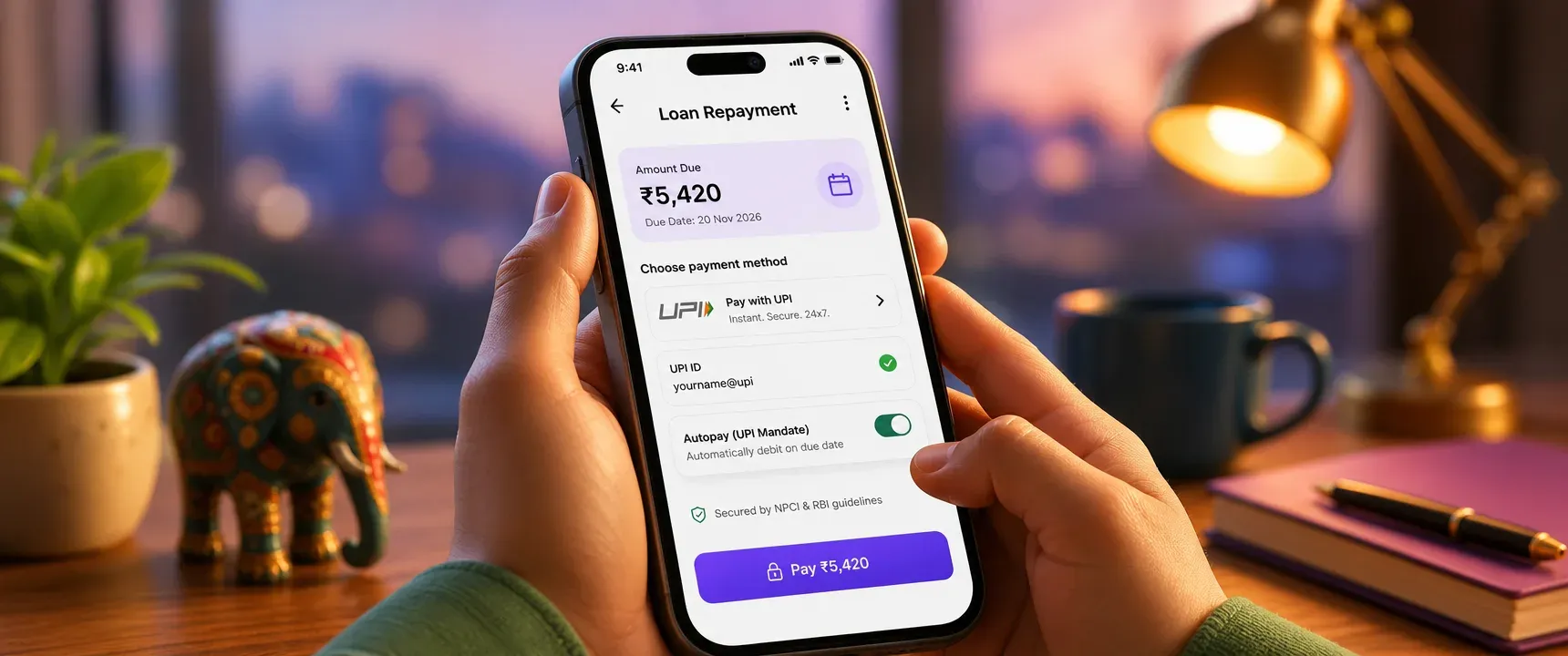
Table of content
Overview
What is the new repayment stack?
How does UPI loan repayment work?
What to check after UPI repayment
What is autopay loan repayment?
Is autopay safe for loan repayment?
Comparing repayment methods
Why repayment tools support discipline
Who benefits from this stack?
What mPokket offers in repayment
Trends shaping repayment in India
FAQs
Missing a loan EMI due date can cost you late fees, a dip in your credit score, and unnecessary stress. For millions of Indian borrowers, the repayment experience has historically been clunky: standing in queues, remembering NEFT details, or juggling multiple payment portals. That friction is disappearing. UPI, autopay, and connected in app repayment tools now form a new repayment stack that digital lenders like mPokket are building into the borrowing journey from day one. Understanding how these tools work can help you repay on time, every time.
Follow our Whatsapp Community for more offers and updates.
Join nowThe repayment stack refers to the set of digital tools a borrower uses to pay back a loan. In India, this stack has evolved rapidly. Traditional methods like cheque deposits and NEFT transfers are giving way to faster, mobile first options.
Today, the core components of the repayment stack for personal and small business loans include UPI payments, autopay mandates, in app repayment interfaces, and debit card payment options. Lenders like mPokket integrate these into a single loan management app, so borrowers can choose the method that fits their routine.
This shift matters because repayment convenience directly affects repayment discipline. When paying an EMI is as simple as approving a UPI request on your phone, borrowers are less likely to miss due dates. That protects their credit profile and keeps borrowing costs predictable.
UPI (Unified Payments Interface) is managed by the National Payments Corporation of India (NPCI). It connects your bank account to a payment app and lets you send money instantly using a UPI ID or QR code. For loan repayment, the process is straightforward.
When your EMI is due, you open your lender's app. You select UPI as the repayment mode. The app generates a payment request or displays a QR code. You approve the transaction through your preferred UPI app, such as Google Pay, PhonePe, or BHIM. The amount is debited from your linked bank account and credited to the lender in real time.
mPokket supports UPI repayment within its app, making it possible for borrowers to settle EMIs without switching between platforms. The confirmation is instant, and borrowers can verify the payment status inside the app immediately after the transaction.
After completing a UPI loan payment, verify three things. First, check that the transaction shows as "successful" in your UPI app's history. Second, confirm the payment is reflected in your lender's app under your repayment schedule. Third, save the UPI transaction reference number for your records. If a UPI payment fails due to a network issue or insufficient balance, the amount is typically reversed to your account within a few hours.
Autopay is a standing instruction that authorizes your bank or UPI app to automatically debit your EMI amount on a fixed date each month. You set it up once, usually during the loan onboarding process or through your lender's app, and it runs until the loan tenure ends or you cancel it.
There are two common types of autopay for loan repayment in India. The first is e-NACH (National Automated Clearing House), which works through your bank account. The second is UPI autopay, which uses a recurring UPI mandate linked to your UPI ID. Both are regulated by the Reserve Bank of India (RBI) and require your explicit consent before activation.
mPokket offers autopay as a repayment option, allowing borrowers to set up automatic EMI debits. This is designed to help borrowers who have busy schedules or irregular routines avoid missing due dates. You can typically cancel or modify autopay through the app or by contacting the lender, though it is advisable to do so before the next debit cycle.
Autopay mandates in India are governed by RBI guidelines. Your bank or UPI provider requires OTP or biometric verification before activating the mandate. The lender cannot debit more than the authorized amount without a new mandate. If you want to stop autopay, you can revoke the mandate through your bank or UPI app at any time.
Indian borrowers now have several repayment channels. Each has trade offs in terms of speed, convenience, and control. The table below summarizes the key differences.
| Repayment method | Speed | Automation | Best suited for |
|---|---|---|---|
| UPI (manual) | Instant | No (one time per payment) | Borrowers who prefer control over each payment |
| UPI autopay | Instant on due date | Yes (recurring mandate) | Salaried employees, anyone wanting hands free repayment |
| e-NACH autopay | Same day or next day | Yes (bank mandate) | Borrowers with stable bank balances |
| Debit card | Instant | No (manual entry) | Borrowers without UPI setup |
| In app payment | Depends on chosen mode | Varies | All borrowers using the lender's app |
mPokket supports multiple repayment modes within its app, including UPI and debit card options. This flexibility is designed to accommodate different borrower profiles, from salaried employees with predictable income to gig workers and freelancers with variable cash flow.
Repayment discipline is not just about willpower. It is about reducing the number of steps between "I owe money" and "I have paid." Every extra step, whether it is logging into a separate portal, remembering an account number, or visiting a branch, increases the chance of delay.
UPI and autopay shrink that gap. A borrower using UPI autopay on mPokket, for example, does not need to remember the due date or initiate a transfer. The EMI is debited automatically. If the borrower prefers manual control, a single tap inside the app triggers a UPI payment that settles in seconds.
This matters especially for first time borrowers, freshers, and those building credit history. On time repayment is the single most important factor in building a positive credit profile. Tools that make repayment effortless can help new borrowers establish disciplined habits early, which benefits them when they apply for larger loans in the future.
The modern repayment stack is not limited to one type of borrower. It serves a wide range of profiles common in India's digital lending ecosystem.
Salaried employees benefit from autopay because their income arrives on a fixed date each month. Setting the EMI debit for the day after salary credit ensures the payment happens without manual effort.
Freelancers and gig workers, whose income is irregular, may prefer manual UPI payments. They can pay the EMI when funds are available, using the same UPI apps they already use for daily transactions.
Self-employed professionals and small business owners managing cash flow can use in app repayment to time their EMI payments around business cycles. For MSME borrowers, aligning repayment with receivables or vendor payment schedules reduces cash flow pressure.
Women borrowers, homemakers starting small ventures, and interns on stipend income also gain from low friction repayment. When the repayment process requires only a phone and a UPI app, barriers related to branch access or complex banking procedures are removed.
mPokket positions itself as a digital lending platform that prioritizes repayment convenience alongside fast disbursal. The app is designed to support multiple repayment modes, including UPI repayment and autopay, so borrowers can choose the method that fits their situation.
Key repayment features available through mPokket include in app EMI tracking, due date reminders, UPI and debit card payment options, and the ability to set up autopay. These tools are part of a broader approach to responsible digital lending, where transparency in repayment terms and accessible payment channels are central to the borrower experience.
For borrowers who are new to formal credit, mPokket's repayment tools can help establish a pattern of on time payments. This is designed to support credit building over time, which is valuable for freshers, interns, and anyone without an existing credit history.
Several developments are accelerating the shift toward UPI and autopay based repayment in India's lending market.
First, UPI transaction volumes continue to grow. NPCI reported over 13 billion UPI transactions in a single month in early 2026, reflecting how deeply embedded UPI is in daily financial behavior. Lenders who support UPI repayment are meeting borrowers where they already transact.
Second, RBI's regulatory framework for digital lending, updated in recent years, emphasizes borrower transparency and consent based repayment mandates. Autopay setups now require clear disclosure of the debit amount, frequency, and cancellation process. This regulatory clarity makes autopay safer and more predictable for borrowers.
Third, mobile first borrowing is the norm for a growing share of Indian borrowers. Loan apps like mPokket handle the entire journey, from application and digital KYC through Aadhaar and PAN verification to disbursal and repayment, within a single app. The repayment stack is no longer a separate experience; it is woven into the same interface where borrowers manage their loans.
These trends suggest that UPI and autopay will become the default repayment channels for personal loans, salary loans, emergency loans, and small business loans in India. Borrowers who understand and use these tools gain a practical advantage in managing their finances and protecting their credit profiles.
The repayment experience is a trust signal. When a lender makes it easy to pay on time, borrowers feel more confident about the relationship. mPokket's integration of UPI, autopay, and in app repayment tools reflects this principle. Whether you are a salaried professional, a freelancer, a gig worker, or a homemaker starting a small venture, the tools to repay responsibly are now in your pocket. The smartest step is to set them up before your first EMI is due.
Yes. Digital lenders like mPokket allow you to pay your personal loan EMI through UPI directly within their app. You select UPI as the payment mode, authorize the debit via your UPI app, and the payment settles instantly to the lender.
UPI loan repayment uses the Unified Payments Interface managed by NPCI. You open your lender's app, choose UPI, and approve the EMI debit from your linked bank account. The transaction is real time, and confirmation appears in both the UPI app and the lender's app.
Autopay is a recurring mandate that automatically debits your EMI from your bank account or UPI linked account on the due date. It is set up once with your consent and runs each month until the loan ends or you cancel it. RBI guidelines govern the process.
UPI transactions are secured by your UPI PIN and processed through NPCI's regulated infrastructure. Each payment requires your active authorization. If a transaction fails, the amount is typically reversed within hours. Always verify the payment status in both your UPI app and your lender's app.
Yes. You can revoke an autopay mandate through your bank's net banking portal, your UPI app, or by contacting your lender. It is advisable to cancel before the next scheduled debit date to avoid an unwanted deduction.
How to Choose the Right Urgent Personal Loan During Financial Emergencies
4 min read • 10 August 2026
Which App Gives An Instant Loan In 5 Minutes In India?
4 min read • 15 April 2026
How First-Time Borrowers Can Build Credit History in India (Step-by-Step Guide)
5 min read • 6 May 2026
How to Secure a Startup Business Loan Without Upfront Capital
3 min read • 14 August 2026