4 min read • 5 August 2026


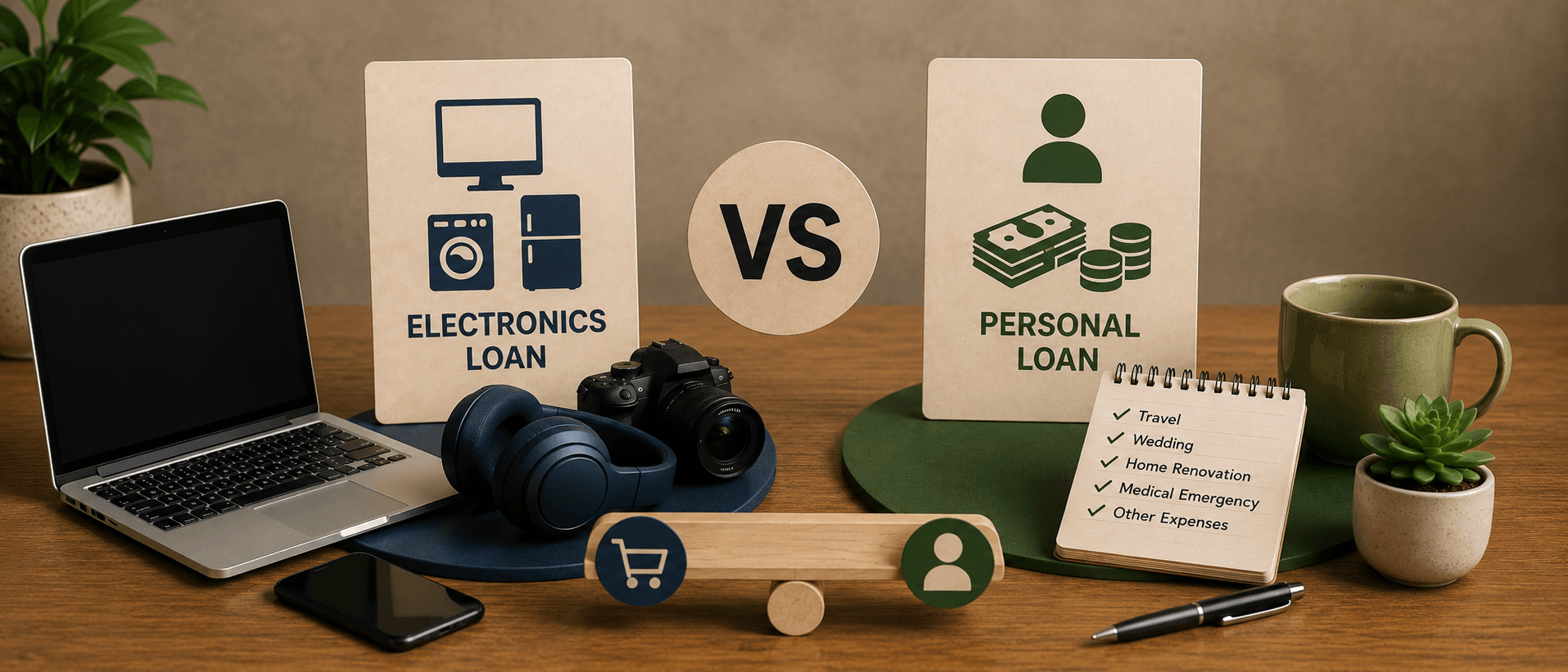
Table of content
Overview
What Is an Electronics Loan?
What Is the Difference Between an Electronics Loan and a Personal Loan?
Which Loan Is the Right Choice for You?
What instant personal loan options fund gadget upgrades easily?
Conclusion
Frequently Asked Questions
When you need money fast to fix or replace a vital piece of tech, you usually face two choices: an electronics loan or an instant personal loan.
An electronics loan is good to consider if you are buying a brand-new appliance from a major retailer during a festive zero-interest sale and already have an excellent credit score. The retailer handles the paperwork, and you walk out with the box.
On the other hand, an instant personal loan is the smarter move when you want to buy a refurbished device from a local shop, need cash to negotiate a hard discount, or simply want to avoid a store’s hidden processing fees.
Let's explore exactly how these two financing options compare behind the scenes. You will learn the hidden costs of store electronics financing, the absolute freedom of cash buying, and how modern lending apps evaluate your actual income instead of just looking at past credit history.
Follow our Whatsapp Community for more offers and updates.
Join nowAn electronics loan is a specific type of credit tied directly to the purchase of a gadget, where the lender pays the retailer directly and you repay the lender. Here is exactly how this specific type of funding works.
Direct Retailer Integration
You usually apply right at the checkout counter. The money never hits your bank account. The finance company settles the bill with the shop directly, and you walk out with the device.
Hidden Cost Traps
Many shops offer "no-cost" electronics financing, but you have to read the fine print. They often bundle hidden processing fees or force you to skip cash discounts you'd normally negotiate.
Restricted Usage
A home appliances loan or gadget financing only covers the exact invoice amount. You can't use a single rupee of leftover funds for a protective phone case, an extended warranty, or paying a utility bill.
The main difference is freedom and usage. An electronics loan restricts you to a specific product at a specific store, while a standard loan deposits cash directly into your account to spend anywhere. Let’s look at the exact differences side-by-side.
Choose an electronics loan if you are buying a brand-new item from a major retailer and already have the prime credit score they demand. Opt for a cash loan if you want negotiating power or face rigid bank rejections. Consider these specific scenarios to make your decision.
Buying Second-Hand or Refurbished
Store financing won't cover a lightly used laptop from a local repair shop or a marketplace. Cash gives you the absolute freedom to buy anywhere, saving you thousands.
Negotiating Hard Cash Discounts
Retailers routinely drop the price by 5-10% if you pay upfront in cash. Having the money already in your bank account lets you grab those on-the-spot deals.
Avoiding Multiple Inquiries
Taking electronics on EMI through a store often triggers a hard credit check by their partner bank. If your score is low, they reject you immediately, leaving you stuck without a device.
App-based NBFCs are the best way to fund a gadget without dealing with strict banking hurdles. They assess your current income instead of obsessing over past credit history. Here is what makes modern lending apps the smartest choice for immediate needs.
Direct Bank Transfers
You get the money in your account in minutes. You walk into any local shop or browse any online sale acting as a cash buyer, entirely bypassing the store's rigid finance desk.
Flexible Approval Criteria
Platforms like mPokket cater specifically to gig workers, students, and self-employed individuals who face bank rejections. If you earn a regular income, a missing or low CIBIL score won’t automatically stop you from getting an instant personal loan.
Tailored Loan Amounts
Whether you need ₹3,000 to replace a busted motherboard or up to ₹2 lakh for a high-end workstation, you only borrow exactly what you need. You aren't forced into oversized minimum loan brackets.
The best financing option here ultimately depends on whether you accept a store dictating your purchase limits or if you prefer the financial freedom to buy any new or refurbished device on your own terms. Download the mPokket app today, complete your profile with basic KYC documents, and instantly transfer up to ₹2 lakh into your bank account to secure your next gadget upgrade.
1. Who is eligible for a consumer loan?
Anyone with a steady income source and basic KYC documents (Aadhaar, PAN) can typically qualify. Traditional banks demand high credit scores, while alternative NBFC apps gladly accept new-to-credit individuals and gig workers.
2. How to buy electronics on EMI?
You can swipe a credit card, sign up for store-based financing at the billing counter, or take an instant personal loan to buy the item in cash while setting up a monthly repayment schedule with the lender.
3. Do I need collateral for an electronic loan?
No. An electronics loan is entirely unsecured. The lender relies completely on your income and credit profile to approve the transaction, meaning you never have to pledge assets like a bike or jewelry.
4. Is EMI a type of loan?
EMI stands for Equated Monthly Installment. It is not a loan itself, but rather the mathematical method you use to repay your borrowed amount plus interest over a specific number of months.
How to Plan Your Personal Loan EMI Repayment Better
3 min read • 17 March 2025
What Is a Fully Digital Loan Application Process? Steps, Documents & Approval Timeline
4 min read • 11 May 2026