4 mins min read • 16 October 2026


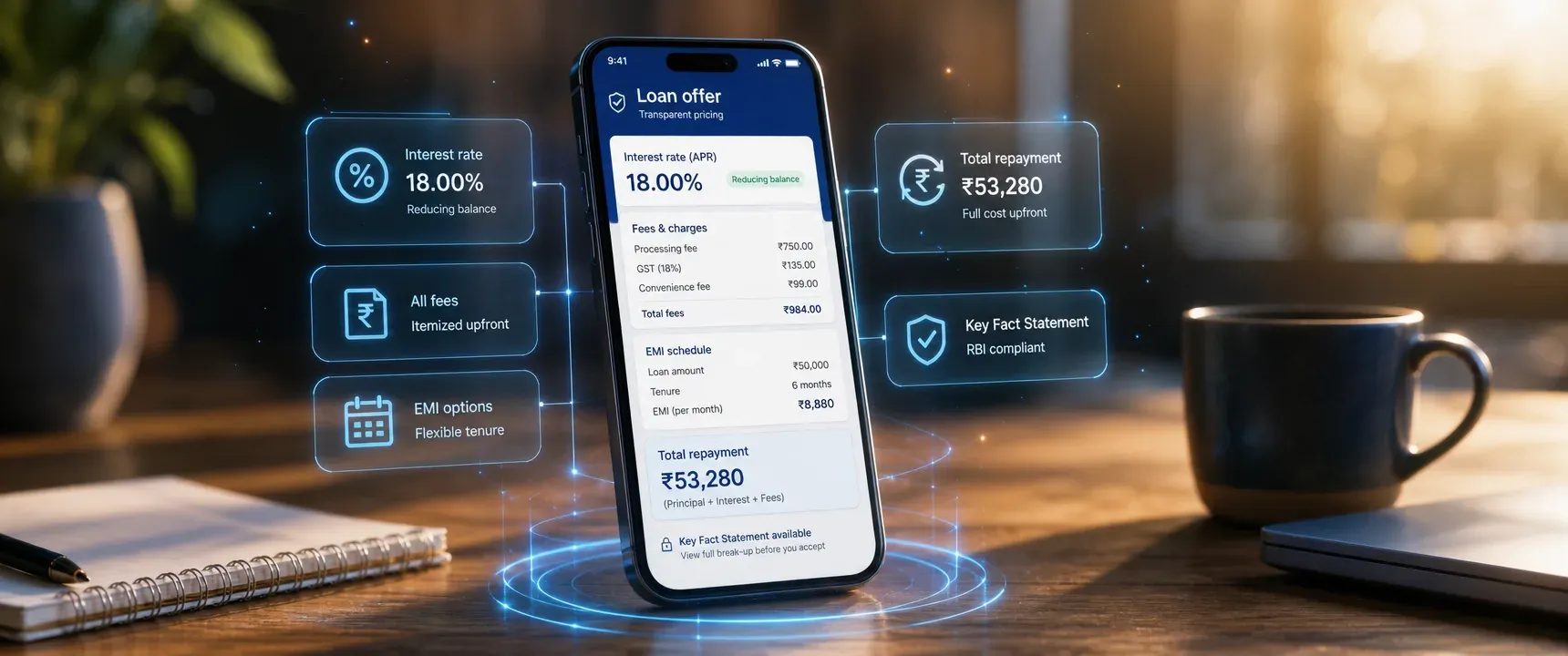
Table of content
Overview
Why pricing opacity persists
Five elements of transparent pricing
How mPokket approaches disclosure
Red flags borrowers should watch for
Calculating EMI before you borrow
FAQs
Every borrower in India deserves to know exactly what a loan will cost before committing to it. Yet many digital lending apps reveal final charges only after a user has completed most of the application. mPokket believes transparent pricing is designed to eliminate that confusion, giving borrowers clear visibility into interest rates, fees, EMI breakdowns, and total repayment obligations from the start.
Follow our Whatsapp Community for more offers and updates.
Join nowMany loan apps in India attract users with headline interest rates that look appealing. The actual cost, however, often includes processing fees, insurance charges, or platform fees that surface late in the application flow. Borrowers discover the real repayment amount only after submitting documents or accepting a credit limit.
This pattern erodes trust across the entire digital lending category. When a borrower feels misled once, they become skeptical of every online personal loan offer they encounter afterward. The result is a market where even honest lenders struggle to earn confidence.
mPokket's approach is designed to counter this by presenting pricing details before a borrower commits. The goal is straightforward: if a user opens the app, they should be able to see what they will pay without completing the full application first.
Transparent pricing in an Indian loan app is not a single feature. It is a combination of disclosures that, taken together, give the borrower a complete picture. Here are the five elements every responsible lender should surface.
The annual interest rate should appear clearly on the offer screen, not buried in a terms document. Borrowers need to distinguish between flat rates and reducing balance rates, because the effective cost differs significantly. A responsible loan app states the method used alongside the percentage.
Processing fees, convenience charges, GST on fees, and any other deductions should be itemized before the borrower taps "accept." If a fee is deducted from the disbursed amount, the borrower should see both the sanctioned amount and the net amount credited to their bank account.
A personal loan EMI calculator built into the app can help borrowers compare different tenure options. For example, a borrower considering a short term loan should see how choosing a 3 month tenure versus a 6 month tenure changes the monthly instalment and total interest paid. mPokket is designed to offer this visibility so borrowers can pick a repayment schedule that fits their monthly budget.
Beyond the EMI figure, the total repayment amount across the full tenure should be stated plainly. This single number, combining principal, interest, and fees, tells the borrower exactly what the loan will cost. Without it, comparing two loan offers becomes guesswork.
The Reserve Bank of India requires digital lenders to issue a Key Fact Statement before loan execution. This document summarizes the annual percentage rate, all applicable charges, the repayment schedule, and the total cost of borrowing. Borrowers should treat this statement as a non negotiable checkpoint. If a loan app does not provide it, that is a clear warning sign.
mPokket is designed to surface loan terms early in the borrower journey. The app aims to show the applicable interest rate, processing fee, EMI schedule, and total repayment before a user finalizes the loan. This approach aligns with RBI digital lending guidelines that emphasize pre commitment disclosure.
For borrowers who are new to formal credit, such as freshers, interns, or first time borrowers, this transparency can help reduce anxiety. Knowing the exact cost upfront allows them to borrow responsibly and plan their repayment around their salary cycle or stipend schedule.
Flexible repayment options also play a role. When a borrower can choose between EMI and lump sum repayment, the app should clearly show how each option affects the total cost. mPokket's flexible repayment structure is designed to give borrowers this choice with full cost visibility.
Even with regulatory safeguards, some loan apps use design patterns that obscure true costs. Borrowers in India should watch for these warning signs before accepting any digital loan offer.
First, if the interest rate changes between the offer screen and the final agreement, the app is not being transparent. Second, if fees appear only in the loan agreement PDF and not on the main offer screen, the borrower is being asked to commit without full information. Third, if the app does not provide a Key Fact Statement, it may not comply with RBI guidelines.
Borrowers should also verify that the repayment schedule matches what was shown during the offer stage. Any discrepancy between the promised EMI and the actual deduction from a bank account or UPI autopay mandate is a serious concern.
Understanding how to calculate personal loan EMI online is a practical skill for any borrower. The standard formula uses three inputs: principal amount, annual interest rate, and tenure in months. Most loan apps, including mPokket, offer a built in EMI calculator that does this math instantly.
For example, if a borrower takes a loan of Rs 50,000 at a certain interest rate for 6 months, the calculator shows the monthly instalment and total interest. Comparing this across different tenure options helps the borrower find a balance between affordable monthly payments and lower total interest cost.
This calculation should happen before the borrower accepts the loan, not after. A transparent loan app makes the calculator accessible from the offer screen itself, so the borrower never has to guess.
Responsible borrowing starts with knowing the numbers. mPokket is designed to put those numbers in front of borrowers early, helping them make decisions grounded in clarity rather than urgency.
Use an EMI calculator that takes three inputs: loan amount, annual interest rate, and tenure in months. Apps like mPokket are designed to offer a built in calculator that shows the monthly instalment and total repayment before you accept the loan.
The Key Fact Statement is an RBI mandated document that summarizes a loan's annual percentage rate, all fees, repayment schedule, and total cost. Responsible digital lenders like mPokket provide this before loan execution so borrowers can review the full cost.
Watch for processing fees, insurance charges, platform fees, or foreclosure penalties that appear only after you accept the offer. A transparent loan app like mPokket is designed to disclose all charges on the offer screen before commitment.
The best loan app is one that shows interest rates, fees, EMI breakdowns, and total repayment before you commit. mPokket is designed to provide this upfront transparency along with flexible repayment options and a paperless digital process.
₹1,000 Instant Loan: Why Can the Amount Credited Be Lower Than the Sanctioned Amount?
3 min read • 11 October 2026
10 money management tips you can take to the bank
2 min read • 6 December 2024
15 Common Financial Mistakes That Student Makes
3 min read • 6 August 2024
₹2,000 Personal Loan: APR vs Interest Rate, What Is the Real Cost?
4 min read • 11 October 2026
20 Common Questions Students Ask When Dealing With Instant Loans!
4 min read • 16 November 2024