4 min read • 5 August 2026


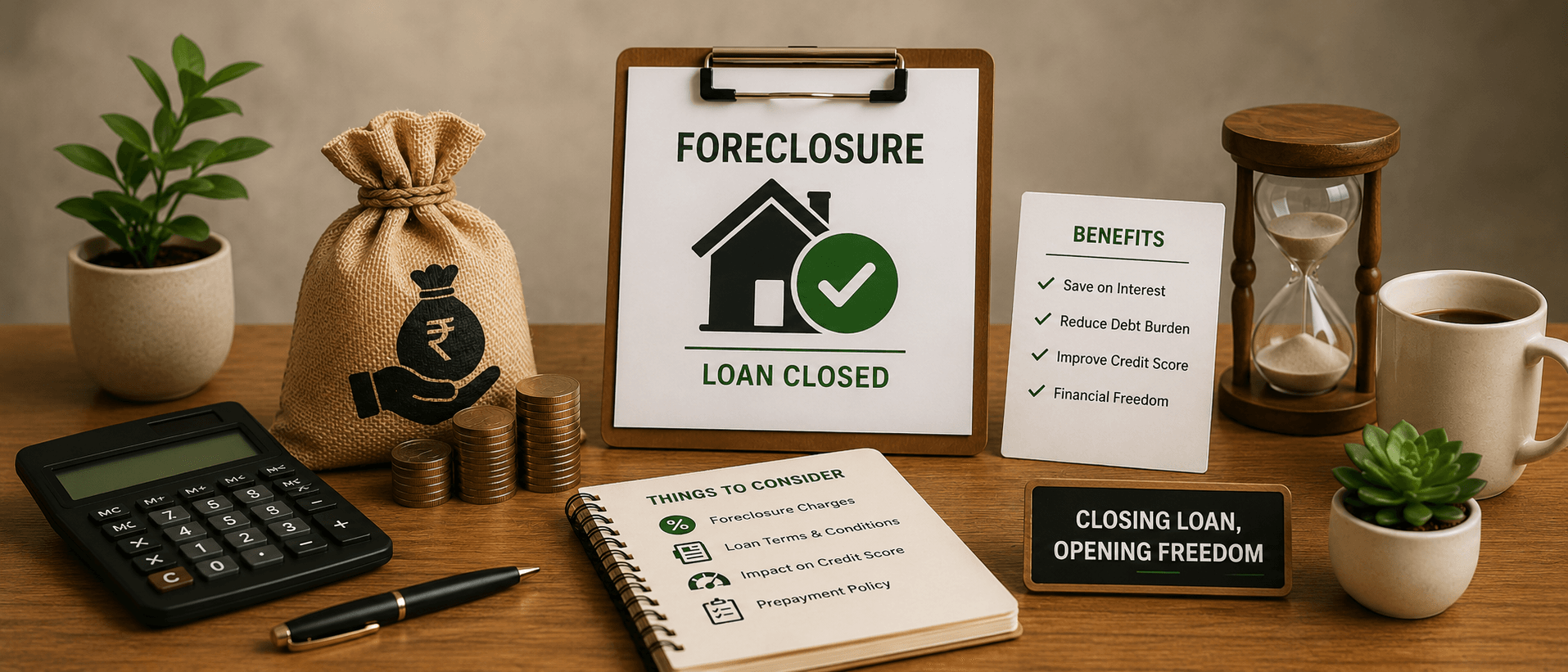
Table of content
Thinking about closing your loan early?
What Is Personal Loan Foreclosure?
What are the Things to Consider Before Foreclosing a Personal Loan?
Which Instant Loan App Offers Flexible EMI Repayment?
Conclusion
Frequently Asked Questions
Personal loan foreclosure is the process of repaying your entire remaining loan amount in a single payment before the original tenure is over, effectively closing the loan account ahead of schedule.
Being debt-free early sounds great. Sometimes it could add unexpected costs. Know if personal loan foreclosure can help you save on interest.
Personal loan foreclosure means paying off your entire outstanding balance in one go, before your actual tenure ends. It sounds simple, and mostly it is, but a few things, like charges, timing, and credit score impact, decide whether foreclosure actually saves you money or not.
Let’s explore what personal loan foreclosure really means, the real benefits, the charges lenders typically apply, and the things you should check before you go ahead and clear that loan early.
Follow our Whatsapp Community for more offers and updates.
Join nowIn plain terms, personal loan foreclosure means paying off your entire outstanding loan principal, interest, and whatever charges apply in a single go, instead of dragging it out through monthly EMIs. You just close the account, and you're done with it.
So how's this different from what you're already doing? Let's break it down:
Now, most lenders won't let you foreclose right away. There's usually a lock-in period first. It could be anywhere from 3 to 12 months, depending on who you've borrowed from and what kind of loan it is.
Mostly people think personal loan foreclosure helps them to save interest. It’s true. Interest keeps accumulating on whatever balance is left, so the moment you close the loan, that clock stops ticking.
But that's not the only upside. A few other things worth knowing:
These personal loan benefits are exactly why foreclosure makes sense if you've got a bonus, extra savings, or surplus cash sitting idle instead of earning much interest.
Many digital lenders charge a fee for foreclosure. It's how they recover some of the interest income they lose. But how much you pay, and how you go about it, varies quite a bit.
Here's a general breakdown of what to expect:
Before you rush to close your loan, run the numbers. Sometimes the foreclosure charges can eat into a good chunk of the interest you'd save, so it's worth doing the math first.
Keep these points in mind:
A bunch of instant loan apps in India now offer some flexibility around EMI repayment, but it's smart to compare a few things before picking one, like tenure flexibility, how much they charge for foreclosure, and what kind of repayment support they actually provide. Some lenders will even let you adjust your EMI plan if money's genuinely tight for a while, which can take a lot of pressure off during a rough patch.
mPokket happens to be built around this kind of flexibility. Approvals come through instantly for up to ₹2 Lakh, and you're not boxed in by a rigid CIBIL score requirement or the usual fixed income proof. Instead, mPokket leans on alternative data scoring to judge applicants more fairly, which works out well for students and young professionals who haven't built up much of a credit history yet.
KYC is quick too, and it's all digital, so there's no waiting around for paperwork to clear. And here's the part that really matters if you're thinking about foreclosure. mPokket doesn't slap on an extra fee for repaying early. That alone makes the whole decision to foreclose a lot easier and cheaper too.
Personal loan foreclosure can be a genuinely smart move if you've got the funds and the math works out in your favor. It cuts your interest burden, closes out debt sooner, and can even help your credit profile down the line.
Before you commit, just check a few things, like the personal loan foreclosure charges, the lock-in period, and whether your cash flow can actually handle it right now.
If you want a lender that keeps things straightforward and doesn't punish you for paying off early, mPokket's worth a look. Download the app, check your eligibility, and see where you stand.
1. What is the difference between foreclosure and part-payment?
Foreclosure wraps up the entire loan in one payment. Part-payment just means putting extra money toward the principal while the loan keeps going, usually with smaller EMIs or a shorter tenure.
2. Is there a minimum lock-in period before I can foreclose?
Pretty much always, yes. Most lenders ask for a lock-in of 3 to 12 months from the date the loan was disbursed. Your loan agreement will have the exact number, so it's worth checking that first.
3. How does foreclosure impact my credit score?
It's generally neutral to positive. Foreclosing a personal loan shows lenders you paid off your debt fully and on time. That said, closing a loan very early can sometimes shrink your active credit mix a little, so the exact effect isn't identical for everyone.
4. Can we foreclose a personal loan in 3 months?
Depends entirely on the lender's policy. Some digital lenders are fine with 3 months; others want you to wait longer. The best bet is to check your agreement or just call your lender and ask directly.
Personal Loans for Salaried Employees: What you Need to Know
5 min read • 9 July 2025
Why Do Salaried Professionals Prefer Personal Loans in Mumbai?
4 min read • 9 July 2025
Guide to Instant Loans for Salaried Individuals: Everything you Need to Know
4 min read • 17 March 2025
Best Quick Loan Apps With Flexible Repayment Options: A 2026 Guide
4 min read • 12 May 2026