4 min read • 5 August 2026


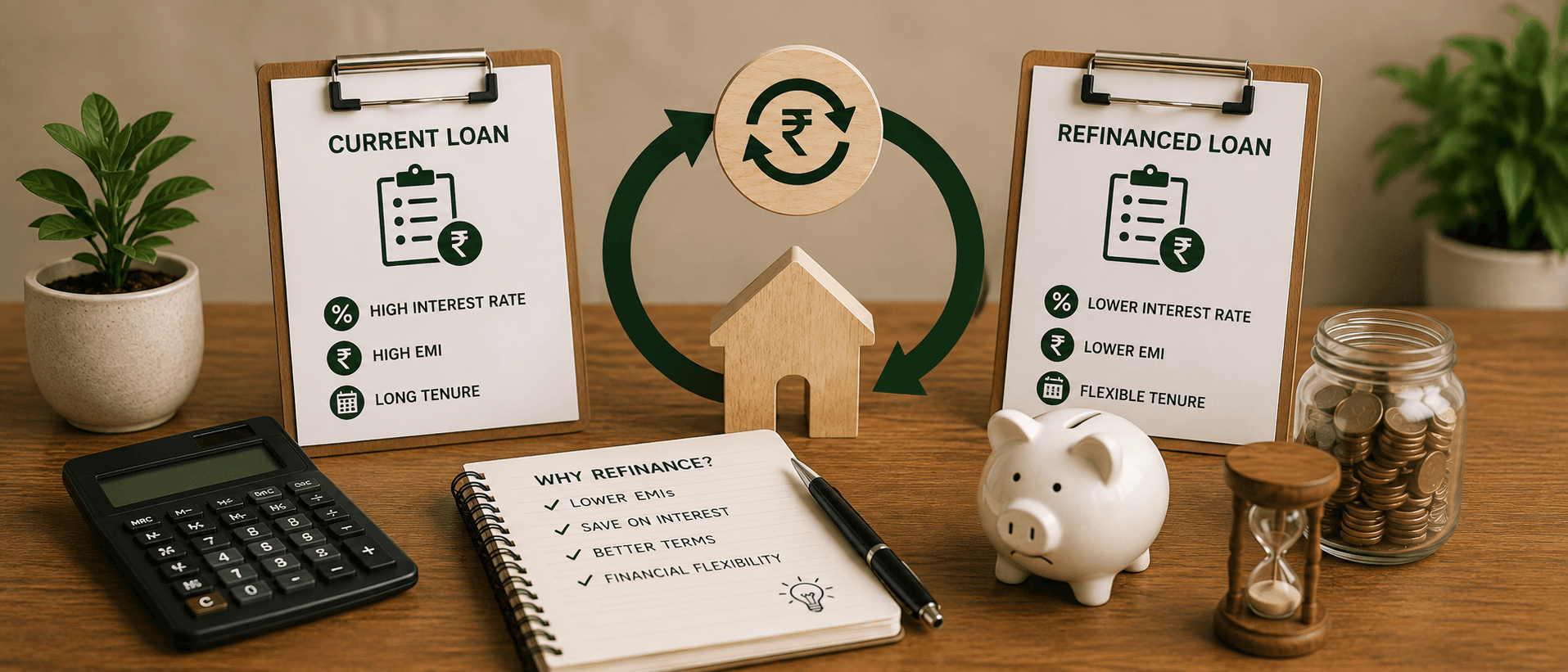
Table of content
Switch to Better Loan Terms with Personal Loan Refinancing.
What Is Refinancing a Personal Loan?
How to Refinance Your Personal Loan
When Should You Refinance Your Online Personal Loan?
Which App Offers Personal Loans Using Alternative Credit Scoring?
Conclusion
Frequently Asked Questions
Missed a lower interest rate that just hit the market? Stuck paying 24% when your credit score has climbed enough to qualify for 14%? That gap between what you're paying and what you could be paying is exactly why refinancing a personal loan exists, and it's costing borrowers in India crores every year without them even realizing it.
This blog breaks down what refinancing actually means, how the process works step by step, and, more importantly, when it makes financial sense versus when it's just extra paperwork for no real gain. You'll also see where an instant personal loan taken through an instant, low-documentation app fits into this picture, especially if you're someone who got a raw deal on interest rates the first time around because your credit file was thin or nonexistent.
By the end, you'll know exactly how to decide if refinancing is worth it for your situation, what lenders look at, and what questions to ask before you sign anything new.
Follow our Whatsapp Community for more offers and updates.
Join nowRefinancing a means taking a new loan, usually from a different lender, to pay off your existing one, ideally at a lower interest rate or better terms.
Think of it as a loan swap. Your old lender gets paid off in full, and you start fresh with a new lender, new EMI, and often a new tenure. People go this route mainly for three reasons:
It's not the same as a top-up loan, where you borrow more on your existing loan without closing it. Refinancing closes one loan and opens another.
Refinancing works by shopping for a cheaper personal loan, using it to close your current one, and then repaying only the new lender going forward. Here's the actual sequence most borrowers follow.
Step 1: Check Your Current Loan's Outstanding Balance and Foreclosure Charges
Call your existing lender or check the app and get the exact outstanding principal, plus any prepayment or foreclosure penalty. Some NBFCs charge 2 to 5 percent on the remaining amount.
Step 2: Compare Online Personal Loan Offers From Other Lenders
Look at interest rate, processing fee, and tenure options across banks and NBFCs. A lower rate with a high processing fee can sometimes cost more than what you're already paying.
Step 3: Check Your Eligibility and Apply
Most lenders ask for your credit score, income proof, and existing loan statement before approving a refinance. Some digital-first lenders skip the CIBIL-heavy route entirely.
Step 4: Use the New Loan to Close the Old One
Once approved, the new loan amount goes either directly to your old lender or into your account, and you use it immediately to foreclose the existing loan.
Step 5: Get the Loan Closure Certificate
Always collect a No Dues Certificate or loan closure letter from your old lender. This protects you if there's ever a dispute over the account later.
Refinance when the new loan's total cost, interest plus fees, comes out meaningfully lower than what remains on your current loan. Suppose you see a new loan offering a 12% interest rate while you are currently paying 14%. Deciding to close the previous loan is often a wise move.
However, you will actually save money only if you ensure the interest you save is a lot more than any foreclosure charges associated with your previous loan. It is even better if there are no foreclosure charges at all.
Similarly, many other situations can work in your favor when refinancing. For instance:
Several digital lending apps in India assess personal loan eligibility using income patterns, spending behavior, and bank transaction history instead of relying only on a CIBIL score. mPokket is one such RBI-registered NBFC that uses this approach for its instant personal loans.
Here's where this matters for the refinancing conversation. A lot of people end up with expensive first loans precisely because they had no credit history when they applied. Banks either rejected them or priced the loan high to cover the risk. That's the exact gap mPokket's alternative assessment model is built to close:
To be clear-eyed about it: mPokket's core strength is originating fast, accessible personal and business loans for borrowers banks tend to overlook, not a dedicated balance transfer or refinance product. If you're comparing refinancing options, it's worth checking directly with the lender on whether a specific loan takeover facility exists and comparing that against what a fresh loan from an alternative scoring lender would cost you.
Refinancing only makes sense when the savings from a lower rate clearly beat the fees you'll pay to switch.
If you initially settled for a high-interest loan due to a thin credit file, digital platforms like mPokket can be a highly relevant alternative. mPokket evaluates income and repayment behavior rather than relying strictly on CIBIL scores.
Before you refinance anything, pull up your current loan's outstanding balance, its foreclosure charge, and competing offers, whether from traditional banks or accessible platforms, and run the actual numbers side by side. That fifteen-minute comparison tells you more than any rate table ever will.
1. How do personal loans work?
If you take a personal loan, you will get a fixed amount that you can spend anywhere you want and repay it in EMIs over a set tenure. You have to repay it, including principal and calculated interest. Most digital lenders offer instant personal loans without collateral.
2. What should you know before applying for a personal loan?
If you apply for personal loans to multiple lenders, it will trigger a hard inquiry that can reduce your credit score. So, first of all, check your CIBIL score and whether you fit their requirements. Next, compare interest rates, processing and other charges of the lenders, and repayment flexibility before applying.
3. How do you take an online personal loan for the first time?
Most banks, NBFCs, and digital lenders have a requirement of a CIBIL score and credit history. So, you should choose a lender, like mPokket, that doesn't demand a long credit history. Also, keep the required documents ready, compare lenders' offerings, and borrow only what you need, and repay on time.
4. Can you take an instant personal loan for any reason?
Yes. You can borrow for any reason, though most lenders offer different types of personal loans. You can use it for medical emergencies, travel, weddings, and even for debt consolidation.
What Determines Your Personal Loan Eligibility? 5 Key Factors Explained
6 min read • 9 July 2026
How Does mPokket Evaluate Personal Loan Eligibility for the Self-Employed?
1 min read • 7 July 2026
Step-by-Step Guide: How To Apply For mPokket Personal Loan
7 min read • 27 May 2026
Understanding Personal Loan Agreements: Key Terms and Conditions
6 min read • 20 January 2024