4 min read • 3 August 2026


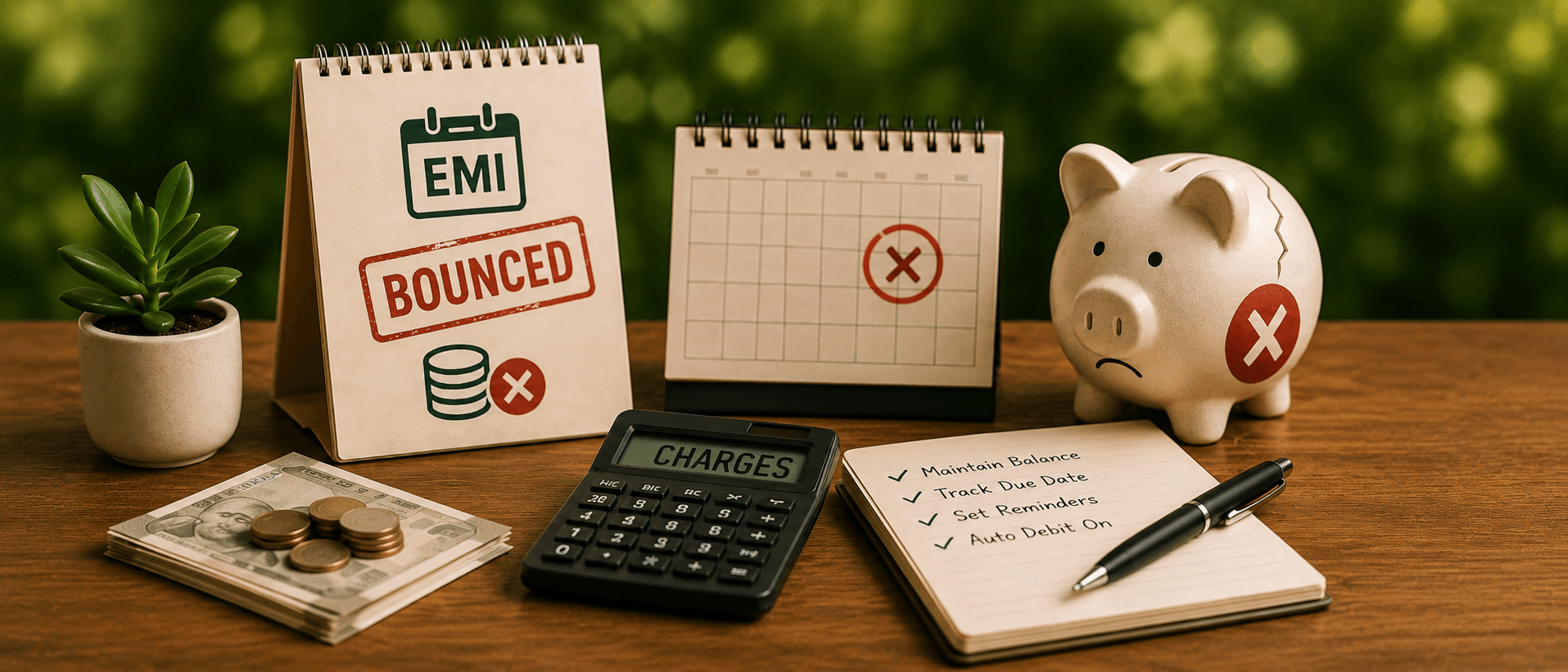
Table of content
Overview
What Are EMI Bounce Charges?
What Happens If You Miss an EMI?
How to Avoid EMI Bounce Charges?
Which instant loan app offers flexible EMI repayment?
Conclusion
Frequently Asked Questions
EMI bounce charges are the frustrating penalty fees you get hit with when an auto-debit fails because of a low bank balance. Fixing an EMI overdue status right away saves your credit score and stops those nasty late fees from snowballing out of control.
Nobody actually plans to skip a loan payment. Usually, a sudden expense pops up, or your salary gets delayed by a day, leaving your bank account a little too light on deduction day. But when that automated bank mandate fails, things get expensive fast. Banks and lenders will quickly slap you with hefty EMI bounce charges. It's super annoying. Plus, on top of the immediate cash penalty, dealing with a missed EMI can quietly wreck your credit score over time.
Figuring out exactly how personal loan EMI bounce charges work is the smartest way to protect your wallet. Whether you're paying off a credit card, a vehicle, or a quick cash advance, those surprise fees add up way faster than you'd think.
Today. We are going to break down exactly why these bounce penalties happen, how much they actually cost, and what you can do to stop them from eating into your hard-earned money.
Follow our Whatsapp Community for more offers and updates.
Join nowEMI bounce charges are basically double-trouble penalty fees that hit your account when a scheduled loan deduction fails due to low funds. Here is a quick breakdown of what you actually end up paying.
Skipping a payment triggers a pretty fast chain reaction. A single missed EMI leads to instant fines and can eventually spiral into serious credit issues.
Instant cash penalties
The second that auto-debit fails, your bank deducts a bounce fee. Then your lender piles on their own late fees and extra daily interest on whatever amount you owe.
Credit score takes a hit
Lenders report your payment history to credit bureaus. Leaving an EMI overdue for more than 30 days means your CIBIL score is going to drop noticeably.
Say goodbye to good offers
If you pay late a lot, you look like a risky borrower. Banks will start pulling back on pre-approved credit cards, limit increases, and top-up loans.
The legal route
Ignore the payment for 60 to 90 days, and things escalate fast. Your account turns into a Non-Performing Asset (NPA), which means recovery agents and legal notices get involved.
Staying ahead of EMI bounce charges isn't complicated if you set up some basic safety nets. Try these practical tips to keep your loan payments totally stress-free.
Keep a cash buffer
Try to leave at least one month's payment sitting in your account as a permanent backup. It saves you if a holiday delays your paycheck or an unexpected bill hits.
Sync with your salary
Ask your lender to set your deduction date a few days after you usually get paid. This gives you plenty of breathing room if your company's payroll runs a day late.
Set up loud reminders
Don't rely entirely on your memory. Put alerts on your phone three days before the money is supposed to leave your account so you can double-check your balance.
Ask for help early
If you know you're going to be short on cash this month, call your lender before the bounce happens. Some platforms might actually let you adjust your payment timeline.
Finding a lender that understands real life makes a huge difference. While traditional banks are super rigid, modern digital apps give you actual flexibility when cash gets tight.
Some lenders actually allow you to modify your EMI plans if you're going through a tough patch with repayments. Digital platforms like mPokket are built with this kind of flexibility in mind. Instead of strict income requirements, they use alternative data scoring for fast KYC and instant approvals up to ₹2 Lakh. Plus, mPokket doesn't charge extra foreclosure fees if you decide to repay the loan before your tenure ends.
At the end of the day, dodging EMI bounce charges is all about staying one step ahead. A little bit of planning protects your credit score and keeps your hard-earned money in your pocket where it belongs.
Dealing with loans shouldn't feel like a trap. You need a financial partner that works with you, not against you. With mPokket, you get flexible repayment terms, fast approvals up to ₹2 Lakh, and zero extra fees for closing your loan early. Want a stress-free financial safety net? Download the mPokket app today and take control of your cash flow.
Does an EMI bounce instantly ruin my credit score?
Not instantly. If you clear the failed payment within a day or two, you're usually fine. But any delays stretching past 30 days get reported to bureaus and will drag your score down.
How can I avoid the penalty for EMI bounce?
Keep a one-month buffer in your account, schedule your due dates right after payday, and set up phone reminders so you never forget to check your balance beforehand.
Does repeated EMI bounce affect future loan approvals?
Absolutely. Lenders hate seeing multiple failed payments on your bank statements. It paints you as a risky borrower, meaning you'll likely get rejected for future credit lines.
How can I resolve EMI bounce issues quickly?
Jump onto your loan app the moment you realize it bounced. Pay the missed loan payment manually using UPI, clear whatever late fees popped up, and you're good to go.
How Do Missed Payments Impact Your Credit Score and Instant Loan Eligibility?
5 min read • 27 May 2026
How to Plan Your Personal Loan EMI Repayment Better
3 min read • 17 March 2025
5 Tips to Repay Loans on Time
5 min read • 31 March 2025
Effective Loan Payment Management: Strategies and Tips for Success
1 min read • 16 December 2024